Start with personal teaching
This guide clarifies the passive internal rotation task in the AAOS shoulder programme. It is for adults personally taught and cleared for this exact movement by their clinician. Permission for another shoulder exercise does not transfer. After injury, surgery, repair or instability, ask about your own restrictions before trying the position.
Recognise the horizontal task
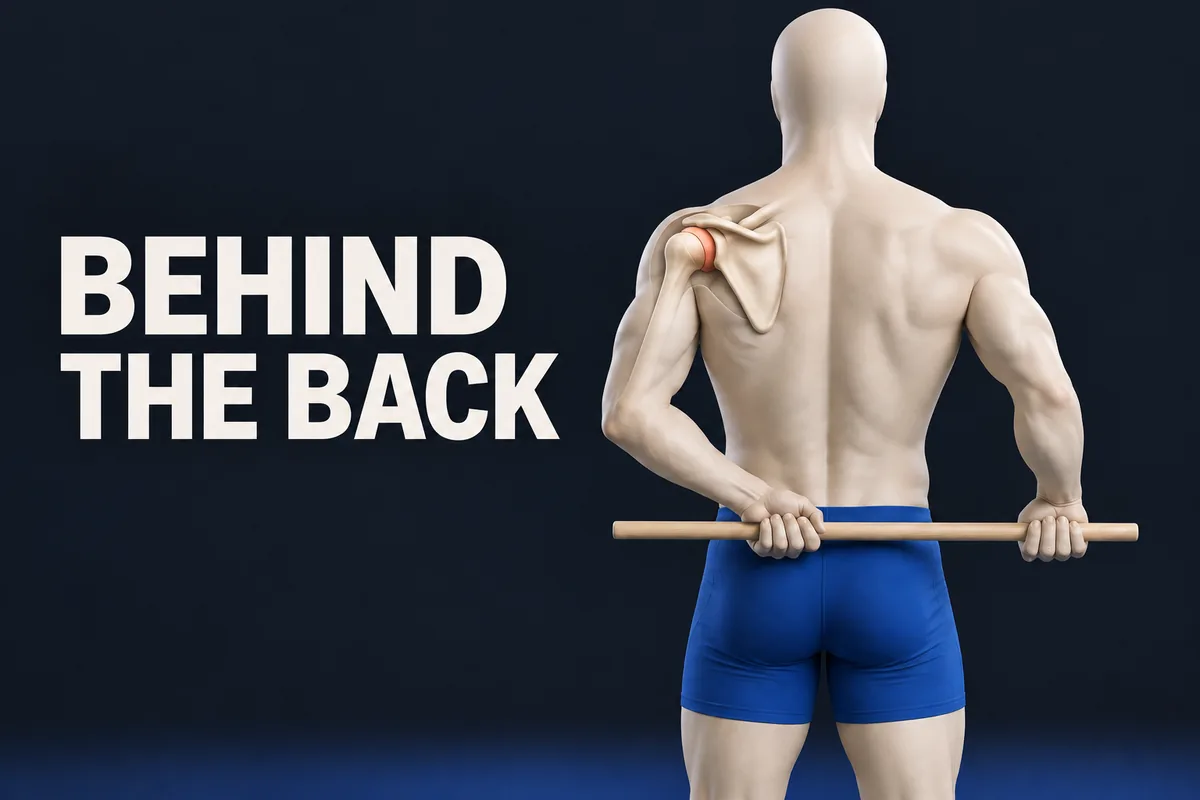
The stick sits behind the lower waist, with one hand holding it and the other lightly holding the other end as taught. The guide moves it horizontally. This is different from the forward stick raise, an overhead grip or pulling a towel upward along the spine. Ask for another demonstration if you cannot identify the task.
Clarify which hand guides
In the example shown from behind, the right hand guides to the right while the left hand follows behind the lower back toward the middle. The left elbow bends; the torso does not lean or twist. Your clinician sets the actual grip and direction for your side. Do not force hand height, symmetry or an endpoint. The AAOS reprint also specifies a horizontal pull without pain.
Keep your own range and dose
Follow your personally prescribed assistance, range, return, hold and repetitions. Move back with control rather than releasing suddenly. Do not borrow a dose or elbow setup from the front outward stick turn. Stop for pain, catching, numbness or a feeling of instability and seek individual advice. This is not a test of shoulder health.
Record the actual movement
Note the side, grip, support, permitted range and response so you can describe the same task next time. Reaching higher does not diagnose improvement. The beginner mobility guide offers broader context, not clearance for this drill. These article translations do not establish which languages the Mobility app supports.
If your clinician separately taught and cleared an upward towel task, clarify that behind back lift instead of changing this horizontal stick direction.