Use only your personally taught version
The sleeper stretch uses the other arm to guide inward rotation at the shoulder while lying on your side. This explanation is for people personally taught and cleared to use this exact exercise by their clinician. The AAOS shoulder programme is a supervised clinical resource. North Tees therapy guidance also requires individual direction, including a surgeon’s permitted range after surgery. Permission for a different shoulder exercise does not clear this one.
Rest on the target shoulder side
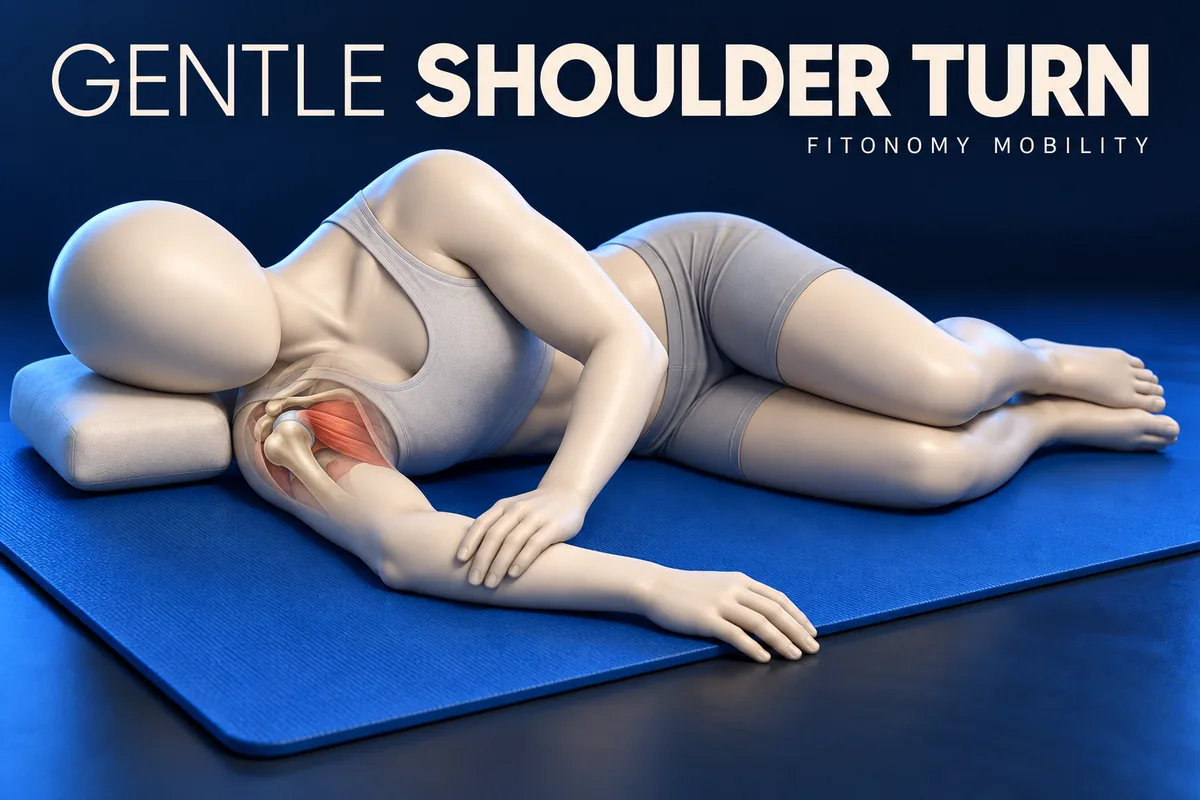
Use a firm flat surface you can get onto and leave safely. Lie with the shoulder you were told to stretch underneath and that elbow bent. A pillow may support the head. Place the upper arm and elbow exactly as personally demonstrated, rather than copying a photo’s angle or rolling into a modified position. If lying on that side is uncomfortable, stop and ask your clinician for a suitable option.
Guide the forearm gently
Use the other hand on the forearm, away from the wrist, to guide the bent arm gently toward the supporting surface. The movement is inward rotation at the shoulder, not wrist bending. Keep the wrist straight. AAOS specifically says not to press on the wrist. Stop the pressure when you notice a gentle stretch behind the shoulder. Reaching the surface is not a goal. Do not push through pain or pinching.
Release assistance with control
Ease the helping hand’s pressure gradually and return the arm with control. Follow only the hold, repetitions and frequency personally prescribed for you. The source programmes’ schedules are not universal doses. Stop with pain, numbness, tingling or a feeling of instability and seek individual advice. This stretch does not diagnose a shoulder problem or promise a treatment result. Do not add weight or ask someone to force the arm down.
Keep other shoulder tasks separate
Stick assisted external rotation turns outward in another position. The horizontal stick behind the back uses a different inward rotation setup. The cross body stretch moves the arm across the chest. These are different tasks, not a routine or automatic progression. The beginner mobility guide provides broader planning context; it does not replace personal clearance. Article translations do not establish which languages the Mobility app supports.