Confirm the task you were taught
This reminder is for adults already taught and individually cleared for this exact exercise. Oxford University Hospitals describes isometric abduction in a clinical leaflet following neck surgery. Plymouth hospital guidance also places wall pressure within individual rehabilitation. Neither source gives every reader permission to start. Ask your clinician about side, contact, effort and amount; an article cannot select a recovery stage.
Set up the forearm contact
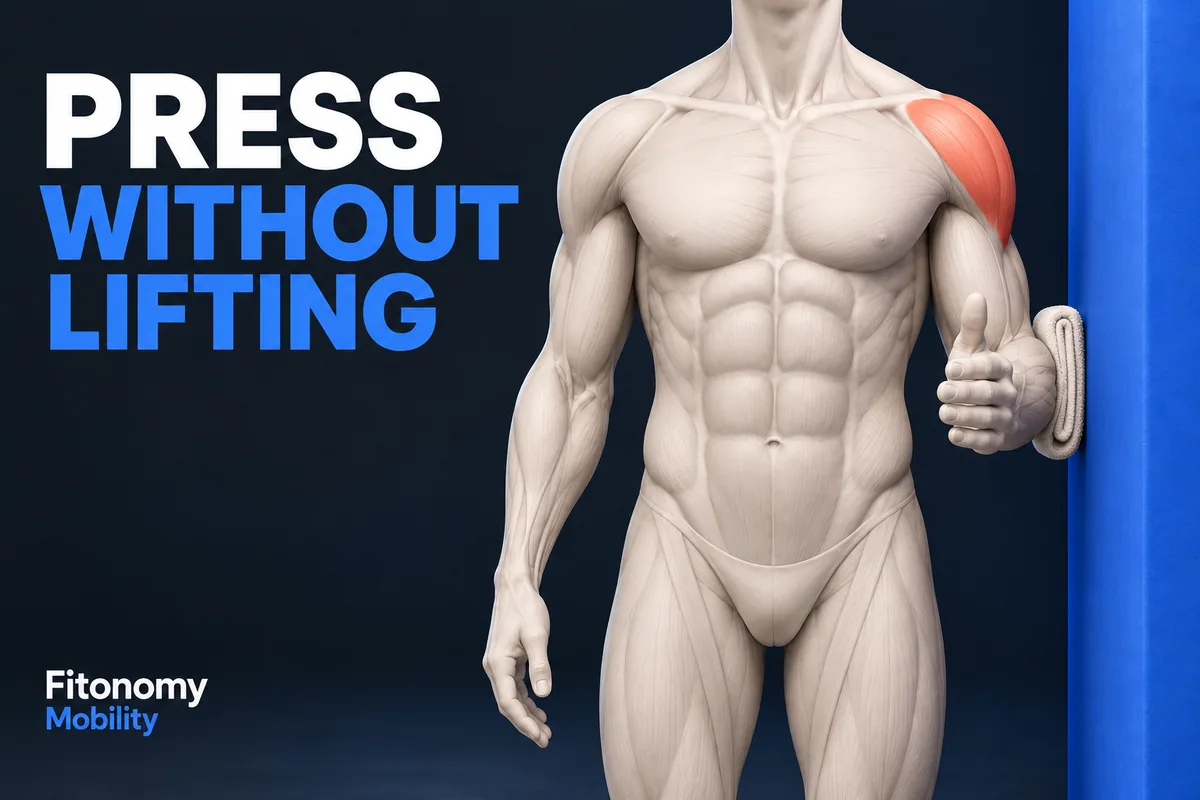
Stand sideways beside a fixed wall with steady footing, using your taught setup. Keep the target upper arm close to your side and bend the elbow about a right angle. Place the outside of the forearm against the wall as demonstrated for you, with padding if instructed. Keep the wrist comfortable and the trunk upright. If you cannot stand or make contact securely, pause and ask for an appropriate setup rather than improvising.
Press gently without lifting
Gently attempt to move the upper arm sideways into the wall’s resistance while the arm stays still. Do not turn the forearm to press only the back of the hand. Keep your shoulders quiet and breathe normally, without leaning your body into the wall, shrugging or using maximum force. The static external rotation guide uses a different contact and attempted direction; the names are not interchangeable.
Release before resetting
Ease off the pressure before taking the arm away or changing sides. Use only your personal instructions for effort, holds, repetitions and frequency. Stop for pain, pinching, tingling, numbness, dizziness, instability or loss of control and seek advice before continuing. Do not turn the release into an arm lift, add a weight or ask another person to push you farther.
Record control rather than range
Note the side, contact, personally instructed amount and whether the arm stayed still and comfortable. The sideways stick raise actually moves the arm, while a seated blade squeeze moves the shoulder blades. Do not transfer their dose or add them automatically. Use the beginner mobility guide to compare tasks. This stationary effort does not prove a range gain or diagnose or treat a shoulder condition.