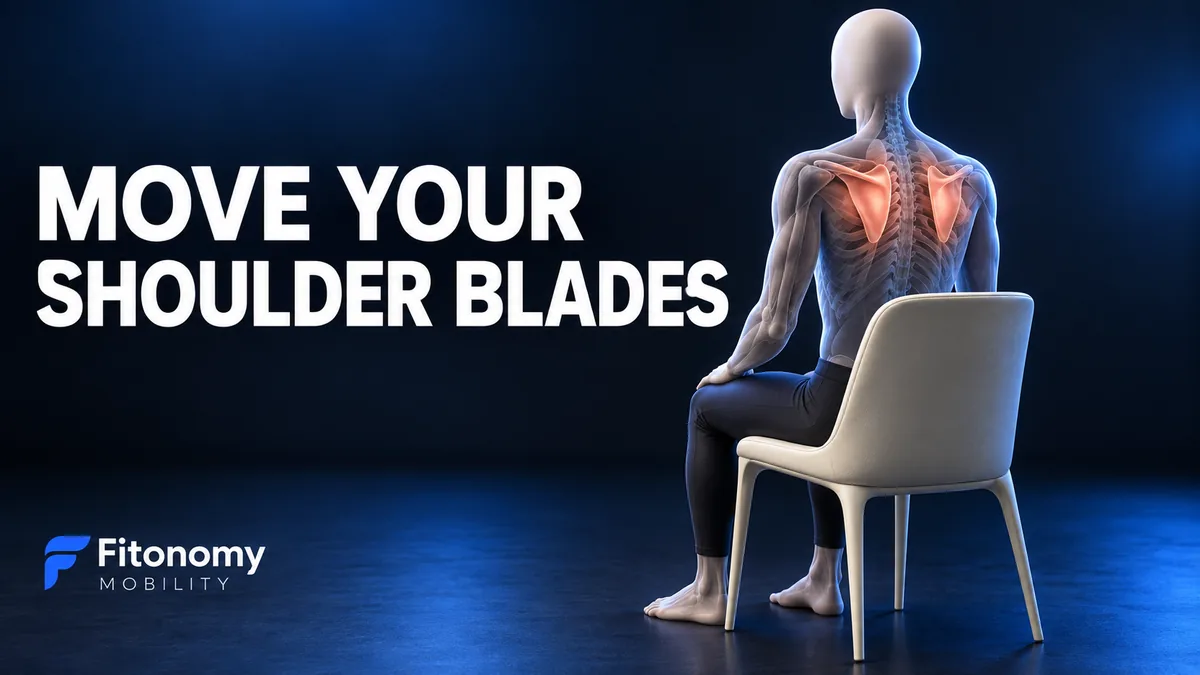
A seated shoulder blade squeeze is a gentle movement between the shoulder blades. It does not require reaching overhead. Move only as far as feels comfortable, then let the shoulders return to rest.
Settle into the chair
Choose a stable chair, sit with both feet supported and let the arms rest by your sides or on your thighs. Look ahead without forcing your chest upward. Notice where the shoulders sit before you move.
Move the shoulder blades
Gently bring the shoulder blades toward each other, as if narrowing the space between them. Keep the neck quiet and avoid lifting the shoulders toward the ears. The NHS Dynamic Health description teaches a seated or standing squeeze followed by relaxation.
Release without shrugging
Let the shoulder blades slide back to their resting place. Do not lock them together or pull the arms sharply behind you. A smooth release is part of the movement. The Leeds NHS instructions also describe drawing the shoulders back and squeezing the blades, but their clinical schedule is not a general dose.
Make the range smaller
If the neck starts to tense, use a smaller squeeze and let the arms hang comfortably. Try a slow breath during the movement rather than holding it. You may pause between attempts. More force is not necessary to explore this motion.
Compare other shoulder moves
Seated shoulder circles trace a circular path instead of drawing the blades together. Shoulder wall slides move the arms upward with wall support when that is comfortable. The beginner mobility guide can help choose a short sequence. Explore the Mobility app for supported routines without assuming the app offers every article language.
Know when to stop
Stop if the movement causes pain, tingling, dizziness or symptoms that worsen. A recent injury, surgery or clinician restriction needs personal advice. This general movement guide is not a treatment for shoulder pain and does not promise a posture change.
For a separate head movement, compare the gentle seated head glide without adding a shoulder squeeze or forcing a posture.