Check the support and suitability
This is a supported shoulder blade movement, not a seated desk break. Health and Wellbeing Queensland classifies its desk version as intermediate and moderate. Only try it if you are comfortable bearing weight through your hands and have no relevant restrictions. Use a fixed, cleared, load bearing desk that cannot slide or tip, with secure footing. A wheeled chair or lightweight table is unsuitable. If inactive, pregnant or affected by a major health condition, seek medical advice first, as the source recommends.
Build a straight arm position
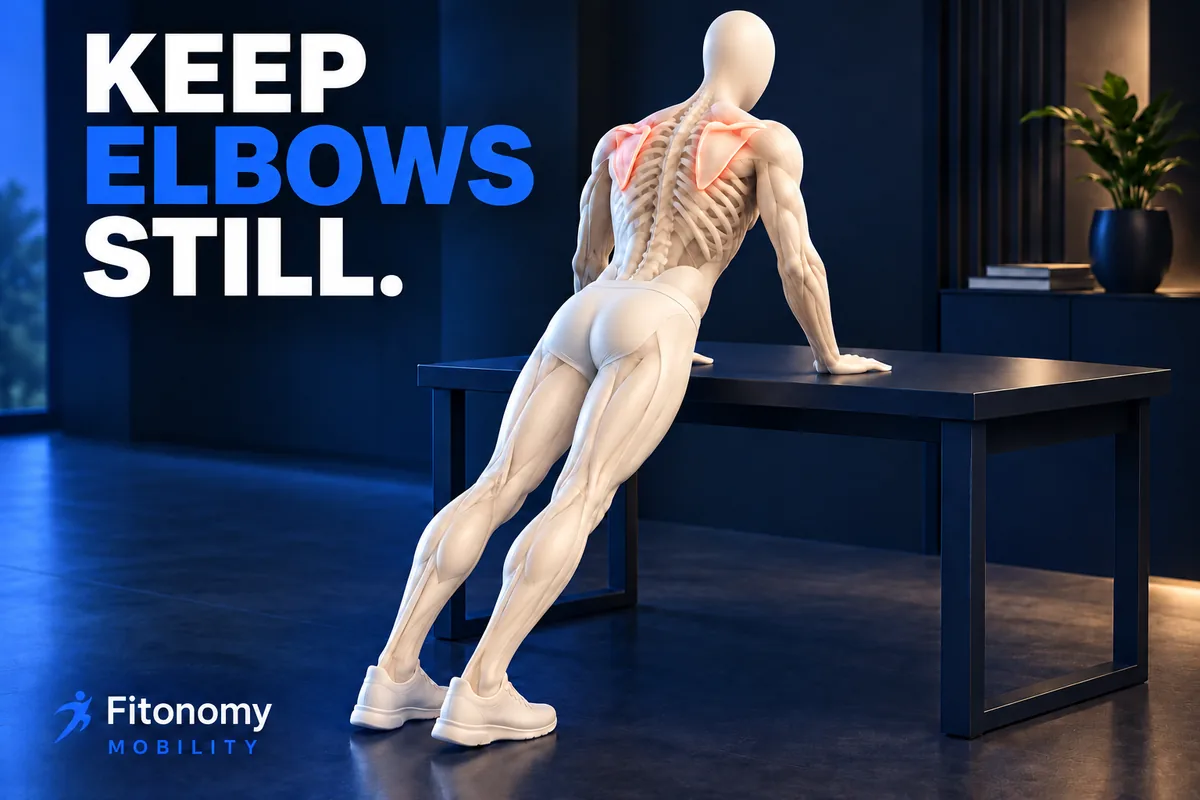
Warm up with suitable light movement before loading the arms. Face the desk and place both palms on it, wrists in line below the shoulders. Step back to make a comfortable inclined line through your body, with your abdomen gently engaged. Keep the elbows straight without forcing them to lock. If the support shifts, wrists hurt or you cannot hold the position comfortably, stop. Do not turn this into a lower surface or floor progression.
Let the blades move closer
Keeping both hands planted and the elbows straight, allow the shoulder blades to move gently toward each other. The chest travels only a little toward the desk. Do not bend the elbows to create a full push up, throw the head forward or let the hips sag. Use a small motion you can reverse easily. The shoulder blades move on the rib cage; a larger chest drop is not the goal.
Press to spread them again
Press through your palms so the shoulder blades move apart. The upper back may round slightly as described by the source, but do not turn the movement into a large spine bend. Keep breathing and return calmly rather than bouncing. No required count, maximal squeeze or stretch is prescribed here. Stop for pain, pinching, numbness, dizziness, instability or lost control. Injury, surgery or a personal movement limit requires your clinician’s advice, not clearance from an article.
Keep a useful movement record
Note the desk, foot position and whether you kept the elbows straight comfortably. Do not treat distance or appearance as a diagnosis or mobility score. A seated blade squeeze is unloaded, while a supine blade reach uses a different supported position. Permission for one does not establish suitability for another. Use the beginner mobility guide to choose appropriate tasks. Fitonomy Mobility is a separate fitness product; article translations do not establish its app languages or provide medical clearance.