Check that this movement is suitable
This is a small shoulder blade movement, not clearance to exercise an injured shoulder. If you have a recent injury, dislocation, surgery, sling or movement restriction, use only your clinician’s permitted plan. AAOS shoulder guidance recommends professional advice and avoiding pain during exercise. Skip this task if lying down, getting up or positioning the arm is uncomfortable. Do not use this article as a rehabilitation timetable or a way to diagnose weakness.
Begin with the arm already upright
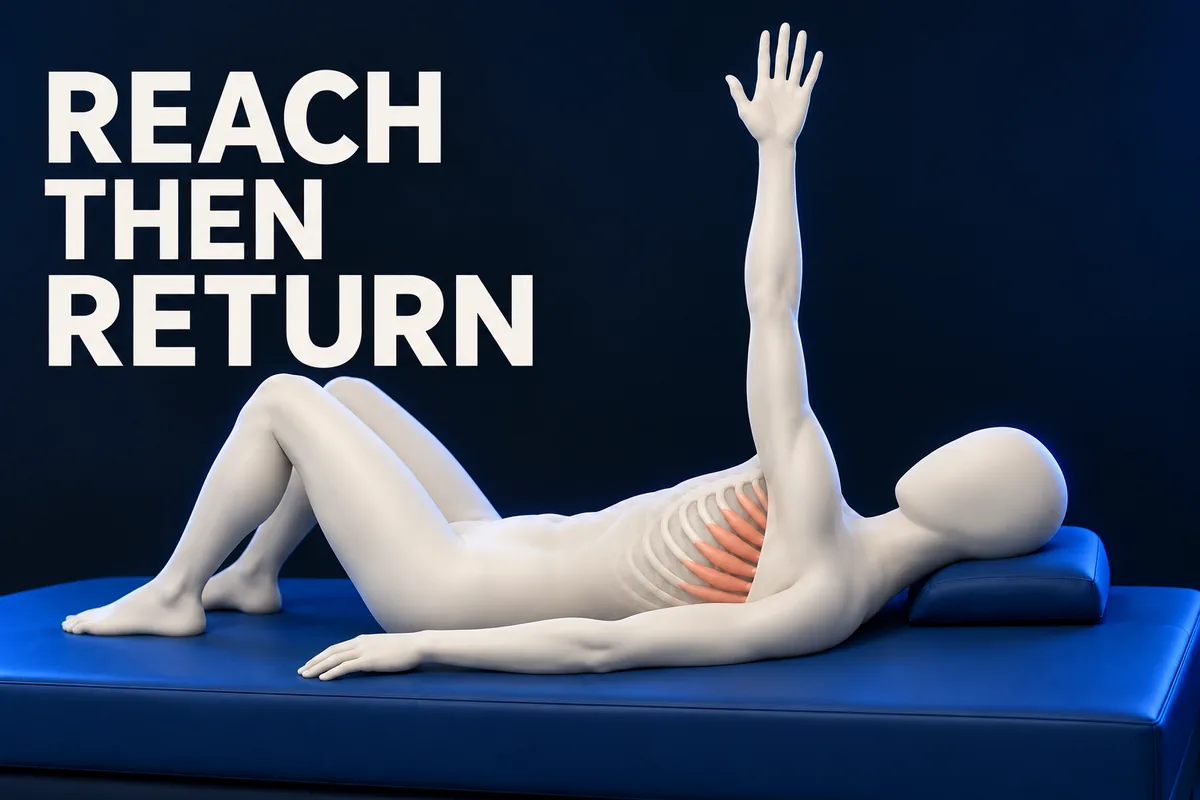
Lie on a stable bed or exercise surface, with comfortable head support if needed. The permitted arm starts pointing toward the ceiling, with the elbow straight without forcing it to lock. The other arm can rest by your side. If you cannot reach this starting position comfortably within your own plan, do not force or assist the arm upward just to attempt the exercise. Ask for a suitable alternative.
Reach a little and return gently
Keep the hand pointing upward and make a small reach toward the ceiling. The shoulder blade glides around the ribs and the shoulder lifts slightly away from the surface; then return gently. Do not make another overhead arm arc or add a weight. Plymouth NHS instructions describe this supine movement in a clinical shoulder leaflet. Its listed review date has passed, so its clinical progression and repetition schedule are not adopted here. The movement description does not establish individual suitability.
Keep the rest of the body quiet
Breathe normally and avoid shrugging toward the ear, arching the back or twisting the trunk to reach higher. A small comfortable motion is enough for this description. No universal number of repetitions, hold time or load is prescribed. Stop for pain, instability, numbness, dizziness or difficulty maintaining the position, and seek personal advice. Do not push through symptoms to complete a count.
Compare tasks and note comfort
Seated shoulder blade squeezing moves the blades toward each other. A forward raise with a stick moves the arm through an assisted arc, while table slides support the hand on a surface. Choose only tasks permitted for you. Note whether the small reach felt comfortable, without treating height as a score or promising improvement. Return to the beginner mobility guide and explore Fitonomy Mobility for routine organization. This article’s language does not establish the app’s language availability.
A shoulder blade glide at a fixed desk loads the hands and uses a different body position. Check its support and suitability requirements rather than treating it as an automatic progression.
A separately taught palm up sideways arm slide moves the supported arm along the bed, rather than making this small blade reach. It needs its own personal clearance.