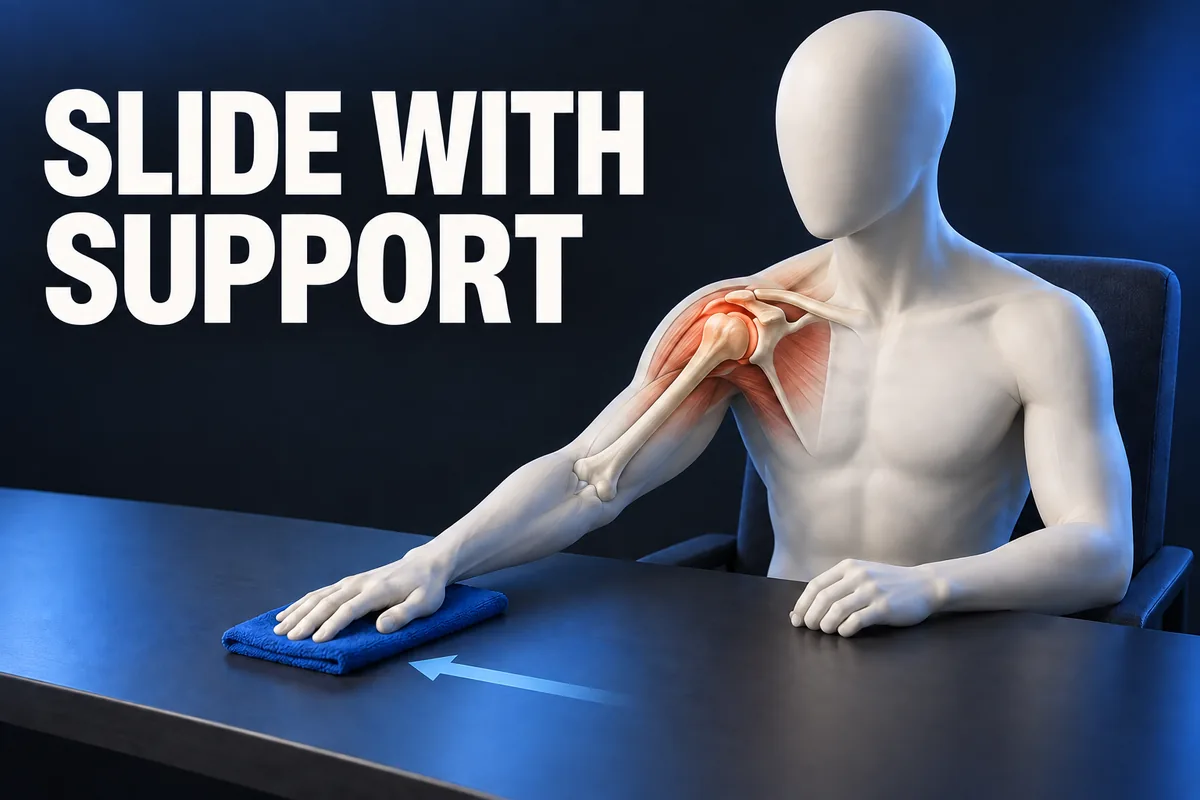
A table slide lets your hand stay supported while your shoulder explores a forward reach. Keep the movement small enough that you can return with control.
Why use the tabletop
The table carries the hand as it moves forward and back. This is a different setup from lifting the arm into the air. The Newcastle Hospitals guide describes a smooth surface and a comfortable range. It does not mean that any painful shoulder should be exercised without personal advice.
Set a stable chair and surface
Sit on a sturdy chair at a table that does not move. Place your feet on the floor and rest one or both palms on a small cloth if that helps the hands glide. Bring the chair close enough that you do not need to lean far to start. The East Lancashire guide shows the seated towel setup.
Slide forward within comfort
Let the hand and cloth travel slowly forward along the table. Allow a little movement from your body if comfortable, while keeping your neck easy and shoulders away from your ears. Stop at a short reach that feels manageable. Keep the hand in contact with the surface rather than lifting it.
Return without forcing
Slide the hand back toward you at the same gentle pace. Pause, then decide whether another comfortable slide is useful. Do not chase a distance or a fixed count. Notice whether the chair, cloth or starting position changes how easy the movement feels.
Compare other shoulder paths
A wall slide moves the hand up a vertical surface. A shoulder pendulum lets the arm hang while the body makes a small sway. The table slide keeps the hand supported in front of you. Choose the setup that matches your current movement goal, and see the beginner mobility guide for a wider routine.
Respect your limits
Stop if movement brings pain, numbness, dizziness or a loss of control. Recent injury, surgery or movement restrictions call for advice from your own clinician before trying a new drill. This general movement guide is not a treatment plan. The North Bristol NHS resource also distinguishes tabletop and wall directions.