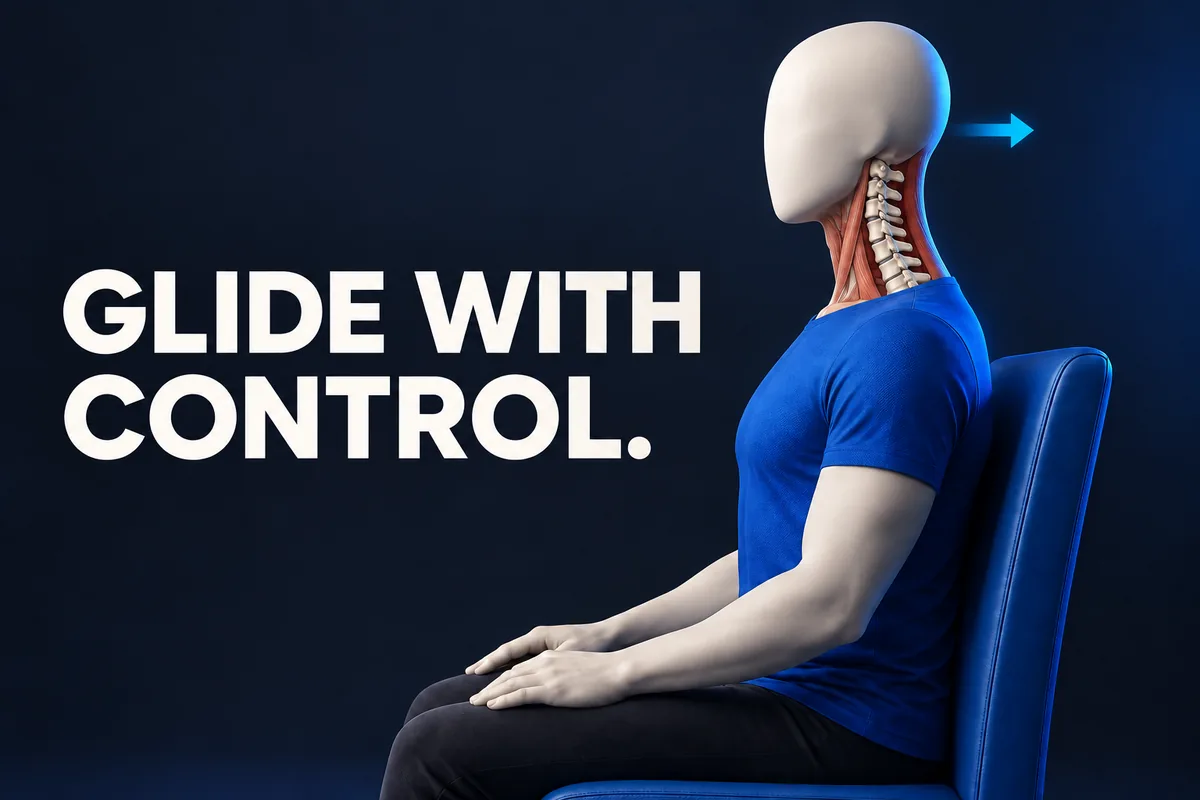
Set up a supported seat
Choose a firm chair without wheels and sit with both feet supported. Rest your hands on your thighs and let your shoulders relax. Look straight ahead from a comfortable upright position rather than making your back rigid. Skip this movement if sitting or moving your neck is uncomfortable, or if your clinician has restricted it.
Glide the head back gently
Move your head a small distance backward, as though bringing it closer over your shoulders. Let the chin come inward without dropping it toward your chest. The Cambridge neck guide describes seated chin retraction without tipping the head forward. Keep the movement gentle and within comfort; there is no distance you need to reach.
Return without reaching forward
Ease back to your comfortable starting position. Do not thrust your chin farther forward or hold the tucked position through the day. Pause and breathe normally before another small attempt. You can finish after trying the path. Clinical exercise schedules are individual guidance, not a number everyone must complete.
Keep gaze and shoulders quiet
If you start looking at the floor, reduce the movement and reset your gaze. If you look up, shrug or lean your whole torso backward, make the glide smaller. Keep your hands resting rather than pushing on your chin or head. Do not add resistance to make this exploration harder. A small calm return matters more than a deep tuck.
Compare distinct movements
The seated neck rotation guide teaches left and right turning, a different direction. The shoulder blade squeeze moves the shoulder blades rather than the head. Use the beginner mobility guide to choose one comfortable task instead of combining all three into a test. This glide does not promise to correct posture or treat neck pain.
Record and stop safely
Note the chair, your starting position and whether your gaze stayed level. Compare the same setup without treating a larger glide as proof of lasting improvement. Stop for pain, dizziness, numbness, visual disturbance or pain spreading into an arm; these are among the North Bristol stop signals. Seek appropriate individual advice rather than repeating the movement to test symptoms. The NHS neck pain guidance also advises help for persistent or concerning symptoms. Recent injury, surgery or uncertainty about suitability calls for personal guidance before trying.
The active neck side bend moves an ear toward the same side shoulder rather than gliding the head backward. Keep these directions separate instead of combining them into a test.