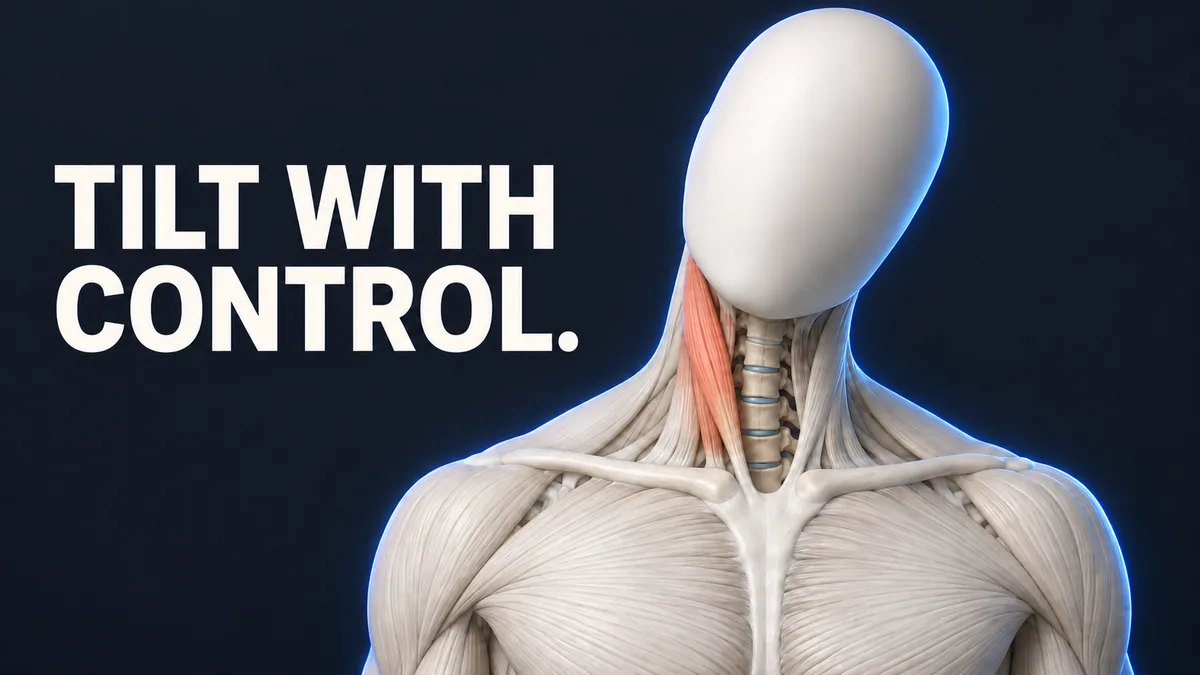
Settle into stable sitting
Sit on a firm chair without wheels, with feet supported and hands resting on your thighs. Let the shoulders relax and look ahead. Choose a position you can maintain comfortably without becoming rigid. This is a small movement exploration, not a posture correction test. The beginner mobility guide helps you choose a suitable starting task.
Tilt rather than turn
Slowly tilt the head toward one side as if bringing that ear toward the shoulder on the same side. Keep facing forward instead of looking over the shoulder or down toward the chest. The Essex NHS exercise leaflet describes gentle lateral flexion and a return to centre. Move only through a comfortable small path; touching the shoulder is not a goal.
Return before changing sides
Bring the head back to its comfortable starting position slowly. Pause, then explore the other side if it remains comfortable. Do not sweep the head in a full circle. Keep hands resting rather than pulling the head or pressing against it. You can finish after a brief attempt; clinical repetition or hold schedules are not a universal requirement.
Notice nearby movement
If a shoulder rises to meet the head, reduce the tilt and let the shoulder settle. If the chest leans, turns or the chin lifts, reset to a smaller path. Keep breathing normally. The useful question is whether you can tilt and return while nearby areas stay quiet, not whether both sides reach the same angle.
Keep directions and records distinct
The neck rotation guide teaches turning left and right. The neck retraction guide teaches a small backward glide. Neither is this sideways tilt. Choose one direction rather than combining them into a range test. Note the chair, side and whether shoulders stayed relaxed. Compare the same setup without treating one deeper tilt as lasting progress or a diagnosis.
Respect symptoms and restrictions
Stop for pain, dizziness, numbness, tingling, visual disturbance or symptoms spreading into an arm. Do not repeat the movement to test those symptoms. The NHS neck guidance advises personal help for persistent or concerning symptoms. Recent injury, surgery, a collar or professional movement restrictions need individual guidance before trying. This article does not prescribe whiplash rehabilitation or promise pain relief.