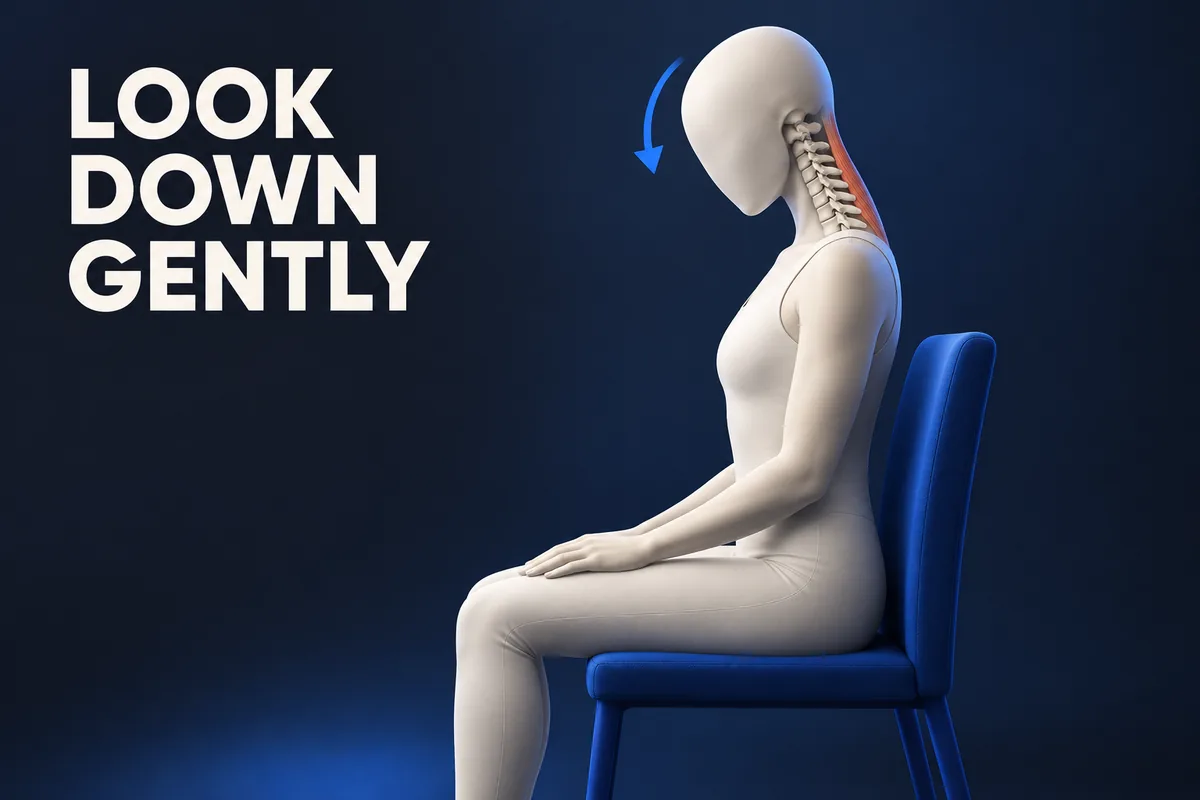
Begin with comfortable sitting
Choose a stable chair without wheels, support both feet and rest your hands on your thighs. Look ahead with relaxed shoulders and a comfortably upright trunk. Skip this task if sitting or neck movement is uncomfortable. Recent injury, surgery, a collar or professional restrictions need individual guidance first. The beginner mobility guide helps organize suitable movement choices.
Look down and return slowly
Gently lower your gaze as your chin moves toward your chest. Use a small comfortable path; touching the chest is not a goal. The Calderdale NHS movement leaflet describes neck flexion and a slow return. Bring your head back to the comfortable starting position, rather than continuing to look upward. This is active movement, not a long held stretch.
Keep hands and shoulders quiet
Keep hands resting rather than pressing on the head. Let your chest stay facing forward without folding the whole trunk. If shoulders rise, the head turns or the movement feels forced, reset and use less range. Breathe normally. You can finish after exploring the path; clinical repetition and hold schedules are not universal targets.
Keep the directions separate
The neck retraction guide teaches a backward glide with gaze level. The neck rotation guide teaches turning left and right. The side bend guide teaches a sideways tilt. Looking down is a different direction. Do not combine these into a full head circle or a test of maximum movement.
Respect symptoms and record the setup
Stop for pain, dizziness, tingling, numbness, visual changes or symptoms spreading into an arm. Do not repeat to investigate symptoms. The NHS neck guidance supports seeking personal advice for persistent or concerning symptoms. Note the chair, comfortable path and whether shoulders stayed quiet. One deeper bend is not proof of progress or a diagnosis. Fitonomy Mobility is a fitness product; this article does not prescribe rehabilitation or claim that every article language is available in the app.
Looking down and looking up are separate movements. The gentle seated look up explains a small upward motion from a stable seat with a return to neutral.
Looking down in sitting differs from a tiny nod with the head resting. The head supported nod guide separates that movement from lifting or pressing into a towel.