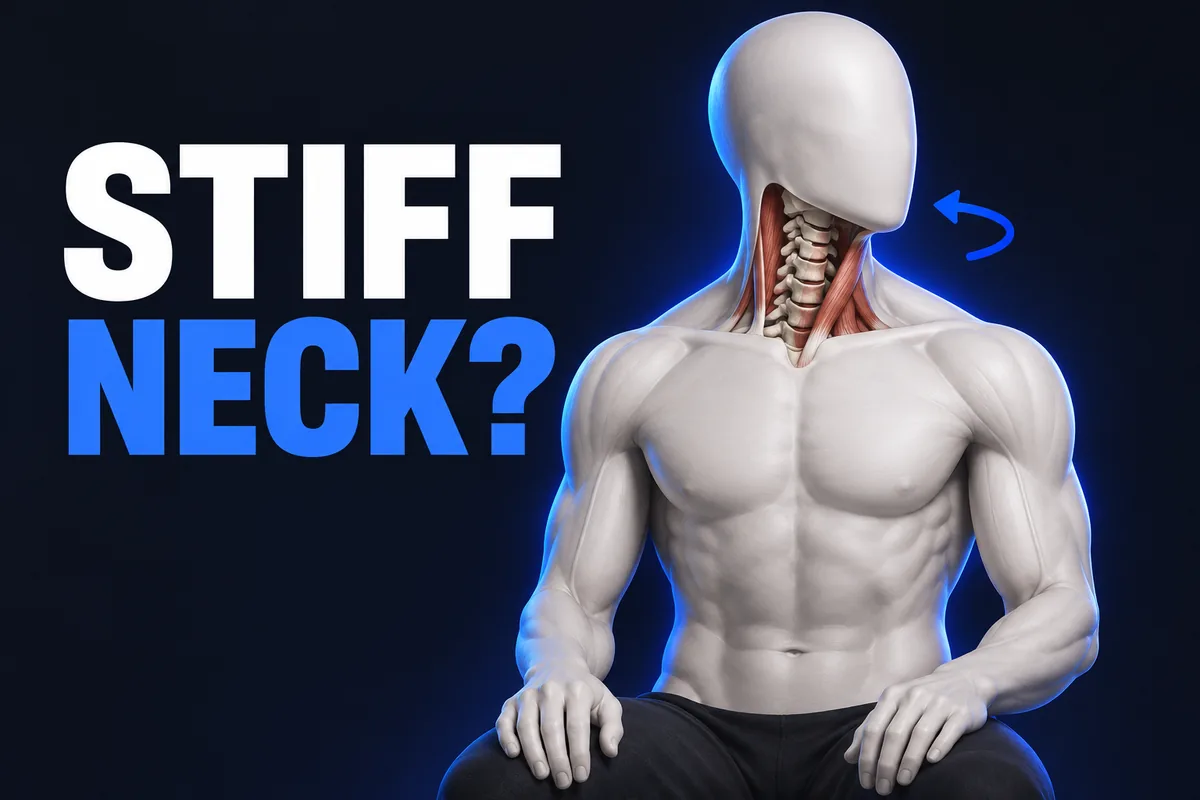
Seated neck rotation is a slow turn of the head while your chest and shoulders stay facing forward. The aim is comfortable movement, not getting your chin over your shoulder. A small turn you can control is a useful place to start.
This is one option in our beginner mobility guide. It differs from seated upper back rotation, where the chest turns and the head follows. Keeping that distinction clear makes the movement easier to practise consistently.
Set up a stable sitting position
Choose a firm chair without wheels. Sit upright without becoming rigid, with feet flat and knees comfortably bent. Let your shoulders settle and rest your hands on your thighs. Look ahead before beginning. If the chair leaves your feet hanging, use a more suitable seat.
Turn gently and return to centre
Slowly turn your head to the left as far as feels comfortable. Keep the chest forward and shoulders quiet. Pause, return to the middle, then repeat to the right. Do not pull on your chin or use your hand to increase the turn.
The NHS sitting exercise guide gives a five second hold and three turns on each side as an example. Use less if needed. The number is not a test you must complete, and a smaller comfortable turn is preferable to a forced one.
Notice three common compensations
- If your chest turns too, reduce the range and start again with your hands resting on your thighs. You do not need to brace your whole body hard.
- If you tilt an ear toward a shoulder or tip your head back, return to a neutral starting position. Think of a gentle horizontal turn rather than looking up.
- If you hold your breath or lift your shoulders, pause and relax them before another attempt. Finish the practice if the movement remains uncomfortable.
Keep the practice easy to compare
Use the same chair and starting position next time. Note whether you kept your shoulders still and whether each direction felt comfortable. Do not chase an angle or force both sides to match. A difference alone does not identify an injury.
For a separate shoulder movement, see the cross body shoulder stretch. It serves a different purpose and should not be used to pull your neck farther. The Mobility app is a fitness product; its phone based estimates are not clinical measurements or a diagnosis.
Know when to stop
Stop if you feel pain, dizziness, tingling or weakness. Seek individual advice after a recent injury or when unsure whether this exercise suits you. The NHS neck pain guidance recommends medical advice for symptoms that persist for weeks or occur with other symptoms such as pins and needles. Do not use repeated turns to test or treat those symptoms.
For a different seated neck direction, the small backward head glide keeps your gaze level rather than turning left or right.
For a different head direction, the gentle sideways neck tilt keeps the chest facing forward and shoulders quiet instead of looking over a shoulder.