Check the position first
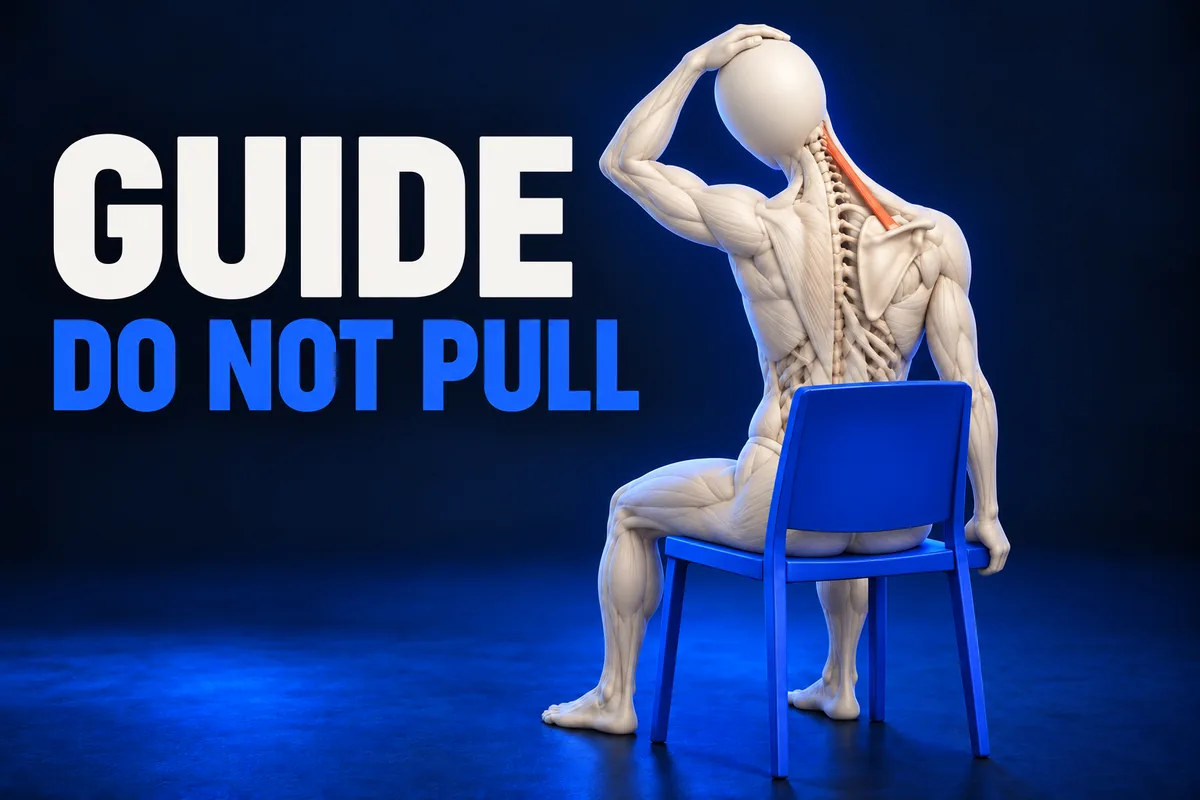
Use a firm chair without wheels, with both feet supported. Start after easy activity, as Mayo Clinic advises. Recent neck injury, surgery, a collar or movement restrictions need individual guidance first. This is a held flexibility option, not a test or a treatment for neck pain. Choose a position you can leave comfortably.
Anchor one hand without strain
For the right side, lightly hold the seat with your right hand and keep that arm low. Rest your left hand on top of your head without pressing. Kenhub’s anatomy guide describes the levator scapulae connecting the upper neck and shoulder blade. Do not force the right shoulder downward or use the guiding hand as a lever.
Guide a small forward turn and tilt
Following the CUH levator instructions, gently bring the head forward, then turn and tilt a little to the left. Allow only a small body lean to the left while staying supported on the seat. Look for mild tension along the right back and side of the neck, not contact between chin and chest or ear and shoulder. Do not pull the head.
Release without pulling
Breathe normally without bouncing. CUH leaves hold and repeat amounts for individual instruction, so there is no required time here. Ease the body upright and the head back to neutral with light guidance, then lower the helping arm and release the seat before changing sides. Stop for pain, dizziness, tingling, numbness, visual changes or symptoms spreading into an arm. Do not repeat to investigate symptoms.
Record the setup rather than depth
Note chair, anchored side and comfortable direction. A single easier attempt is not proof of lasting improvement. The side bend guide and neck rotation guide teach separate active directions with hands resting. Do not add this combined hold onto those movements as a range test. Use the beginner mobility guide to choose one suitable task.