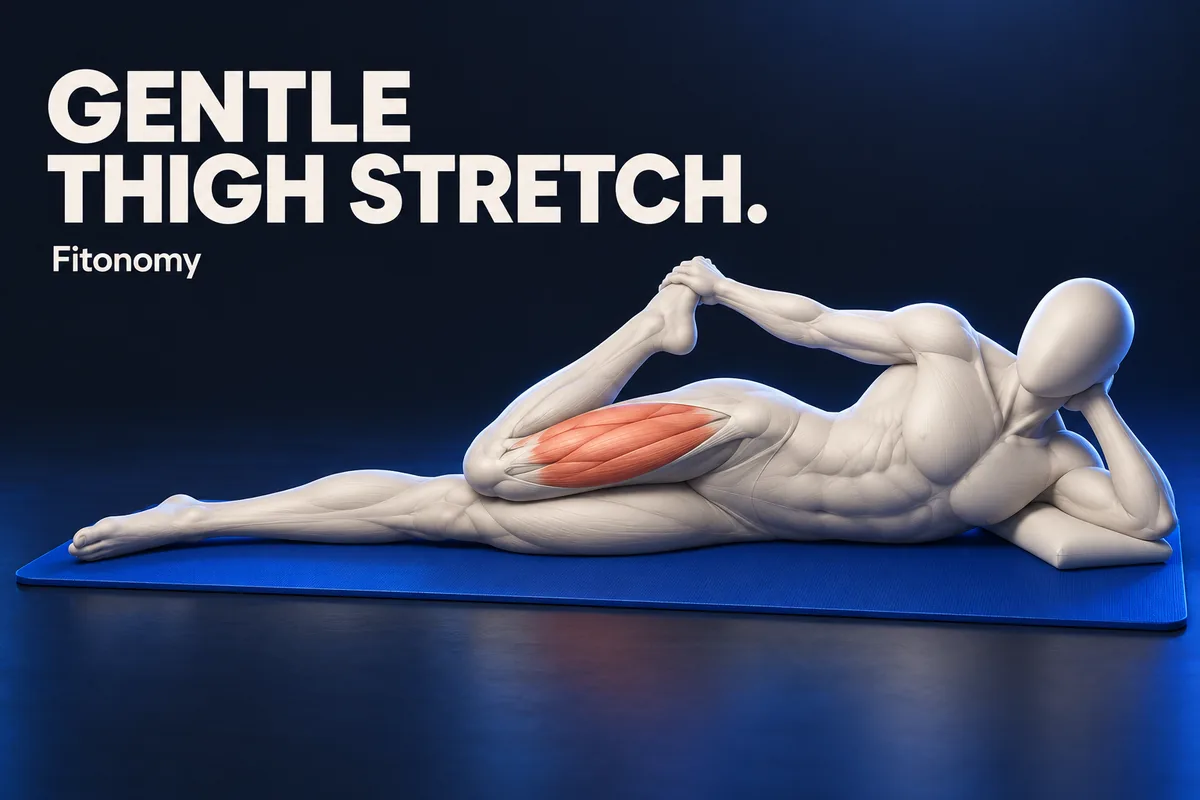
Choose a comfortable floor setup
Try this held stretch after suitable light activity, only if lying down and getting up are comfortable. It removes standing balance from the task, not every difficulty. Injury, recent surgery, pregnancy, symptoms or uncertainty call for individual suitability advice. This is general flexibility practice, not treatment.
Bend the upper knee
Lie on your left side on a stable mat with your head comfortably supported. Bend the right knee and bring the heel behind you. The NHS thigh stretch uses the right hand at the top of that foot to guide it gently toward the right buttock. Keep the knees close. Do not twist the foot or force heel contact. If reaching is uncomfortable, skip the hold rather than adding a strap yourself.
Keep the pelvis quiet
Use only enough contact for a mild pull along the front of the upper thigh. Keep the hips stacked rather than rolling backward or arching the lower back to bring the heel closer. The hand is not a lever for a deeper bend. Stop for knee or hip pain, pinching, tingling or lost control. A smaller heel gap is not a score.
Release before turning
Breathe normally without bouncing. The NHS gives fifteen to twenty seconds as an example, not a required rehabilitation dose. Release earlier if comfort changes. Let go gently and lower the foot with control before changing position. Turn slowly and consider the other side only if you can settle comfortably. Do not roll while gripping the foot.
Compare the same support
Note side, head support, comfortable hold and whether the pelvis stayed quiet. One deeper attempt does not prove lasting progress. The standing quadriceps stretch uses a different base; the seated hamstring stretch targets the back of the thigh. Use the beginner mobility guide to choose suitable practice. These translations do not establish Mobility app language support. No pain relief or range gain is promised.