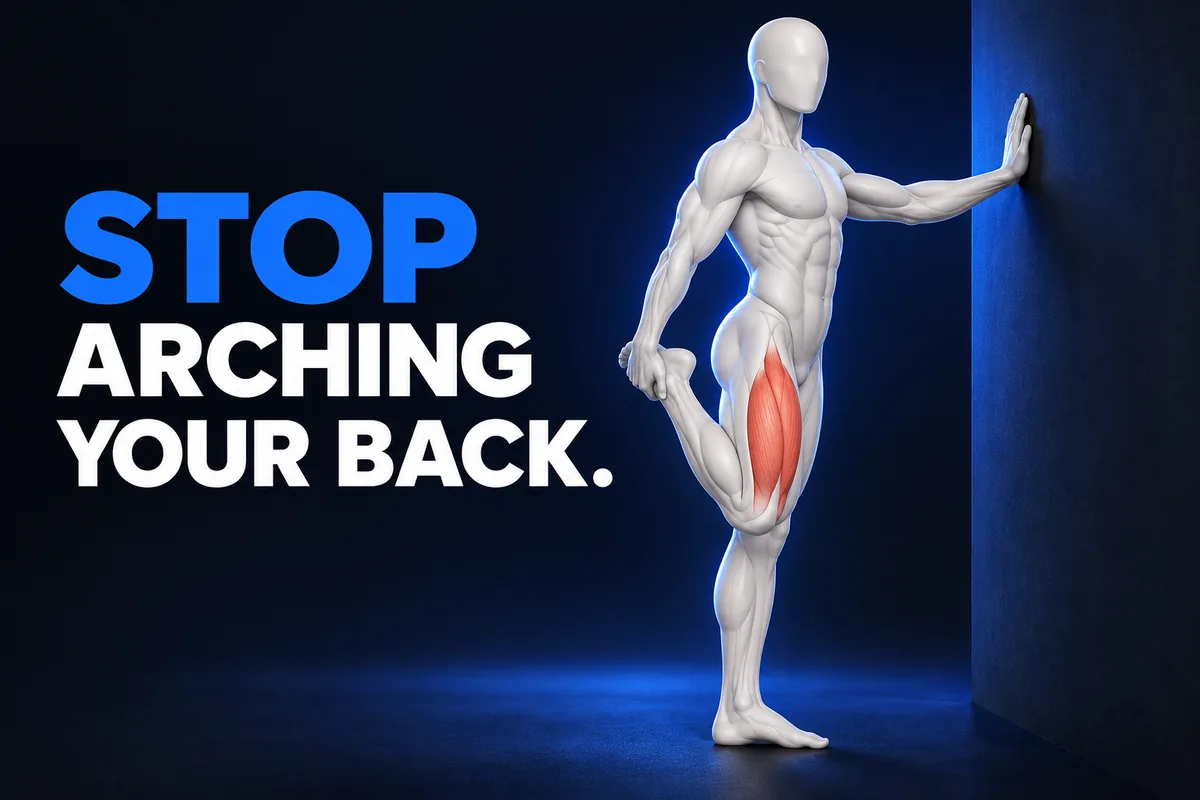
A standing quadriceps stretch brings one heel behind you while you hold a stable support. The aim is a mild stretch along the front of the thigh, not pulling the heel as close to your buttock as possible. More back arch is not more useful thigh movement.
This is general flexibility practice. It is not a test of knee health or a treatment for pain. If an injury, recent surgery or a condition affects your movement, ask a qualified clinician which version is appropriate.
Set up your support first
Begin with five to ten minutes of easy activity, such as walking. Stand beside a solid wall or fixed exercise support on a surface where your feet will not slip. Check that you can hold it comfortably before lifting a foot.
Rest one hand on the support. Keep the standing foot grounded and the standing knee comfortably unlocked. If standing on one leg feels unstable even with support, leave this version out.
Bring the heel behind you
- Bend one knee and gently hold the ankle with the hand on that side. Avoid twisting the foot to reach it.
- Keep the knees close and the torso comfortably upright. Light abdominal tension can help you avoid pushing the belly forward and arching the lower back.
- Move only far enough to feel a mild pull at the front of the thigh. Breathe normally without bouncing or yanking the ankle.
- Release your grip slowly and place the foot down before changing sides. Keep the support until both feet are settled.
Mayo Clinic's basic stretch guide describes support, close knees and a hold of about thirty seconds. For a first practice, try one comfortable hold on each side, releasing sooner if needed. That is an adjustable starting example, not a required dose or a reason to tolerate pain.
If the position feels awkward
Cannot reach your ankle? Do not jerk the leg upward, twist or abandon your hand support. Skip this version and ask for a suitable alternative. The half kneeling hip flexor stretch addresses a different movement and is only an option if kneeling is comfortable; it is not an identical substitute.
Back arching or knee moving far forward? Reduce the pull and reset your stance. Knee pain, tingling or numbness means stop, rather than stretch harder. Mayo Clinic's flexibility guidance emphasizes gentle movement and avoiding pain.
Track the setup, not heel distance
Note the side, support, comfortable hold time and whether your torso stayed steady. Use the same setup next time. A smaller heel gap can come from a changed back position, so it is not proof of improved flexibility.
The beginner mobility guide helps you place one or two suitable movements in a repeatable routine. A deeper stretch or a longer hold is not necessary every session.