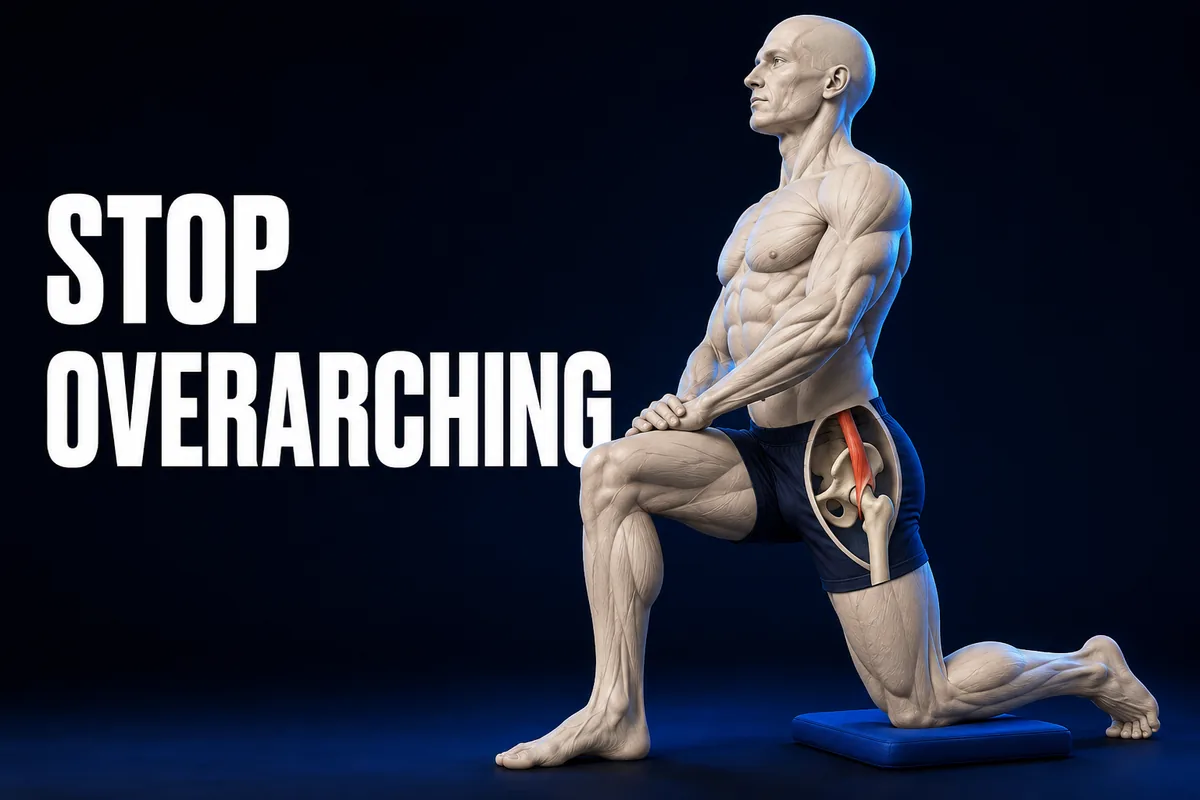
The half kneeling hip flexor stretch uses one knee on the floor and the opposite foot in front. It can be a useful way to explore a comfortable stretch at the front of the rear hip. Moving farther is not the goal if the extra distance comes from arching your lower back.
For a different front thigh position, the standing quadriceps stretch uses hand support and a bent knee. It is a separate movement, not an identical replacement for this hip stretch.
For a separate active movement, seated hip marching lifts a bent knee from a chair. It practises control rather than holding this kneeling stretch.
Our beginner mobility guide helps you fit this stretch into a manageable routine without working through every exercise. For a separate upper body movement, seated thoracic rotation practices a gentle turn from a stable chair; it is not a replacement for a hip stretch.
Prepare a comfortable base
First warm up with light activity. Mayo Clinic’s stretching guide suggests five to ten minutes and keeping stretches gentle. Place a folded towel or pad under the knee that will rest on the floor.
Bring the other foot forward, with that knee roughly above the ankle. Start with the rear knee beneath its hip and the trunk tall. Rest your hands on the front thigh for balance. If getting into or holding this position hurts, do not force it.
Move through the hip, not a bigger back arch
- Gently engage your abdomen and keep the pelvis steady. Think of keeping your ribs above your pelvis rather than lifting your chest as high as possible.
- Shift forward a small amount while keeping your rear knee supported. A light squeeze of the buttock on the kneeling side may help you maintain the position.
- Pause when you feel a mild stretch at the front of the rear hip or upper thigh. Breathe normally and ease back out with control.
The ACE exercise instructions emphasize a stable pelvis and avoiding a lower back arch. You may need only a small movement. Do not add an overhead reach or a deep lunge just to make the stretch look more dramatic.
How long should you hold?
Mayo Clinic gives about 30 seconds as a general hold example. Use a shorter comfortable hold if needed, then change sides. The timing is a guide, not a challenge to endure discomfort. Do not bounce or have someone push you deeper.
Check these common mistakes
- Pressure at the kneeling knee: add cushioning and reassess the position. Stop if it remains painful.
- Ribs flare upward as you move forward: ease back, restore a tall trunk and try a smaller shift.
- Sharp discomfort or a pinching sensation: stop rather than trying to stretch through it.
An injury, recent surgery or a health condition affecting your hips, knees or back calls for advice from your healthcare professional about suitable stretches. This exercise does not identify the cause of stiffness or treat a diagnosis.
Keep your observations useful
Note the side, knee support and whether you could keep the pelvis steady. Compare comfortable attempts with the same setup over time. One deeper stretch does not prove lasting mobility improvement.
Our guide to mobility and flexibility explains why available range and control are related. Fitonomy Mobility offers guided movement routines and currently uses English. Phone readings are fitness estimates, not clinical measurements.
If kneeling on the floor is unsuitable, try the supported standing hip stretch with both feet grounded.