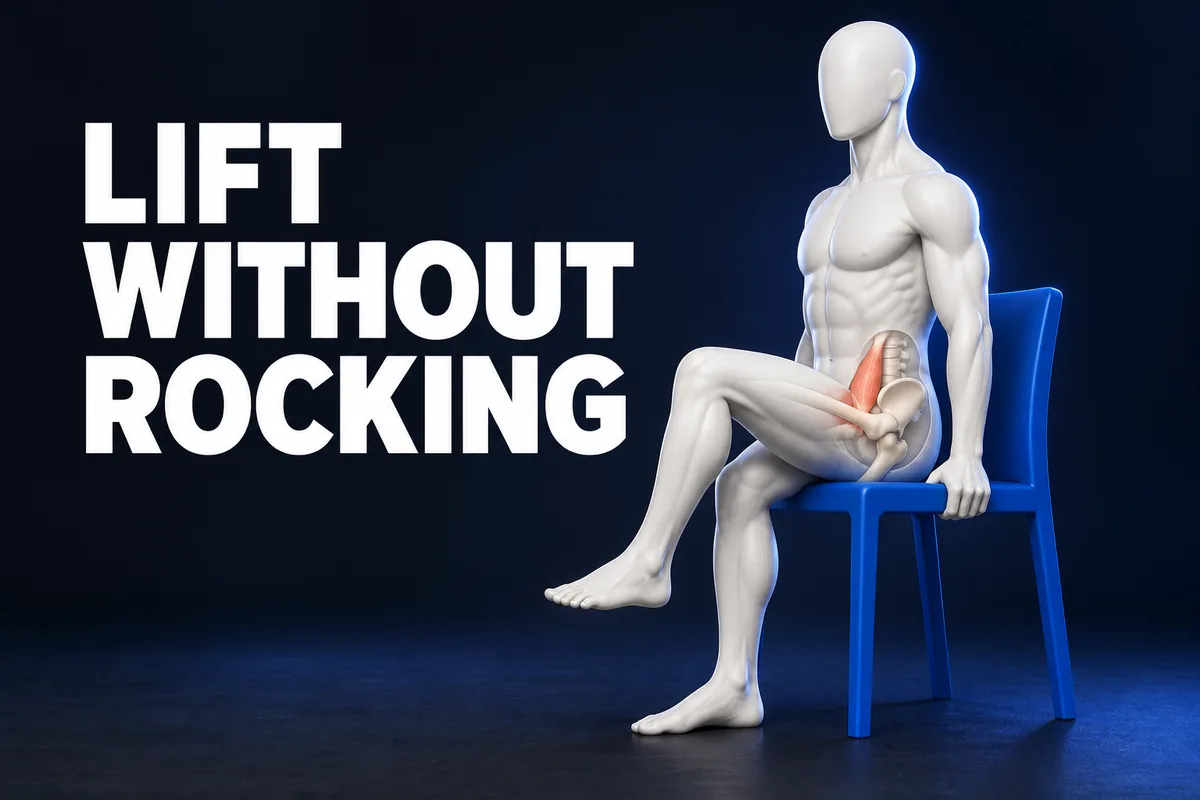
Seated hip marching means lifting one bent knee while sitting, then returning the foot before changing sides. The useful challenge is keeping the movement comfortable and controlled. A higher knee is not a better repetition if you have to rock backward to reach it.
For a supported movement while lying down, heel slides explore knee bending with the heel staying on the surface.
Seated marching does not train the same position as a rotation stretch. Our beginner hip rotation guide explains supported floor setup and when it may be unsuitable.
Start with a stable seat
Use a sturdy chair without wheels on a secure surface. Sit upright with both feet flat and your knees comfortably bent. Move away from the backrest without perching so close to the edge that you could slide. Hold the sides of the seat lightly for support.
The NHS sitting exercise guide demonstrates this movement with an upright torso, a bent knee lift and controlled foot placement. If you are unsure whether the exercise suits you, check with a health professional involved in your care.
Lift, lower and reset
- Keep one foot planted. Slowly lift the opposite knee only as far as feels comfortable, leaving the knee bent.
- Let the thigh rise without pulling it upward with your hands. Avoid leaning back or holding your breath.
- Lower the foot gently and settle both feet before changing sides. Think of two separate controlled lifts rather than a fast march.
Begin with a few attempts. The NHS example uses five lifts per leg; you can start with fewer and rest between attempts. The count is a guide, not a test you have to pass.
When the torso starts moving
If you rock backward, lower the knee and try a smaller lift. If the chair moves, stop and secure the setup before continuing. If you grip the seat hard, pause and check whether the range or effort is too much today.
Do not add ankle weights or pull the knee toward your chest to force a larger range. This guide is about simple movement control. Stop for pain, pinching, tingling or a feeling of instability rather than forcing the next repetition.
Choose and track the right task
This is active hip movement. A kneeling hip flexor stretch uses a different position and a held stretch; neither movement replaces the other automatically. Seated ankle circles explore a different joint while using chair support.
Record the chair, side, number of lifts and whether the torso stayed steady. Compare the same setup across sessions. A small smooth lift is useful information, but it does not diagnose stiffness or prove a permanent change in mobility.
Use our beginner mobility guide to choose a manageable practice. After an injury, recent surgery or persistent symptoms, follow individual clinical guidance rather than adopting a general example as rehabilitation.
For another seated movement, continue with Seated Pelvic Tilts: Explore Pelvis Movement on a Chair.
Use a stable support and a small controlled side path while your toes face forward and your trunk stays quiet. Supported Standing Side Leg Lift With a Level Pelvis
When a stable worktop makes standing safe, compare this seated motion with the supported standing hip march for a small forward knee lift.
For a sideways hip path from the same stable chair, see the seated hip step guide; marching raises the knee forward instead.