Set up a stable chair
Choose a firm chair that cannot roll or slide. Sit with both feet on a clear, level floor and enough space to either side. Keep your weight centered on the seat. The East Kent hospital movement guide shows a seated sideways leg movement, but its rehabilitation schedule is not a general instruction.
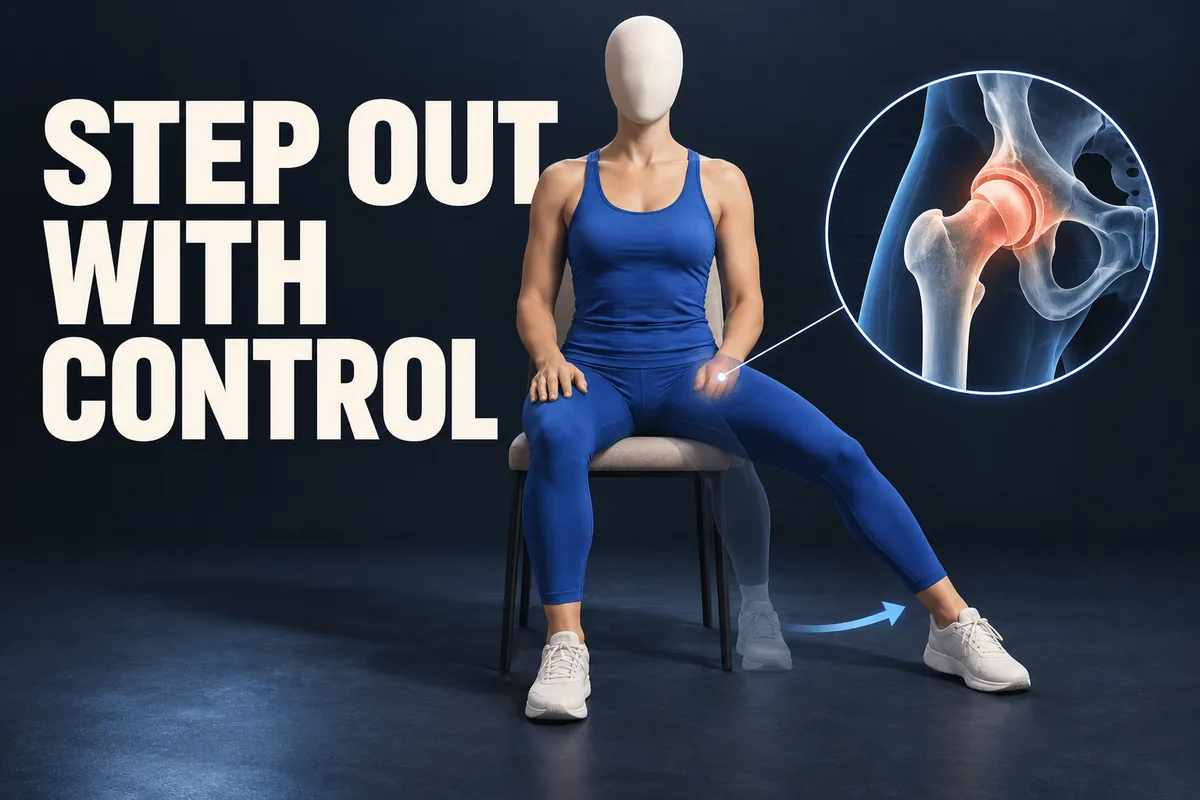
Move one leg to the side
Lift one foot only enough to clear the floor. Move that knee and foot a small distance outward together, then place the foot down. Let the movement come from the hip rather than leaning your whole trunk. The AdventHealth seated movement guide also shows a side path from a chair. There is no target width.
Return along the same path
Lightly lift the moving foot again and bring it back toward its starting place. Keep the other foot on the floor and your pelvis quiet. Pause before changing sides. A seated hip march lifts the knee forward and up; this movement travels sideways instead.
Compare the two sides calmly
Try the other leg if the first felt comfortable. Notice whether your body leaned or whether one side needed a smaller path. A difference is an observation, not a diagnosis or a reason to force a wider step. The mobility progress journal offers a way to record the chair and range you used.
Choose an easier position when needed
If lifting the foot is awkward, make the path smaller or stop. The lying sideways leg slide supports the leg on a surface but requires floor or bed access. Stop for pain, dizziness or loss of control. After recent hip surgery, injury or movement restrictions, follow your own clinician's instructions instead of a general article.