Choose a supported position
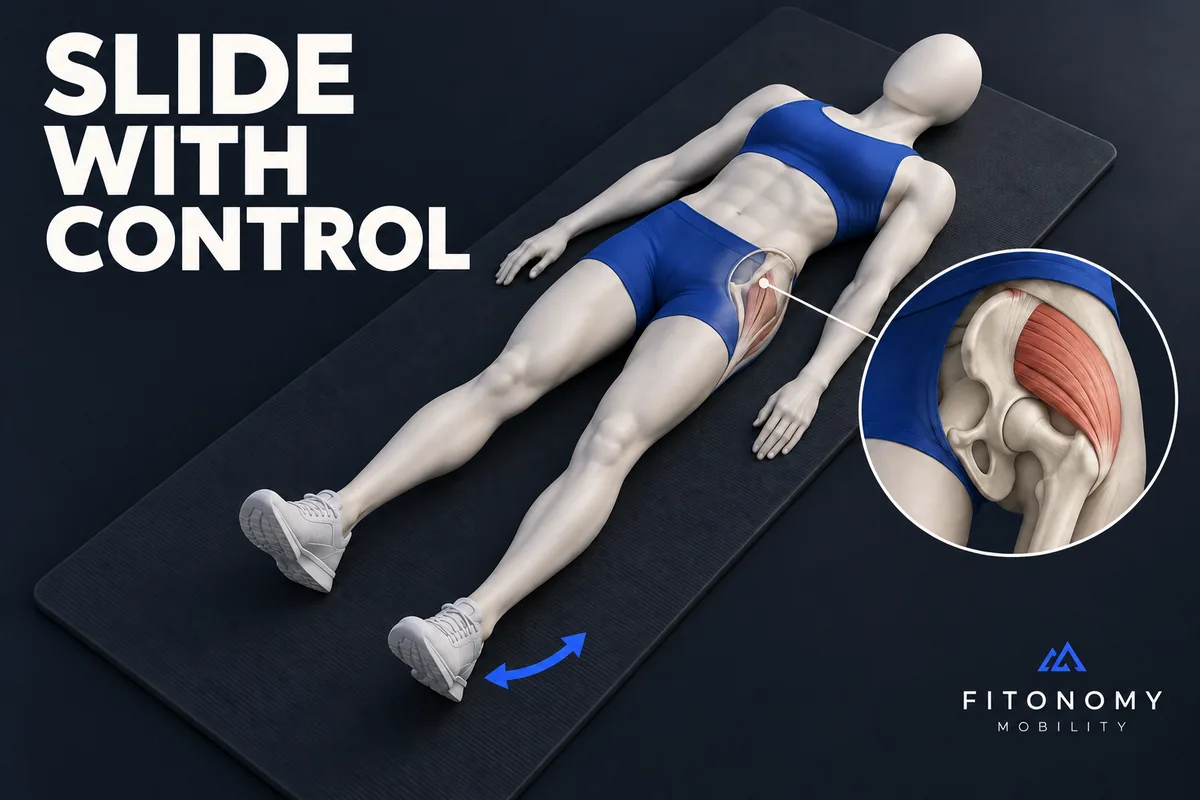
Use a firm bed or a mat on a secure floor with room beside your leg. Choose a position you can enter and leave comfortably, away from a bed edge. Lie on your back, support your head if needed and let your arms rest. Keep the moving leg comfortably straight without pressing the knee into a lock.
Slide one leg sideways
Slowly move one leg a small distance away from your body along the surface. Keep the leg supported rather than lifting it. The Cambridge NHS hip movement guide describes a straight knee and a comfortable sideways range. The Physitrack demonstration uses a sliding sheet under the leg. A suitable smooth support may help if the surface catches; do not drag harder or make your whole mat slippery.
Return along the same path
Bring the leg gently back toward its starting position. Avoid pulling it across the other leg. Breathe normally and pause before another attempt or changing sides. There is no required distance, hold or repetition count for this general exploration. Individual clinical instructions take priority.
Keep the movement at the hip
Notice whether your pelvis rolls, your trunk shifts or the foot turns outward to make a bigger gap. Reduce the slide if that happens. Let the knee and toes face generally upward without forcing their position. A standing side leg lift has different support and balance demands. The side lying clam opens a bent knee while the feet touch; it is a different task.
Record a repeatable setup
Note the side, surface and any sliding support, plus one observation such as pelvis stayed still or used less range. Compare the same setup later rather than treating one wider slide as lasting improvement. Use the beginner mobility guide to choose one suitable movement; the neighboring exercises are not a checklist to finish.
Respect personal limits
Stop for pain, pinching, numbness or loss of control. Do not add weights, bands, a passive pull or forced knee straightening. Recent injury, hip surgery or persistent symptoms require personal advice before trying a new movement. The cited patient demonstrations do not provide medical clearance, a universal rehabilitation schedule or a promise to treat stiffness.
If lying down is inconvenient, the seated side step guide offers a different lateral hip path from a stable chair.
For a gentle held inner thigh position rather than an active sideways slide, consider the seated butterfly stretch only if sitting on the floor suits you. It does not replace this movement.