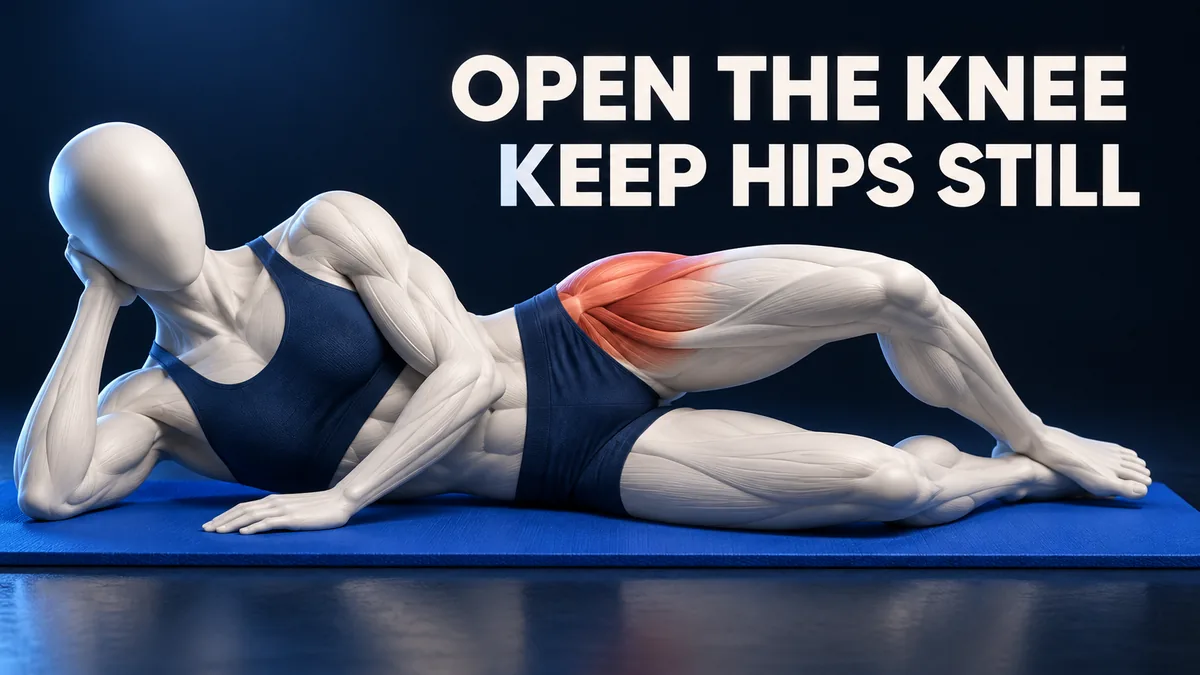
Set up on your side
Lie on a comfortable mat with your head supported. Bend both hips and knees in front of you so your knees are stacked and your feet rest together. Keep the trunk in an easy line rather than twisting backward. The Cambridge NHS instructions describe this bent knee starting position.
Open the upper knee
Keep the feet touching and slowly lift only the top knee. A small gap is enough; the movement is at the hip, not a roll of the whole body. Breathe normally. The Bexley NHS leaflet shows the feet remaining together as the knee rises.
Use a hand to check the pelvis
Rest your free hand lightly on the upper side of your pelvis. Notice if that bony area begins to turn backward with the knee. If it moves, make the opening smaller and try again without forcing. Bexley suggests this hand check and a smaller range when the pelvis moves.
Close with the same control
Lower the upper knee gently until it rests on the lower knee. Keep the feet together and avoid letting the leg fall. Pause and check that your breathing and position remain comfortable. You may try the other side if it suits you; the two sides need not open to exactly the same height.
Know when to stop
Stop if you feel pain, pinching, numbness, dizziness or a loss of control. Do not push the knee farther just to make a larger gap. After recent injury or hip surgery, or with prescribed movement limits, follow individual clinical advice. The NHS leaflets are clinical examples, not a universal repetition dose or treatment promise.
Compare another hip direction
A standing side leg lift moves a straighter leg out while you hold stable support. The hip rotation guide explores a different floor position. The beginner mobility guide can help you choose one comfortable movement rather than doing every option.
The sideways slide while lying on your back keeps a straighter leg supported and moves it along the surface; it differs from opening this bent knee.