Confirm the personally taught task
The Worcestershire lower limb guide says to perform only exercises selected by your physiotherapist, with an individual dose. Use this explanation only if this exact movement was taught and permitted for you. It is not permission after injury or surgery, a hip test or a treatment plan.
Set the supported position
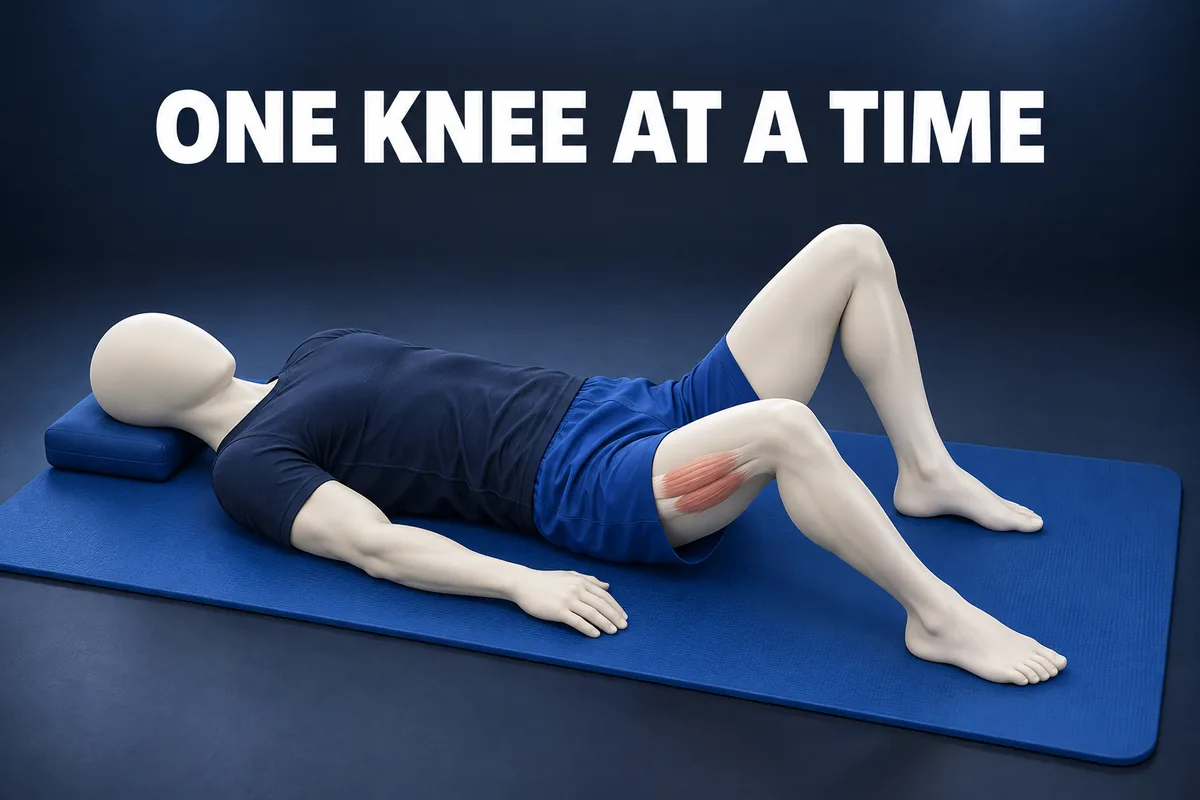
Lie on your back on the safe surface you were shown, with your head supported as needed. Start with both knees bent and both feet resting on the surface. Keep the pelvis comfortably supported. If getting down, lying comfortably or getting back up is uncertain, ask for personal guidance first.
Open only one knee
Keep one knee quiet while the other bent leg opens slowly a small distance to the side. The name does not mean dropping the leg. Follow the foot contact and range you were taught; do not pin or twist the foot, push the knee down or chase floor contact. Reduce the movement if the pelvis rolls.
Return without a body roll
Bring the same knee back toward its starting position with gentle abdominal control and normal breathing. The separate surgery leaflet also describes a short opening and return, but its postoperative days and repetitions are not your general routine. Your clinician’s range, dose and restrictions take priority.
Compare and record the task
Knee rolls move both knees together. A side lying clam starts on the side with feet touching. Record your actual support, side and comfortable control, not a guessed normal angle. Stop for pain, pinching, tingling, swelling or instability and seek advice. The beginner mobility guide helps organize practice; its article languages do not establish Mobility app language support.