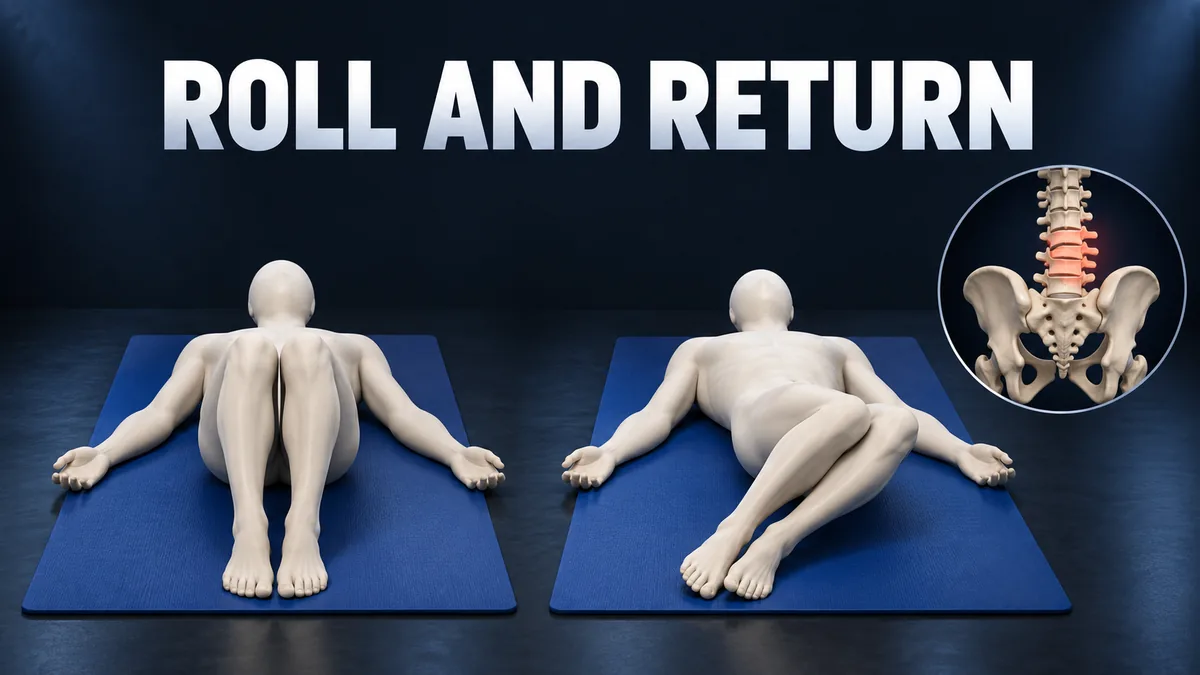
Knee rolls create a small rotational path through the lower trunk while the upper body rests on a stable surface. Comfortable control matters more than range.
Choose a stable position
Lie on a firm comfortable surface with your head supported if needed. Bend both knees, place the feet down, and let the shoulders and upper trunk settle.
Move both knees together
Keep the knees close and move them slowly toward one side. The Cambridge NHS guide describes the same side to side path while the upper trunk stays still. Stop before the shoulders lift or the movement becomes a drop.
Return through center
Bring the knees back to center before moving toward the other side. The South Tees NHS guide also keeps feet and knees together and emphasizes slow movement with the pelvis supported evenly.
Compare without forcing range
Notice whether one side feels easier today without pushing farther. The Plymouth NHS guide also keeps both shoulders on the floor. Seated pelvic tilts use a forward and backward path, while thoracic rotation moves a different region.
Know when to stop
Stop for pain, dizziness, numbness, tingling, weakness, or symptoms that persist. Recent spine or abdominal surgery, fracture, pregnancy related restrictions, or professional movement limits need individual guidance. Record an observation in Fitonomy Mobility without diagnosing.
The supine pelvic tilt guide rocks the pelvis forward and backward while the knees stay centered; here the knees travel sideways.
To move one leg toward the trunk rather than rolling both knees sideways, explore the single knee to chest stretch and return slowly.