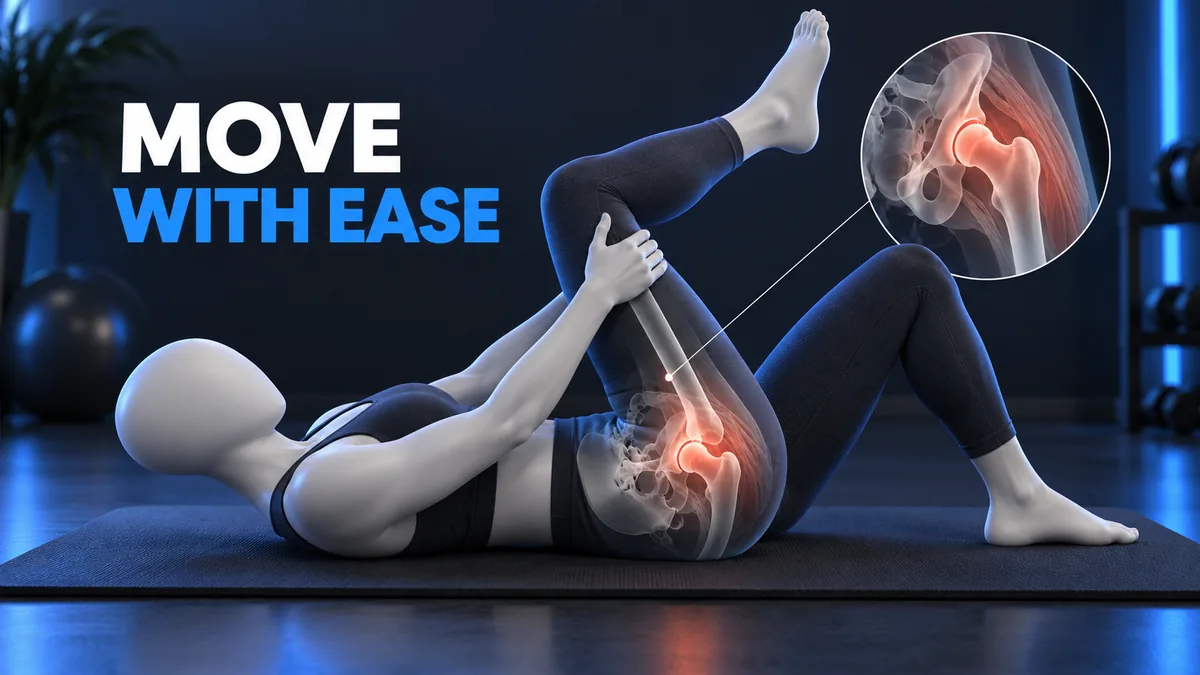
Know the movement
This movement brings one thigh toward your trunk while you lie on your back. It differs from a heel slide, where the heel stays near the floor, and from supine knee rolls, where bent knees move sideways. The AAOS hip exercise illustration shows a gentle one knee path. This is a movement guide, not treatment for a condition.
Set a stable position
Lie on a comfortable, stable mat or bed with your head supported. Leave the other knee bent and its foot resting if that feels easier for your back. Keep your shoulders relaxed and breathe normally. You can start with a small range. If a clinician has given you movement restrictions, use that individual advice instead of this general guide.
Guide the thigh, not the knee joint
Bend one knee and bring the thigh toward your chest. Support behind the thigh or around the shin without yanking the knee joint. Stop at a comfortable point rather than pulling for a deeper stretch. The AAOS instructions specifically caution against pulling at the knee. Do not press your back flat by force.
Return and compare sides
Ease the foot back to its starting place under control. Notice whether the movement felt smooth and comfortable, then try the other side if you wish. The opposite leg can stay bent and supported. You do not need to copy a clinical hold time or number of repetitions. The NHS exercise page is clinical material and asks readers to choose exercises with professional guidance.
Stop or choose a different motion
Stop if you have pain, tingling, dizziness or worsening symptoms. A supine pelvic tilt explores a different small pelvic motion, while knee rolls move both legs sideways. Choose only what fits your comfort and any personal guidance. Fitonomy Mobility can be explored for mobility routines, but this page makes no promise about a result or support for every language.