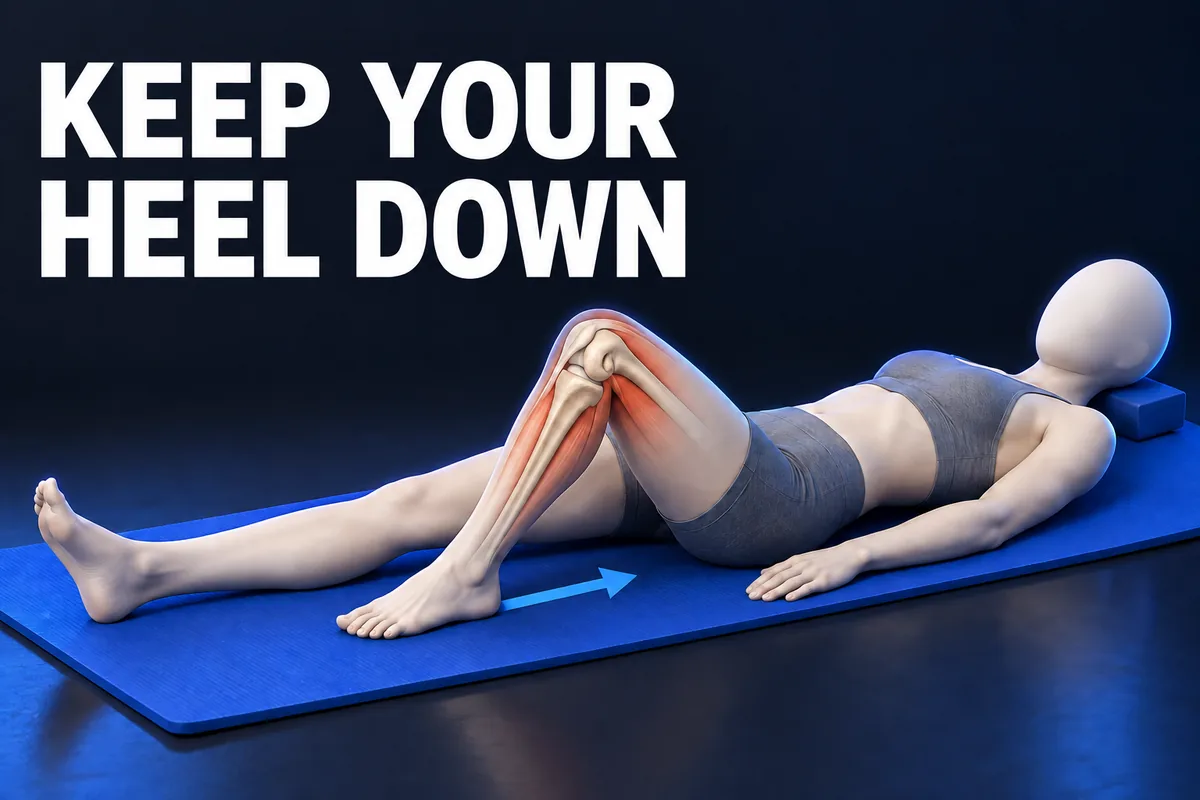
A heel slide bends and straightens the knee while the heel stays supported on a bed or floor surface. The useful task is a smooth return, not getting the foot as close to the body as possible. This guide covers gentle unassisted movement, not a test of knee health or a rehabilitation prescription.
When supported knee bending feels familiar, seated knee extension offers a distinct active straightening movement from a stable chair.
Start with a comfortable support
Choose a firm bed or a mat on a secure floor, with enough length for your leg to straighten. Use a position you can enter and leave comfortably. Stay away from the edge of a bed. If getting onto the floor is difficult, do not make the transfer part of the challenge.
Lie on your back with your head supported as needed and your arms relaxed. Let your pelvis settle. Rest your legs along the surface; the resting knee may stay bent if that makes your back more comfortable.
The South Tees NHS demonstration shows the heel moving away and back while lying down. The Sussex NHS bed exercise guide also describes a sliding knee bend. Both are patient resources with exercise amounts set for individual care.
Slide, pause and return
- Slowly bring one heel toward your body, allowing the knee to bend. Keep the heel in contact with the surface rather than lifting the foot to bring it closer.
- Stop at a comfortable point before the pelvis starts rolling or you have to pull harder. Keep the knee generally in line with the foot instead of letting it fall outward.
- Pause briefly, then slide the heel away and let the leg straighten only as far as comfortable. Do not press the knee down to force the final part.
- Breathe normally and let both legs settle before changing sides.
For a first exploration, three slow attempts on each side are one small practice example. Fewer is fine, and you can rest between attempts. This is not a clinical dose or a requirement to practise through discomfort.
Change the setup before chasing distance
If the heel catches on the surface, stop and choose a smoother suitable support rather than dragging harder. If the foot lifts, reduce the bend and slow the movement. If your hips rock, return to a smaller range with the pelvis settled.
Do not add a strap, a weight or a strong pull with your hands to force more range. An assisted exercise prescribed by a clinician has different instructions. Stop for pain, pinching, tingling or a feeling that the knee catches or gives way. Persistent symptoms, recent injury or surgery need individual guidance.
Record what you can repeat
Note the side, surface, resting leg position and number of comfortable attempts. Add one observation such as heel stayed down or pelvis stayed steady. Compare the same setup; a different mattress or starting position can change the slide. One farther attempt does not prove lasting improvement.
Seated hip marching involves lifting the thigh from a chair and is a different task. A seated hamstring stretch is a held stretch, not the same knee movement. Use the beginner mobility guide to choose an appropriate starting position instead of treating every exercise as a checklist.
There is no required heel distance or knee angle in this general practice. Choose a comfortable range you can control and follow your own clinician’s instructions if you are receiving care.
For a different knee bend with the heel off the floor, see the standing knee bend guide.
If floor access is inconvenient, the seated knee bend keeps your torso on a chair while the foot travels on the floor.