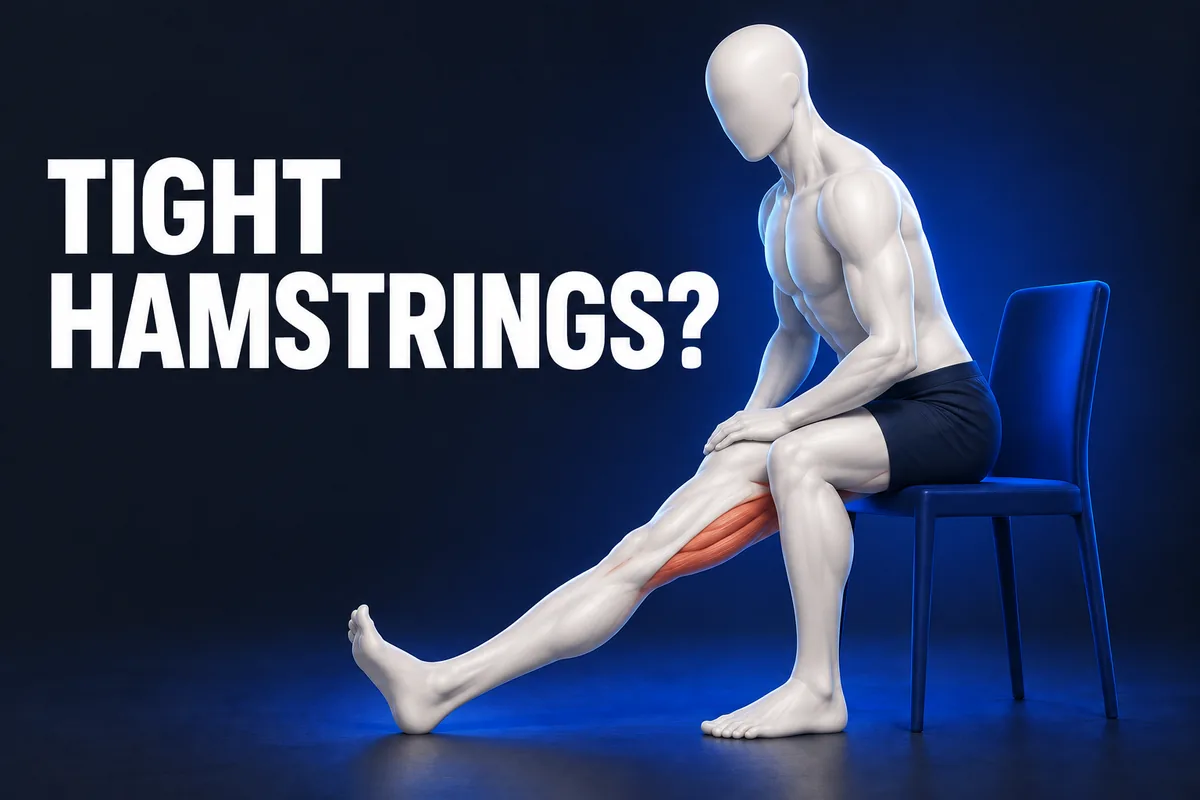
A seated hamstring stretch uses a chair so you can explore a gentle stretch at the back of the thigh without getting onto the floor. The aim is a comfortable hip hinge with one leg extended. Touching your toes is not the target, and reaching farther by rounding your back changes the movement.
Set up the chair and legs
Choose a firm chair without wheels on a nonslip surface. Sit near the front with enough seat beneath you to remain stable. Start with both feet on the floor and your back comfortably tall.
Extend one leg in front with the heel supported and the knee comfortably straight. Keep the other foot flat beneath its bent knee. Relax the extended foot rather than pulling the toes hard toward you. Rest your hands lightly on the bent thigh, without pressing on the extended knee.
Lean from the hips, not toward your toes
- Slowly tip your torso forward from the hips, keeping your back long and shoulders relaxed.
- Stop at a mild pulling sensation behind the extended thigh. A small lean can be enough; you do not need to reach your foot.
- Breathe normally, hold without bouncing, then come upright before changing legs.
The South Tees NHS demonstration uses a stable chair, an extended leg and a forward movement at the hip. Its advice to repeat as directed by a physiotherapist applies to an individual care plan, not a universal dose for every reader.
Keep the stretch comfortable
Warm up first with five to ten minutes of easy movement, or stretch after a suitable workout. Mayo Clinic's stretching guidance suggests a hold of about 30 seconds without pain or bouncing. That is general guidance, not a requirement to tolerate increasing discomfort.
For a first practice, explore one comfortable hold on each side and release sooner if needed. Stop for pain, tingling or numbness. Do not stretch through a recent strain or assume a pulling sensation explains a medical problem. Seek individual advice if symptoms persist or an injury affects the movement.
Avoid making the movement look deeper
- Rounding the back to reach farther: sit taller and use a smaller hip hinge.
- Pulling the toes strongly upward or locking the knee: relax the foot and return to a comfortable leg position.
- Sliding forward on the chair: reset your seat and heel. Stability matters more than the distance you lean.
Compare like with like
Note the chair, heel position, side, comfortable hold time and how the movement felt. Use the same setup when you try again. A different seat height or warmer muscles can change the experience, so one deeper attempt is not proof of lasting progress.
For a floor supported option that changes the knee angle, use the supine hamstring stretch guide.
Our mobility and flexibility guide explains why available range and active control are different. A standing calf stretch addresses another area of the leg. Fitonomy Mobility's phone measurements are fitness estimates, not clinical tests; this chair stretch is not a diagnostic assessment or a promise of pain relief.