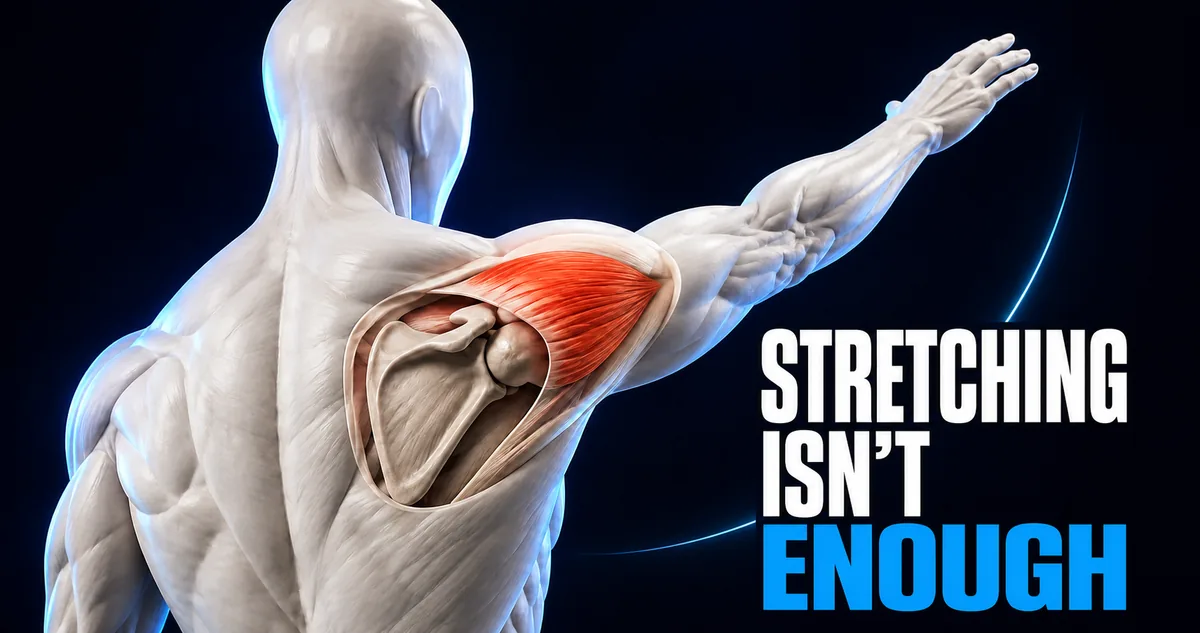
Flexibility describes how much movement is available. Mobility also considers how well you can actively use and control that movement. In everyday training, the useful question is whether you can reach the position your activity needs with comfort and control.
Ready to turn the idea into practice? Our beginner mobility guide helps you choose a comfortable starting position and organize a small routine. If you prefer a chair, seated thoracic rotation is one movement to explore with the full setup instructions.
Range and control are related
A leg that can be gently supported into a position may not reach the same place under its own effort. That does not diagnose a problem. It illustrates why reaching farther and controlling a movement are different training goals.
This is a common coaching distinction rather than a universal naming system. ACE's explanation of mobility and flexibility describes usable range as involving strength, coordination and balance alongside flexibility. Stretching and movement practice can therefore complement each other.
Try a gentle movement check
Choose an ordinary movement you want to make more comfortable, such as reaching toward a shelf. The following observation is not a medical test or a competition for the largest range.
- Walk around gently first. Stand in a comfortable position with a clear space around you.
- Slowly raise one arm toward a comfortable overhead position, then lower it. Keep breathing normally. Repeat a few times without adding weight.
- Notice whether you lean, rush or need to change the movement. Use a smaller range if that makes the motion easier to control. Do not force the arm farther with your other hand.
- Record the movement and how it felt. Compare with your own later attempts, not a photograph of someone else's body. Stop if it causes pain.
Choose practice that matches the task
If a stretch feels comfortable, it can be one part of your routine. Follow a clear demonstration and build gradually. The NHS flexibility exercise guide offers approachable home examples, including gentle upper body and lower body movements.
Also practice moving slowly through a range you can control. For a workout, choose gentle movements related to what you will do next. Cleveland Clinic explains dynamic and static stretching as different tools; a moving drill and a held stretch are not interchangeable instructions. Neither requires bouncing or forcing discomfort.
Do not turn every session into a longer stretch or a harder drill. Repeat a manageable routine before adding difficulty. A movement that becomes smoother at the same range is worth recording, even if the endpoint does not change.
Track comparable attempts
Keep the setup, side, warmup and measurement method consistent. Write down what you practiced and whether it felt controlled. A different starting position can change a reading, so one larger number does not establish lasting improvement. There is no universal number of days in which everyone gains a particular angle.
When to get individual advice
Persistent pain, a recent injury or repeated sensations of a joint giving way need individual assessment. Do not use a mobility routine to diagnose the cause or push through sharp pain. A qualified clinician can help determine which movements are appropriate.
Put the idea into your Mobility routine
Fitonomy Mobility describes a ten position assessment using phone sensor estimates for most positions, daily sessions and a full retest available every 30 days. Use the same setup when comparing readings and review the session guidance before moving. These are fitness estimates, not clinical measurements. Start with one useful movement goal and a routine you can repeat.