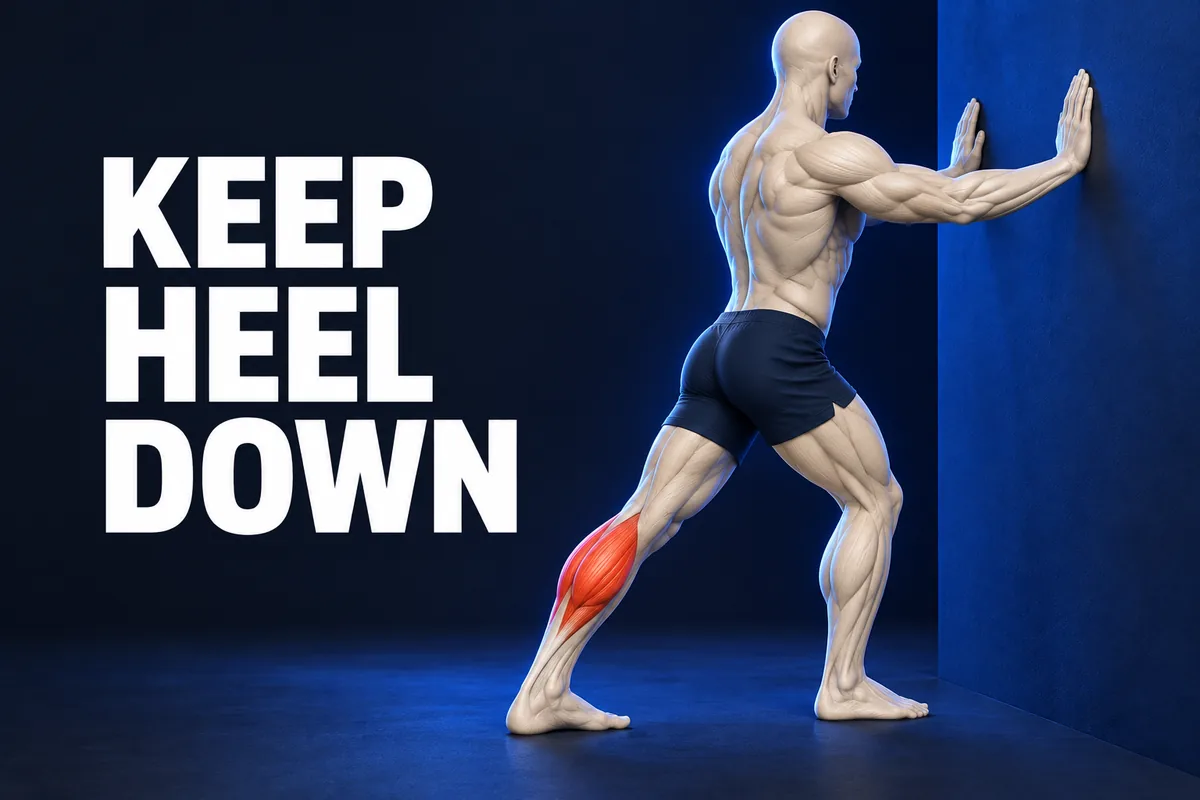
The standing calf stretch uses a split stance to explore a gentle stretch at the back of the lower leg. This guide covers the version with the rear knee straight and the rear heel on the floor. A longer stride is not automatically a better stretch.
Prepare a supported position
Use a solid wall and a floor where your feet will not slip. Warm up with five to ten minutes of light activity, or practise after a workout while you are already warm. If an injury or health condition affects your leg or balance, ask a qualified clinician which movement is suitable.
Place your hands on the wall at a comfortable height. Step one foot behind the other, leaving enough width between your feet to feel steady. Keep both feet pointing toward the wall rather than turning the rear toes outward.
Keep the rear heel grounded
- Bend the front knee gently while keeping the rear leg straight without forcing the knee backward.
- Move your body slightly toward the wall, keeping the rear heel in contact with the floor and the back long. Keep your hips facing the wall.
- Stop at a mild pull in the rear calf. Breathe normally, avoid bouncing, then ease out and change sides.
These cues follow the Mayo Clinic calf stretch. If you cannot keep the heel down comfortably, shorten the step and reduce the forward lean. Do not push harder just to copy someone else's position.
How long should you hold?
The NHS stretching guide gives 15 to 20 seconds for a calf stretch; Mayo Clinic uses about 30 seconds. These are examples, not a test you must pass. Start with a shorter comfortable hold if needed and release before you lose control or feel pain.
Three details worth checking
- Heel lifting: make the stance shorter. A raised heel changes the position this guide is teaching.
- Foot turning outward: reset the step with the toes toward the wall, within a comfortable position.
- Chasing a strong sensation: reduce the lean. Stop for pain, pinching or tingling rather than trying to stretch through it.
Compare like with like
Record which leg was behind, the approximate foot spacing and whether the rear heel stayed down. Keep footwear, support and warmup similar when you compare another session. Avoid treating a longer hold or a deeper lean as proof of lasting mobility improvement.
This stretch and the knee to wall ankle check use different knee positions. Do not compare their distances as though they were the same measurement. Use the ankle guide for its own consistent setup, without treating it as a diagnosis.
Stretching is one part of movement practice. Our mobility and flexibility guide explains the distinction. Explore guided routines in Fitonomy Mobility; phone measurements are fitness estimates, not clinical readings. This stretch is not a treatment plan for an injured calf or Achilles tendon.
For the rear knee bent variation with the heel still down, see the bent knee calf stretch; this guide keeps the rear knee straight.
You can also guide the foot while seated with a towel. The seated towel calf stretch explains where the fabric sits and how to pull gently.