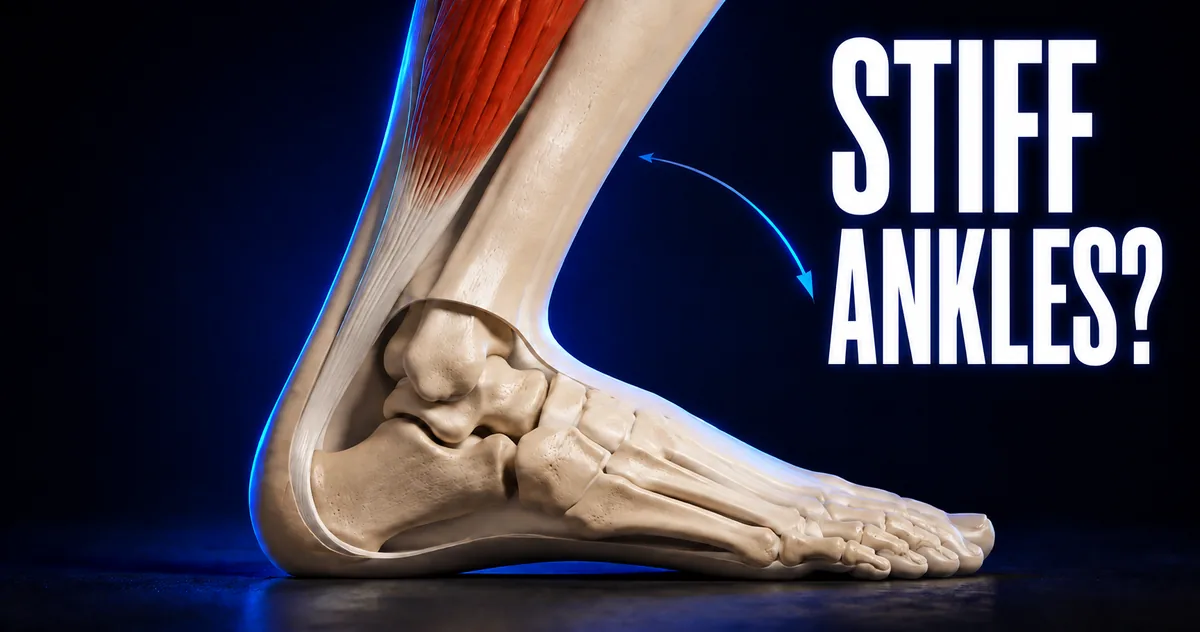
The knee to wall check observes how far your shin can move forward over a planted foot. That movement is ankle dorsiflexion. A wall and ruler can help you record it, but the result is useful only when the setup stays consistent. It is not a diagnosis or a score of your overall fitness.
What this ankle check tells you
With the knee bent and heel down, you explore one aspect of ankle movement under load. This does not measure every direction your ankle can move, or explain why a movement feels limited. Our guide to mobility and flexibility explains why available range and active control are related but different.
Prepare a repeatable setup
Use a clear wall, a firm nonslip floor and a ruler or tape measure. Try the check barefoot if standing that way is comfortable and appropriate for you. Walk gently first, and use the same brief warmup whenever you compare results. Keep a hand on the wall for balance.
This is for comfortable movement observation, not testing a fresh injury. Stop if there is pain. Seek advice for recurring symptoms, and urgent medical help after an injury if pain is severe or you cannot walk. The NHS ankle pain guide describes when to get help.
How to do the knee to wall check
- Face the wall with one foot a short distance away and the other behind for balance. Point the front foot toward the wall, with its heel and forefoot resting on the floor.
- Slowly bend the front knee toward the wall, following the direction of your toes. Touch the wall lightly if you can. Keep the front heel down and avoid bouncing or pushing with your hands.
- If you cannot reach comfortably, move the foot closer. If it is easy, move it slightly farther away and try again. Use small adjustments rather than forcing a bigger movement.
- Find the farthest position you can repeat comfortably with the heel down and the foot position unchanged. Measure along the floor from the tip of the big toe to the wall. Use centimeters and record which side you tested.
- Step away and reset before repeating. Note a few attempts and whether they agree, then use the same process on the other side. If the results vary, check the setup instead of keeping only the largest number.
The published measurement protocol uses a lunge toward a wall to assess ankle dorsiflexion. At home, treat this as a practical observation inspired by that approach, not a substitute for a clinician's standardized assessment.
Three mistakes that change the result
A lifted heel gives a different task, even if the knee reaches farther. Turning the foot outward also changes the setup. Finally, pressing hard, bouncing or measuring from a different toe makes comparisons less useful. Repeat a smaller controlled attempt rather than chasing extra distance.
Record more than one number
Use a simple note: date, side, distance in centimeters, footwear, warmup, heel contact and how the movement felt. Keep the same measuring point and floor surface. A photo of your setup can help you recreate it without comparing your body with someone else's.
A study of the lunge test in people with ankle problems found that standardized measurements could be repeatable. That does not make every small change in a home measurement meaningful. Look for a consistent pattern across comparable sessions, not one unusually large attempt.
There is no single home result here that labels your ankle healthy, injured or ready for every sport. A difference between sides is something to observe, not a diagnosis. If it is painful or affects normal activities, get individual advice instead of forcing the smaller side to match.
Turn the observation into useful practice
Keep comfortable movement practice separate from repeated maximum testing. Start with a range you control and stop before pain or heel lift. If you need a plan for ongoing stiffness or an old injury, a qualified clinician can help choose suitable exercises.
For gentle seated movement between separate checks, read the ankle circles guide. A circle is a different task, and its size does not predict your wall distance.
If you use Fitonomy Mobility, follow its guided assessment consistently and keep its results separate from this wall check. A distance in centimeters and a phone angle reading are different measures. Track a repeatable movement and a routine you can maintain, rather than treating a bigger number as the only goal.
The bent knee calf wall stretch is a held rear calf position; this ankle check measures the movement of the front shin.