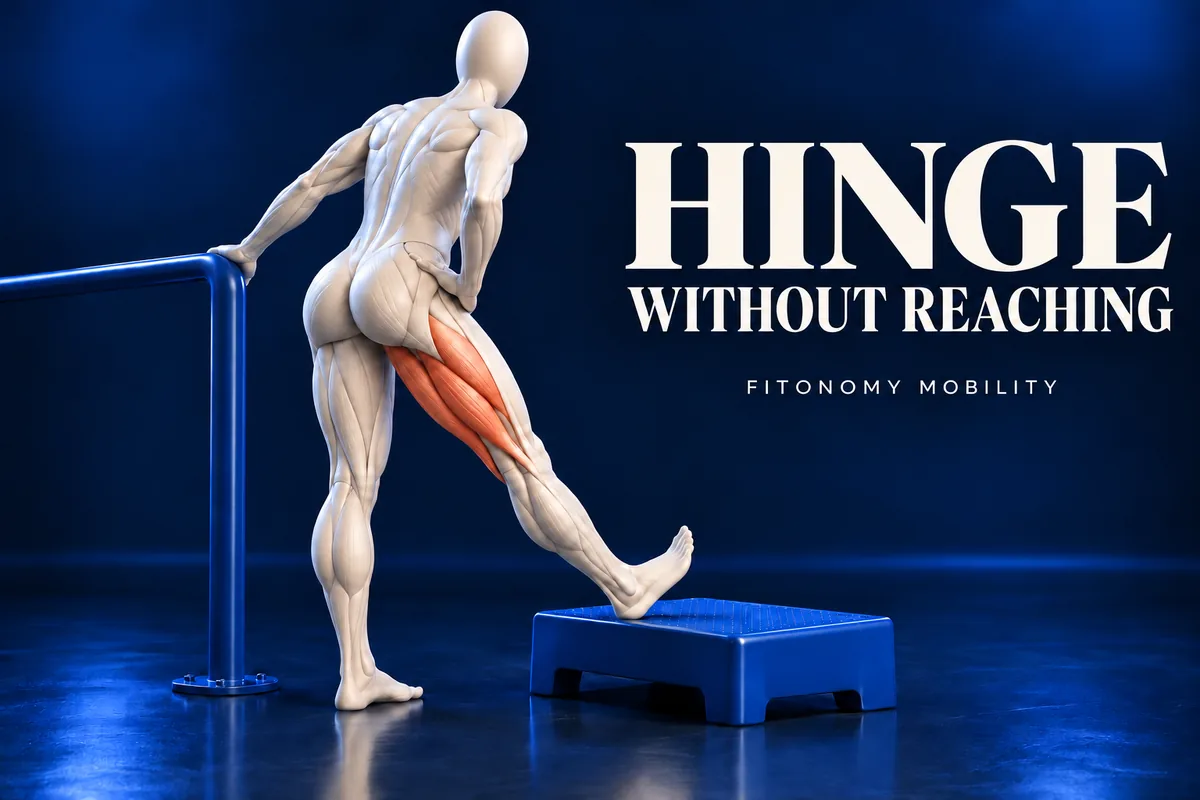
Choose separate stable supports
Use a fixed counter or rail for your hand and a stable low step or platform for your heel. Neither should roll or slide. Clear the floor first. Mayo Clinic stretching guidance recommends easy activity before stretching and individual advice when injury or health conditions affect movement. If you cannot stand steadily with support, leave this version out.
Place the heel without reaching
Hold the hand support before lifting the foot. Place one heel on a comfortable height in front of you, keeping the other foot grounded and pointing forward. Keep the knees comfortably straight without pushing them backward. A taller platform is not a better stretch. Do not stretch to reach the support or use a rolling chair.
Hinge gently from the hips
Tip forward a little at the hips with a long back. Keep your hand support and stop at a mild stretch behind the raised thigh. Do not round down to touch your toes, pull the foot or press on the knee. Breathe normally without bouncing. Pain, tingling, numbness or instability means stop, rather than push farther.
Return before changing sides
Come upright first, then carefully place the raised foot back on the floor. Change sides only after both feet are settled. The Aurora standing example uses hand support, a raised leg and a slow hip hinge. Its hold of twenty to thirty seconds is an example, not a requirement; release sooner if needed and follow personal instructions for timing and repetitions.
Compare the setup rather than depth
Record the support, heel height, side and comfortable response. Changing platform height changes the task, so a deeper lean does not prove lasting improvement. The seated version supports the pelvis on a chair; the supine version rests the trunk on the floor. The standing quadriceps stretch addresses the front thigh. Use the beginner guide to choose suitable practice. This is not a diagnosis or treatment plan, and article translations do not establish Mobility app languages.