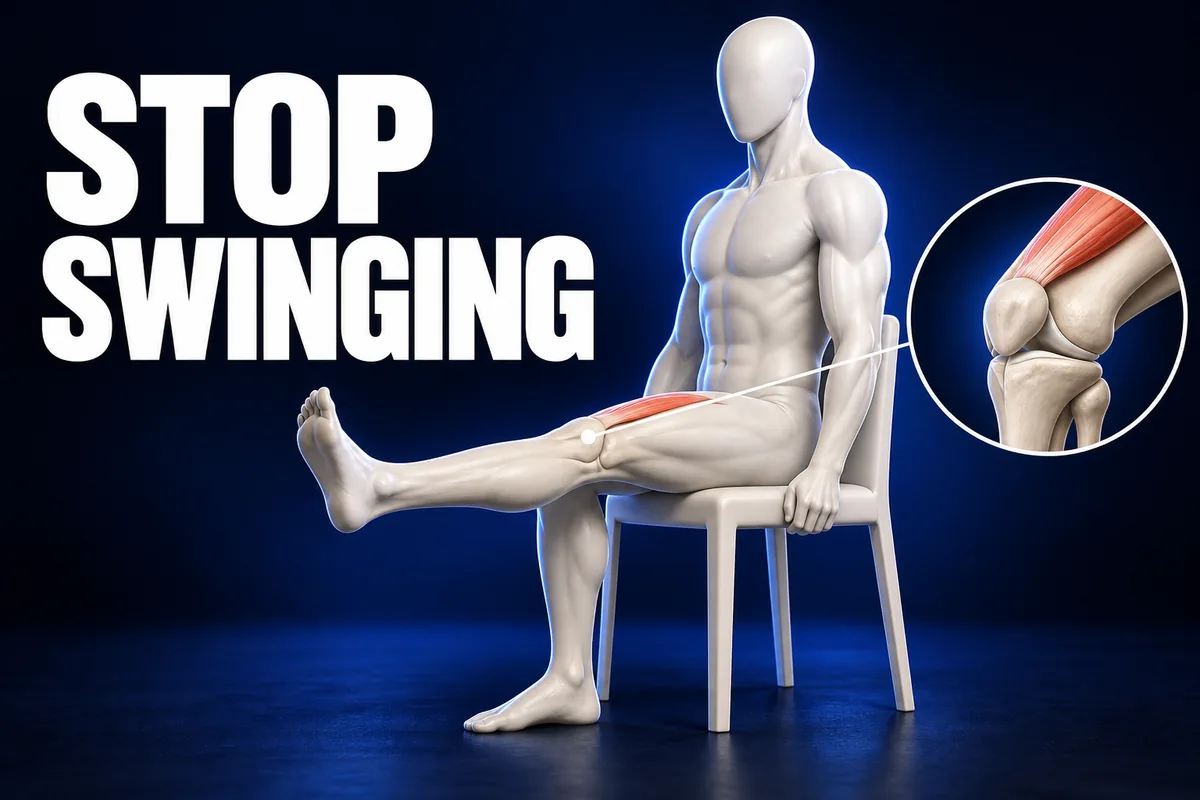
A seated knee extension is a simple active movement: the thigh stays on the chair while the lower leg straightens and returns. This guide uses no band, ankle weight or gym machine. The goal is control in a comfortable range, not forcing the knee perfectly straight.
Set a stable chair
Use a firm chair without wheels. Place both feet on the floor and sit far enough forward for the moving heel to clear the floor. Keep enough of both thighs supported that you do not feel perched on the edge. Let your trunk stay quiet and upright.
Straighten without swinging
Keep one thigh resting on the chair. Slowly lift that foot by straightening the knee. Stop before you need to lean backward, raise the thigh or snap the knee. Pause briefly if comfortable, then lower the foot at the same controlled speed.
Watch the return
The lowering phase is part of the movement. Avoid dropping the foot, gripping hard with the toes or using a kick to create momentum. If the chair presses sharply behind the thigh, move slightly back or choose a chair with a more comfortable edge.
Compare the same setup
Try a few slow movements on each side using the same chair and posture. Three attempts can be enough to learn the pattern, but this is an example rather than a clinical dose. Compare smoothness and comfort, not a guessed normal angle.
Know when to stop
Stop if you feel sharp or increasing pain, catching, giving way, tingling or new swelling. After an injury or operation, follow the range, holds and repetitions given by your clinician. A general article cannot replace that individual plan.
Continue with: heel slides, seated hip marching, beginner mobility guide.
Sources reviewed: Cambridge University Hospitals.
For active bending with the foot kept down, follow the chair foot slide; this exercise instead lifts the foot to straighten the knee.