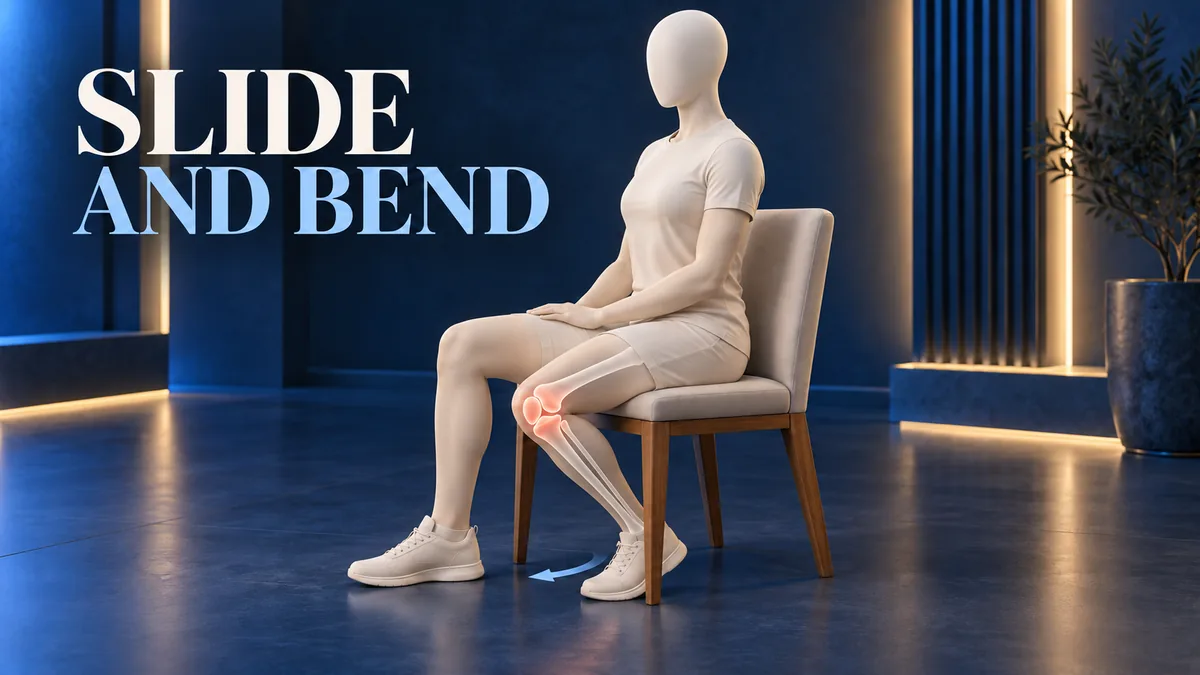
Choose a steady chair
Use a firm chair without wheels on a level floor. Clear space in front of and beneath it. Sit fully on the seat with both feet down; do not perch at its edge. The North Tees NHS chair guide shows a seated foot slide, but its sets and progressions are care examples, not a required routine here.
Set the moving foot
Keep one foot comfortably planted as a reference. Place the other foot where it can slide without catching. Hold the chair lightly if needed and keep your torso quiet. The foot stays on the floor during this knee movement. If the chair shifts when you test the slide, stop and choose a more secure setup.
Slide backward to bend
Slowly draw the moving foot back under the chair so that knee bends in a comfortable range. Keep the sole or heel in contact with the floor and avoid dragging through strong friction. Let the knee point roughly where the foot points; do not pull it sideways to gain distance. The King’s College Hospital demonstration shows this backward path in a clinical leaflet.
Return without forcing
Slide the same foot forward again at a controlled pace, stopping where the knee can straighten comfortably. Do not force either end of the path or use your other leg to push farther. Breathe normally. Try a few easy movements, then compare sides only if the chair and floor remain stable. Clinical hold times are not a general target.
Compare and stop safely
The lying heel slide uses a bed or floor beneath the whole leg. Seated knee extension lifts a foot to straighten the knee; this slide keeps it grounded to bend. Record the chair, floor and comfortable range if tracking progress. Stop for pain, catching, swelling or instability. After injury or surgery, follow personal clinical advice. Fitonomy Mobility offers mobility practice, without implying its interface supports every article language.