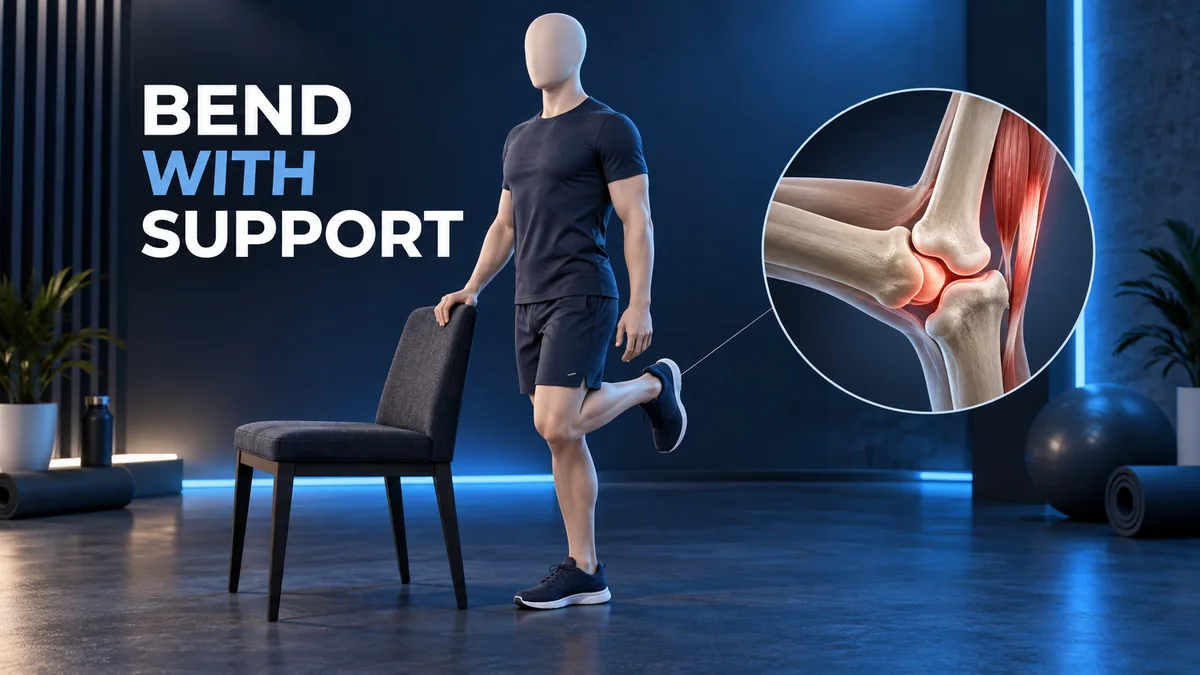
This standing knee bend lifts one heel toward the seat while the other foot bears weight. The Worcestershire hospital guide describes bending the knee with support and lowering the foot in control. It is different from a squat or a heel slide on the floor.
Know which knee moves
The moving leg bends at the knee, with its foot leaving the floor. The standing knee stays comfortably soft; you do not have to squat on it. Choose only a small range you can control. This is movement practice, not a test of knee health.
Choose stable support
Use a fixed rail or a solid chair that will not roll or slide. The NHS strength guide advises a stable chair without wheels. Clear the floor and place both feet under you before shifting weight. Keep support close enough to hold without leaning far.
Set the standing leg
Hold the chair or rail lightly and shift weight onto one foot. Let the standing knee stay unlocked and the chest face forward. If balance is uncertain, do not lift the other foot. Choose a seated option or ask for individual guidance.
Lift the free heel
Bend the free knee so its heel travels a little toward the seat. Keep the two knees roughly near each other and stand tall rather than tipping the hips forward. The Memorial Sloan Kettering guide shows this path. Stop before pain or loss of balance.
Return and compare sides
Lower the foot slowly to the floor, reset both feet and relax your grip if safe. Try the other side only if the support and balance still feel reliable. Notice differences without treating them as a diagnosis. There is no required height or repetition count.
Choose another knee path and stop safely
A heel slide bends the knee while the heel stays supported. Seated knee extension straightens the knee from a chair and the beginner mobility guide helps plan a routine. Stop for pain, numbness or dizziness. After injury, surgery or restrictions, seek personal clinical advice. Fitonomy Mobility is a separate app.