Choose a suitable position
Use a firm comfortable surface you can get onto and leave safely. This is a movement control explanation, not back pain treatment. Recent injury, surgery or movement restrictions need individual advice. During pregnancy, ask about a suitable position; NHS guidance advises avoiding prolonged flat lying in later pregnancy.
Set both feet down
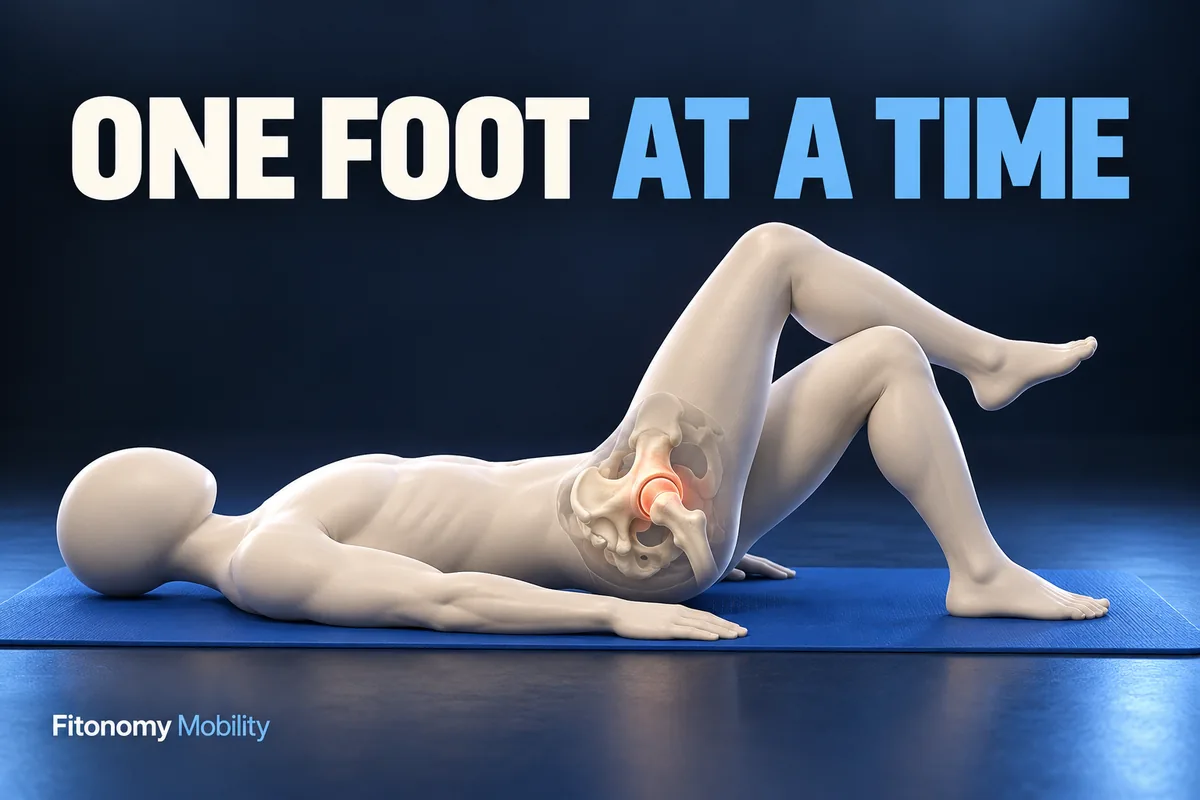
Lie on your back with both knees bent, feet resting flat and arms comfortable beside you. Let your head and shoulders rest. The VA marching guide begins in this supported shape and keeps breathing throughout. Do not press your back hard into the surface or hold your breath.
Lift and replace one foot
Keep one foot down while slowly lifting the other bent leg through a comfortable range. Do not pull the knee with your hands. Lower the foot gently and settle it before changing sides. The therapist demonstration shows a bent leg lift, but its height and hold are not universal targets. A few comfortable attempts with rests are a practice example, not a clinical dose.
Keep control comfortable
If the pelvis rocks or the back arches, return the foot and try less lift. Stop if a smaller movement is still uncomfortable. Keep both arms resting and avoid lifting both legs together. A heel slide keeps the heel touching the surface; seated marching uses a chair. Neither is the same setup.
Record a repeatable attempt
Note the surface, side and whether the foot landed gently with the pelvis quiet. Compare the same setup without chasing height or equal sides. Stop for pain, tingling, dizziness or instability and seek advice for persistent symptoms. The beginner mobility guide helps choose practice. Article translations do not establish Mobility app language support or promise a lasting gain.