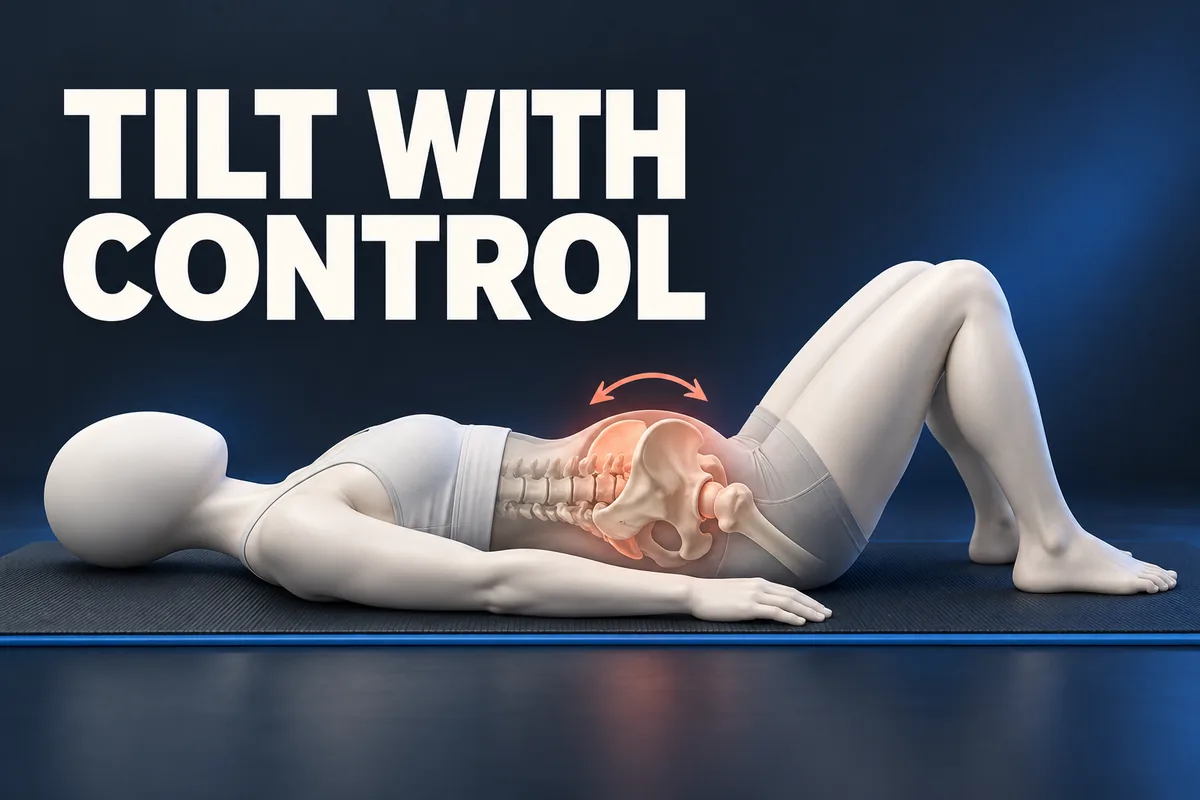
Set up on a stable surface
Lie on a comfortable firm surface with your knees bent and both feet planted. Let your head, shoulders and arms rest. The movement is small and does not require lifting your hips. If getting onto or off the floor is difficult, the seated pelvic tilt guide teaches a related movement from a firm chair.
Tilt backward gently
As you breathe normally, rock your pelvis so the lower back moves a little closer to the surface. Keep both feet down and your knees roughly centered. The South Tees NHS guide describes this gentle flattening while the chest and upper back stay relaxed. Do not force the spine flat or hold your breath.
Return through the middle
Ease the pelvis back toward a comfortable middle position. Notice the contact of your lower back with the surface without trying to measure an angle. Pause if the movement becomes painful or you need to grip with the shoulders. There is no universal number of repetitions for this general movement guide.
Tilt forward a little
Let the pelvis rock the other way so a small space appears under the lower back. Keep the hips on the surface rather than making a bridge. The Cambridge NHS movement guide distinguishes the gentle forward arch from the backward flattening. Stay within a range you can repeat smoothly while breathing.
Keep the movement distinct
In a pelvic tilt, the knees stay roughly in place while the pelvis rocks forward and backward. The supine knee rolls guide instead moves both knees side to side. Stop for pain or new symptoms, and follow individual advice after injury or surgery. Fitonomy Mobility can support a movement routine, but this guide is not a treatment plan.
If you prefer to move one thigh toward your chest instead of tilting the pelvis, try the single knee to chest movement with a gentle return and no pull at the knee.