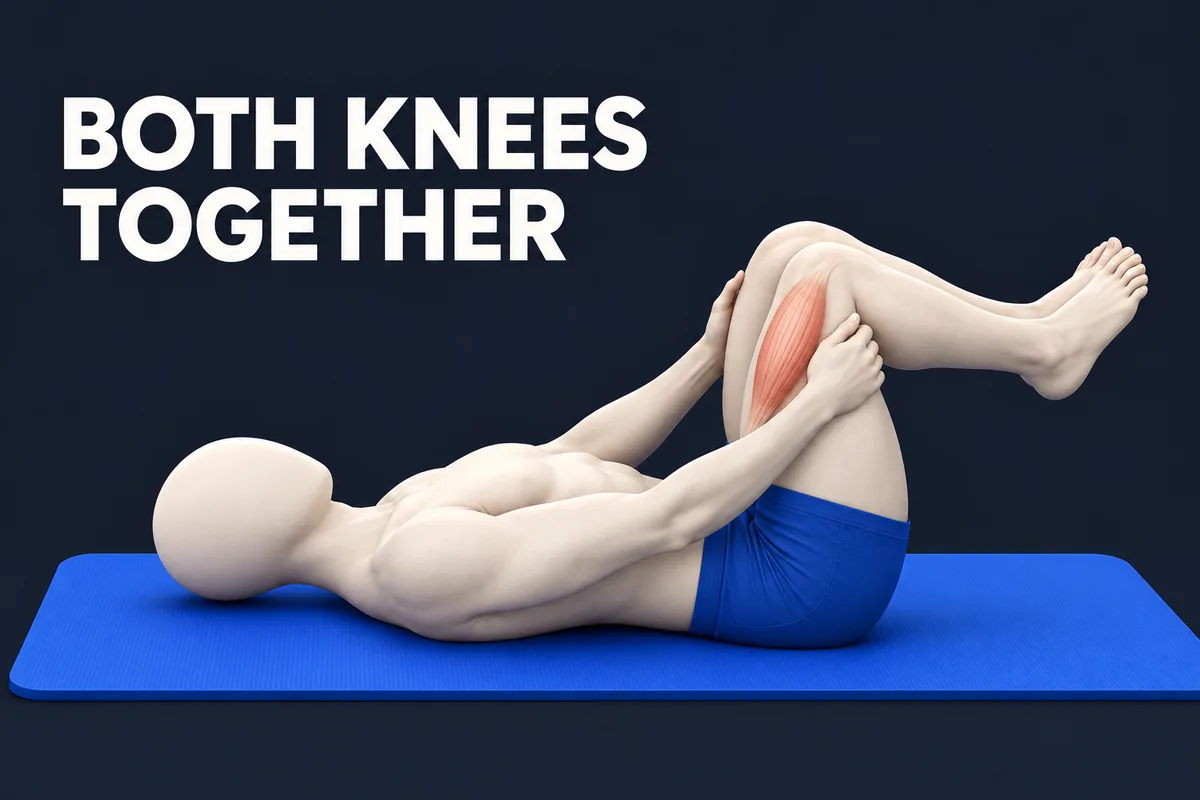
Confirm this exact task
This guide clarifies a double knee hug for adults personally taught and permitted to do it by a clinician. South Tees’ clinical guide describes both legs together as a progression, not an automatic next step. Permission for a single knee hug does not establish that both legs together suit you.
Begin with reliable support
Use the stable bed or mat and access method shown to you. Start on your back with knees bent and feet resting, as in Guy’s and St Thomas’ instructions. Let your head and shoulders remain supported. If getting down, lying there or returning up is uncertain, ask for an adapted setup first.
Know what changes with both legs
In the double version both thighs come toward the trunk and both feet leave the surface. In an alternating single version one foot can remain down. This is not sideways knee rolling, a heel slide or a head curl toward the knees. Do not add rocking or twist the legs sideways.
Keep your personally taught contact
Use the hand support, entry sequence, range and return demonstrated for you. Published illustrations differ, so do not copy a new grip from the cover or press on the knee joints. Breathe normally without forcing the knees against the chest. Follow your own hold and repetitions, then return the feet with control rather than dropping the legs.
Record and stop appropriately
Note double knee hug, support, hand position, permitted range and response. More compression does not diagnose progress. Stop for pain, tingling, dizziness, instability or worsening symptoms and seek individual advice. Injury, surgery or other movement restrictions require personal clearance. The beginner guide offers context, not treatment or permission. Translations do not imply every article language is supported in the Mobility app.