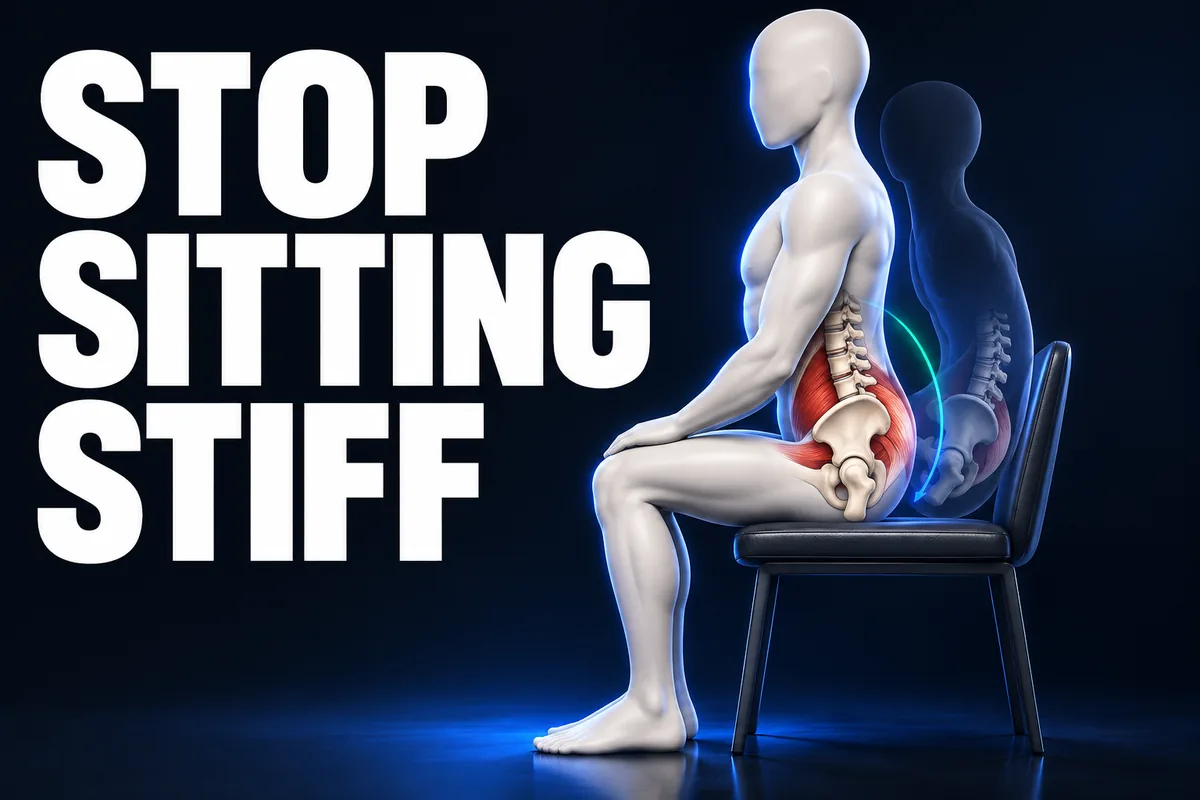
A seated pelvic tilt is a small movement of the pelvis on a chair. You gently roll the pelvis backward, return through the middle and roll it forward. The goal is to explore control and comfort, not to create the largest possible curve.
Choose a firm chair
Use a stable chair or firm surface that does not roll. Sit toward the front half with both feet supported and enough space to move. Let your hands rest on your thighs.
Roll backward slowly
Breathe normally and gently tuck the tailbone under. The pelvis rolls backward and the lower back may become a little rounder. Keep the feet down and stop before you need to push or strain.
Return and roll forward
Come back through a comfortable middle position. Then roll the pelvis forward a small amount. Let the movement come from the pelvis instead of lifting the chest or pulling hard with the shoulders.
Use a small repeatable range
Move slowly between the two directions several times. The useful range is the one you can repeat smoothly while breathing. There is no required angle and the two directions may not feel identical.
Know when to pause
Stop if the movement causes sharp or increasing pain, tingling, numbness, dizziness or a new change in bladder or bowel control. After injury, surgery or during a clinical treatment plan, follow the range and repetitions given by your clinician.
Continue with beginner mobility guide, seated hip marching and seated knee extension.
Movement setup reviewed with South Tees Hospitals NHS Foundation Trust.
Move both bent knees slowly from side to side while your shoulders and upper trunk stay supported. Supine Knee Rolls With Your Shoulders Supported
For a standing variation with fixed hand support, the feet planted hip circle guide explores a gentle circular pressure path.
For the same pelvic direction while lying with both feet planted, see the supine pelvic tilt guide; this version uses a chair.