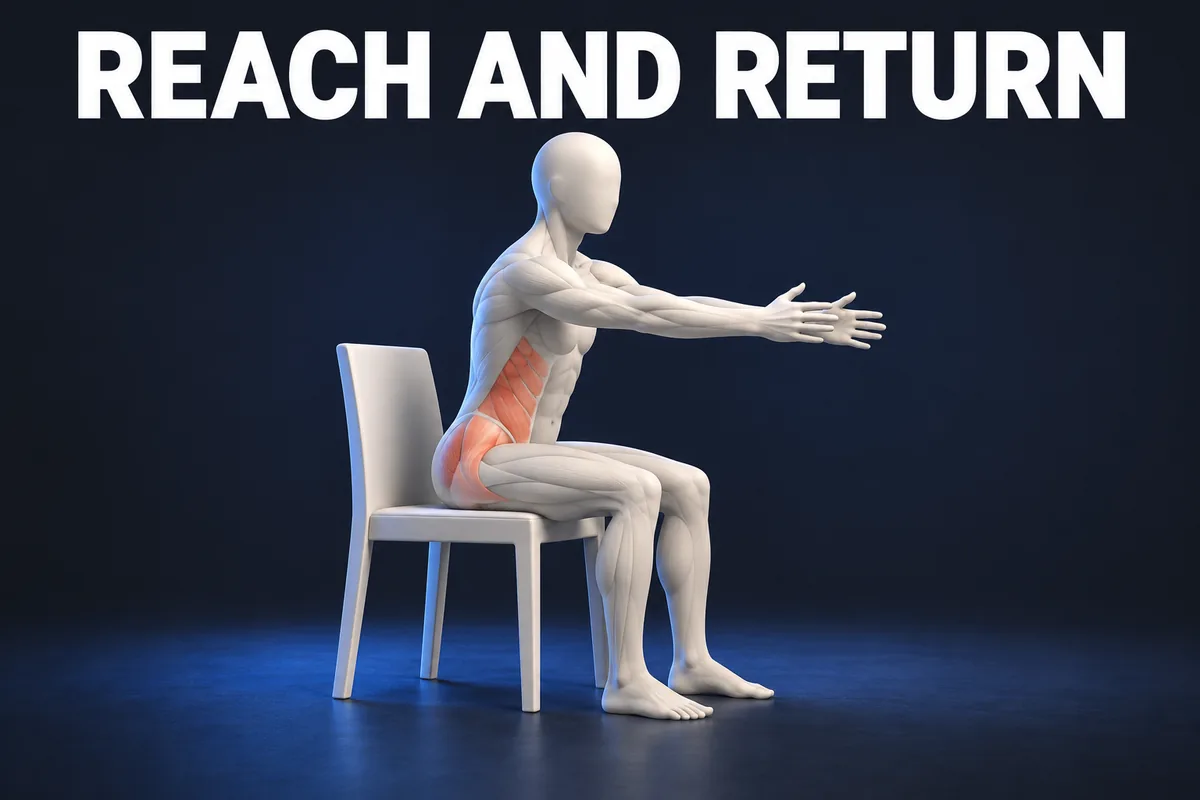
Start with a suitable taught task
Use this guide only if a physiotherapist has taught you that seated forward reaching is suitable for you. The North Tees balance leaflet is written for hospital patients and people returning home. Its sets and standing progressions are not a universal routine. Follow your own support, range and repetition instructions, especially after injury or surgery.
Set a stable base
Choose a solid chair without wheels and clear space ahead. The NHS sitting guide describes feet flat on the floor and comfortably bent knees. Sit securely upright with feet about shoulder width apart. Do not balance on the edge. If you need another person's assistance, arrange it before practising rather than trying alone.
Reach a little and return
Bring both hands in front of you and lean forward a small comfortable amount, as the North Tees leaflet describes. Keep both feet planted and your pelvis on the seat. Return upright slowly, then relax the arms. Breathe normally. Reduce the lean or finish when control changes. Do not reach for the floor, add a weight or continue into standing here.
Keep nearby movements separate
The seated side bend moves sideways, while chair rotation turns the chest. A pelvic tilt rolls the pelvis rather than reaching forward with both hands. Choose one task according to your instructions. The beginner mobility guide helps organize appropriate practice; it does not override personal advice.
Record control and respect symptoms
Stop for pain, dizziness, unusual breathlessness or instability and seek appropriate advice rather than repeating to test symptoms. Note the chair, foot position, support and whether the return stayed controlled. The mobility journal separates observations from test scores. Farther reach is not proof of reduced fall risk or a diagnosis. Fitonomy Mobility is a fitness product; translated articles do not imply that every article language is available in the app.