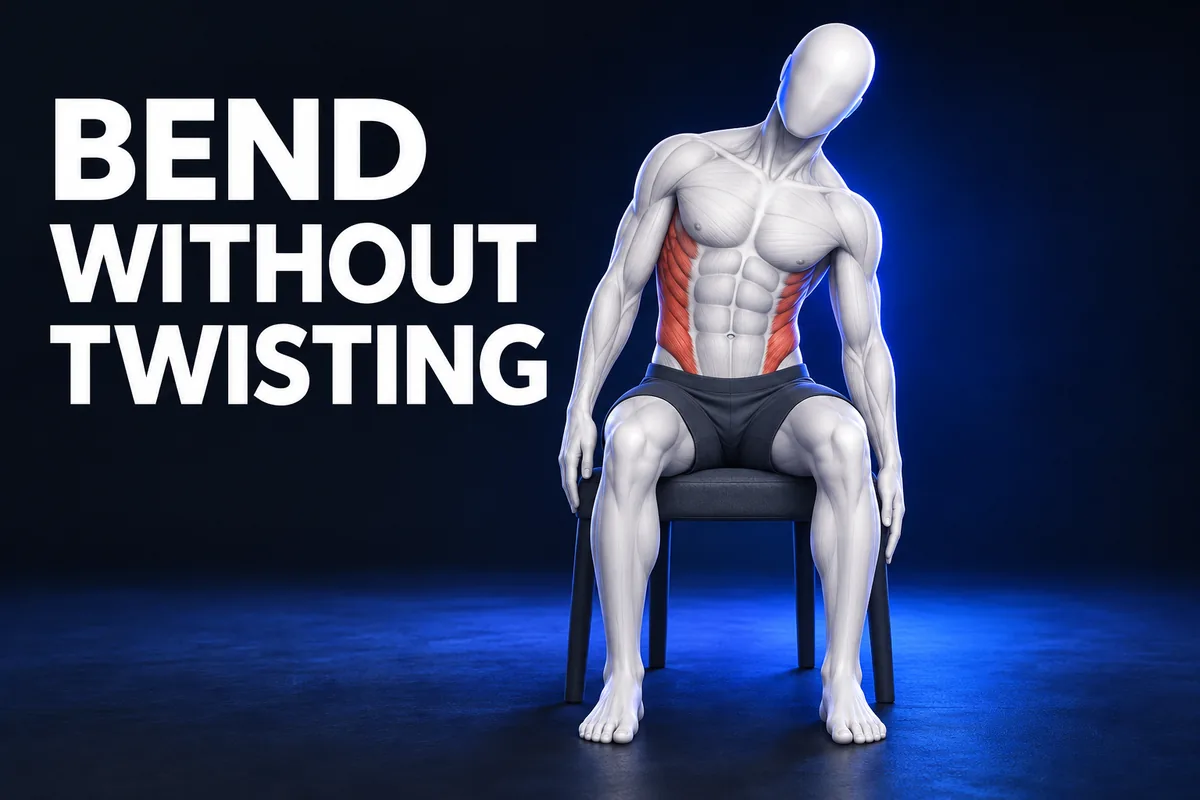
A seated side bend explores sideways movement through your trunk. This version keeps both arms low, so you do not need an overhead reach. The aim is a small, comfortable movement with a steady base.
Choose a stable chair
Use a firm chair without wheels or armrests that block your movement. Both feet should rest flat, with knees comfortably bent around a right angle, following the NHS chair setup. Leave clear space on each side.
Sit upright with weight on both sides of your seat. Relax your shoulders and let your hands rest beside your outer thighs. If this position feels unstable, skip the exercise and get guidance.
Slide one hand down your side
Gently bend at the waist to one side as the hand on that side slides down beside your thigh. Keep the other arm relaxed. Look ahead and let your head follow the trunk naturally.
Return upright slowly, then try the other side. Keep breathing normally. The Cambridge University Hospitals instructions describe this hand sliding movement and controlled return.
Try three slow repetitions per side, resetting upright each time. This is an adjustable practice example, not a clinical prescription. You can stop sooner or use less movement.
Keep the base steady
- Keep both feet flat and both sides of your pelvis on the seat. Stop the lean before a hip lifts.
- Keep your chest facing forward. Turning your shoulders changes the movement into a twist.
- Avoid folding forward, pulling on the chair or reaching for the floor. More hand travel is not the goal.
Stop when the movement is uncomfortable
Stop for pain, pinching, tingling, numbness, dizziness or instability. Persistent symptoms, a recent injury or surgery call for individual advice before continuing. This exercise does not diagnose stiffness or treat back pain.
Record the chair, side and whether your feet and hips stayed steady. Compare the same setup without forcing both sides to match. A farther reach is not a clinical score.
Use the beginner mobility guide to build a small routine. Seated thoracic rotation practises turning, while cat cow offers a separate floor movement for bending and extending the spine.