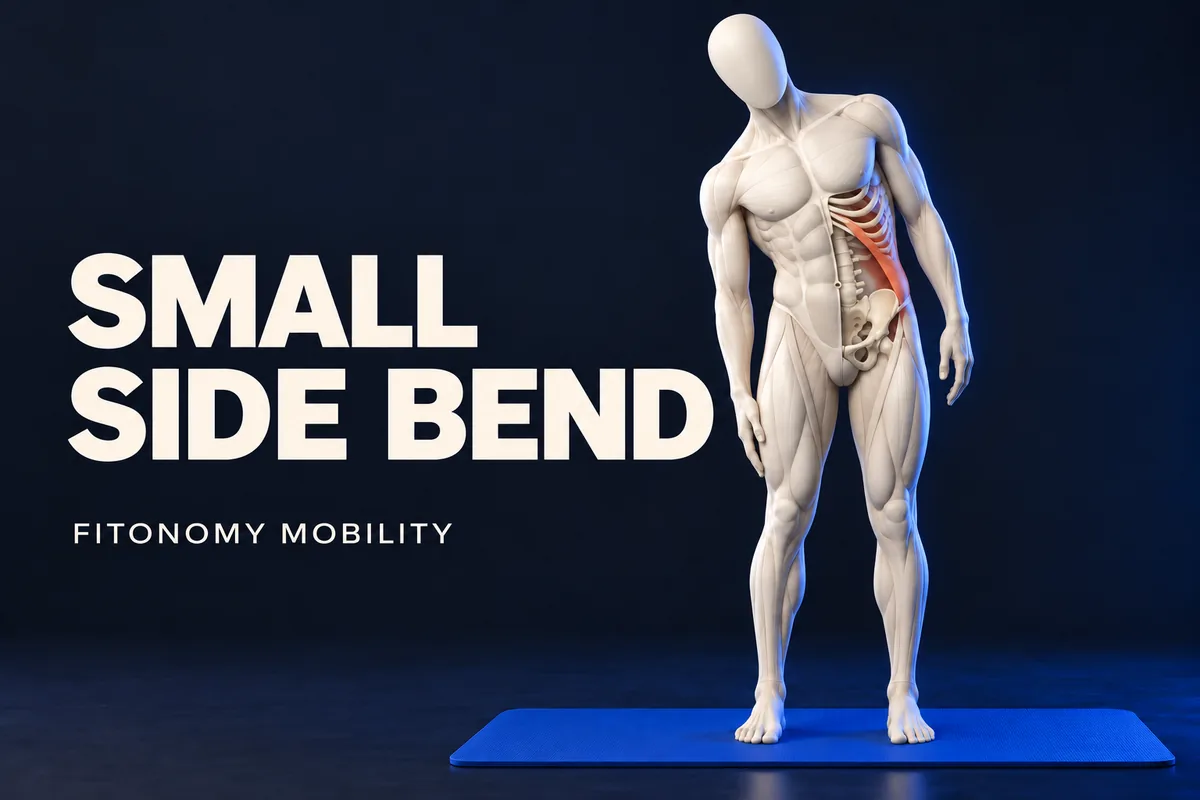
Choose a steady base
Try this only if standing and returning upright feel steady. Stand on a clear level floor with feet about hip width apart and arms loose by your sides. The NHS flexibility guide describes this starting position. If standing is uncertain, use the seated side bend guide only if that setup is suitable, or seek individual advice.
Slide one hand down the side
Gently bend your trunk to the left as the left hand slides along the outside of the left thigh. Keep your chest facing forward and both feet on the floor. Let the head follow naturally rather than deliberately tilting the neck. The movement may create a mild stretch on the opposite side. Do not chase the floor or force a strong sensation.
Return before changing sides
Come back upright slowly, pause, then try the right side if comfortable. The NHS example uses a two second hold and three repetitions per side. This is an adjustable example, not a required dose or range. Breathe normally and finish sooner if control fades. Neither hand should pull the body farther.
Keep the directions distinct
Keep both arms low without adding a weight or an overhead reach. Reduce the bend if you start folding forward, twisting or shifting a foot. The standing hip circle moves the pelvis around a different path; seated upper back rotation teaches a turn. They are not deeper versions of this movement.
Record comfort and know when to stop
Note the side, footwear, starting stance and whether you returned smoothly. Compare the same setup without forcing symmetry or treating hand travel as a clinical score. NHS suitability advice recommends personal guidance for uncertainty, health problems, injury, symptoms, recent surgery or pregnancy, and stopping for pain or unwellness. Stop for dizziness, numbness or instability too. The beginner mobility guide helps organize a small routine. Fitonomy Mobility is a separate app; this article does not provide a diagnosis or treatment plan.