Set up support before lifting
Choose a stable mat and enough clear space to lie down and get up comfortably. This is a movement option, not a rehabilitation prescription. If you have symptoms, recent surgery or movement restrictions, ask a qualified professional whether it suits you. ACE describes the straight leg version.
Keep the body on its side
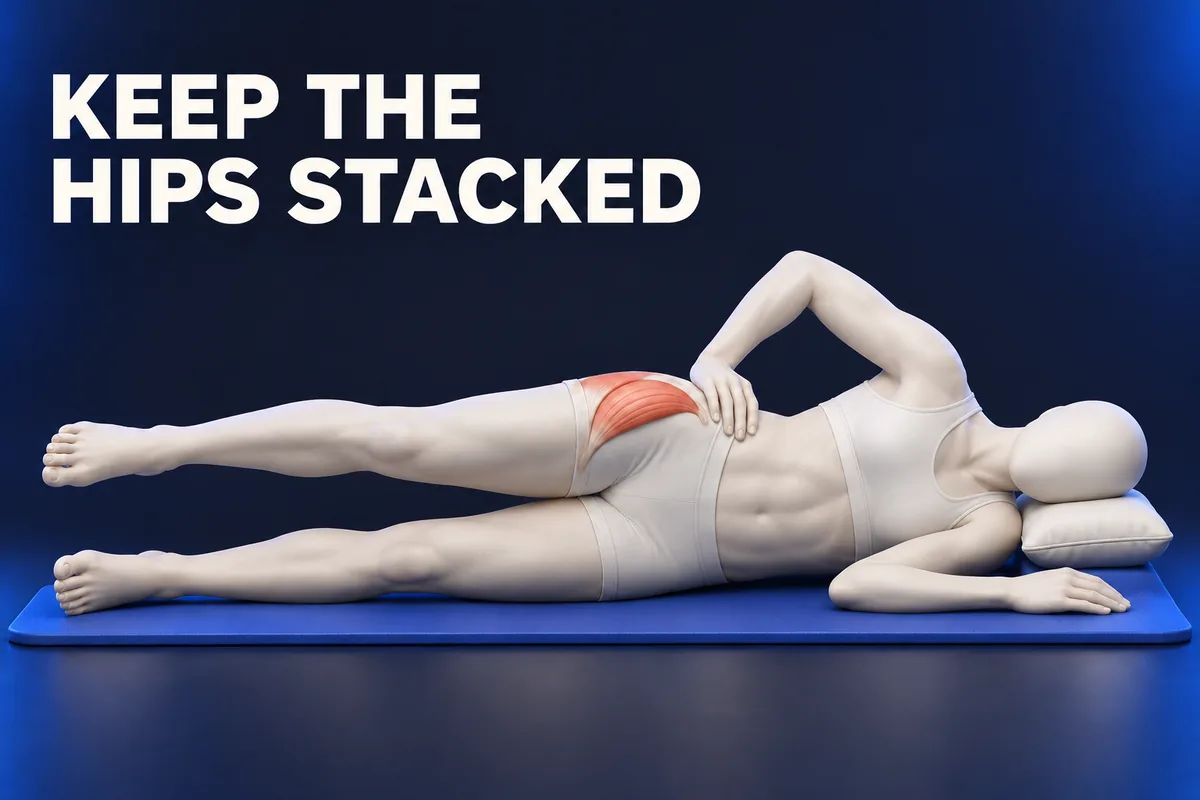
Lie on one side with both legs straight. Support your head with a comfortable pillow or your lower arm, keeping the neck aligned with the spine. Stack the shoulders and hips rather than rolling toward your back. Rest the upper hand on your hip so you can notice movement.
Lift a small arc
Keep the upper knee facing forward and the foot neutral, without turning the toes toward the ceiling or forcing them downward. Raise the upper leg a small amount while the lower leg stays on the mat. Exhale gently as you lift; stop the arc before the pelvis tilts or the lower back tightens. Height is not the goal.
Return before changing sides
Lower the leg slowly and breathe in. Keep the trunk quiet rather than dropping the foot. Settle both legs before repositioning for the other side. Use only a comfortable amount of practice, without bands or ankle weights. Stop for pain, dizziness or lost control; an individually prescribed routine takes priority.
Recognize the different tasks
The supported standing version also moves a leg sideways but adds upright balance. A side lying clam bends the knees and keeps the feet together while the top knee opens. Here both legs stay straight and the feet separate. Record the side and whether your pelvis stayed still, rather than treating a higher lift as proof of progress.