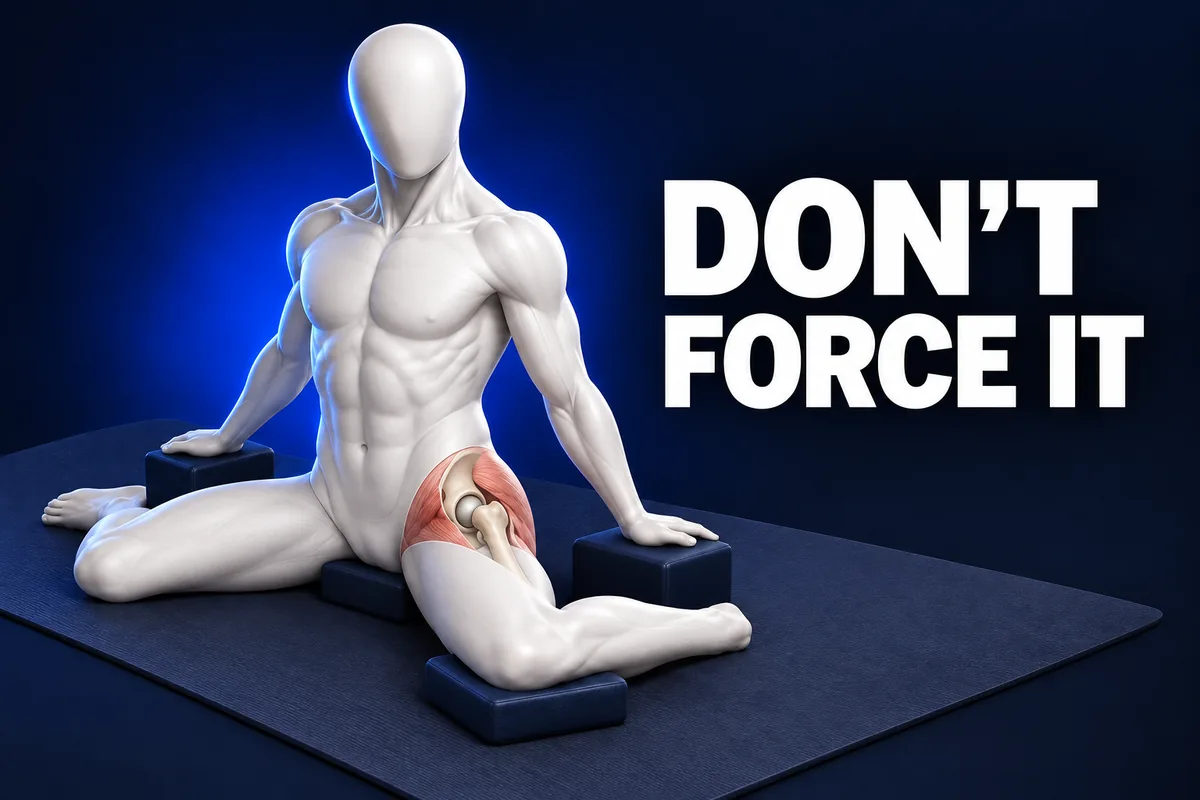
Hip rotation turns the thigh within the hip joint. In the 90/90 floor position, the front hip rotates outward and the other hip rotates inward. It can be a demanding stretch, even when social videos call it beginner friendly. Support and comfort matter more than matching a picture.
Decide whether this position suits you
You should be able to get down to the floor and back up comfortably. Cleveland Clinic's physical therapist guidance advises against this stretch after hip or knee replacement or with hip impingement. Knee conditions may also make it unsuitable. Seek individual guidance if injury, surgery or persistent symptoms affect your movement.
If floor access is the difficulty, seated hip marching offers a different active movement. It is not the same rotational stretch and is not automatically suitable for a painful hip.
Build a supported base
Warm up with light activity first. Mayo Clinic suggests five to ten minutes before stretching and recommends gentle movement without bouncing.
- Sit on a mat, using a firm cushion or yoga block under your hips if helpful. Place your hands beside you on stable support.
- Bend one leg in front, with its outer thigh toward the mat and shin across your body. Place the other thigh out to the side, with that knee bent and its lower leg pointing backward.
- The name describes roughly right angles at both knees. Do not force those angles or floor contact. Support the front knee with a pad if needed rather than pressing it downward.
- Keep your torso comfortably tall and breathe normally. Stay within a mild stretch. Your hands and supports may remain in place.
Hold gently, then leave with control
The Cleveland Clinic example uses a hold of twenty to sixty seconds. Begin with a shorter comfortable attempt if necessary. Release the position slowly, bringing the legs back to a comfortable seat before arranging the opposite side. Skip rapid switches and deep forward folds while learning.
Pain, pinching or lingering discomfort means stop and seek advice. Extra padding does not make a painful position appropriate. Neither side needs to look identical.
Record support, not a score
Note which leg was in front, the seat and knee support, comfortable hold time and any need to lean. Compare the same setup later. Reaching the floor once does not prove a lasting improvement or diagnose a restriction.
Our beginner mobility guide helps you choose a small routine. The half kneeling hip flexor stretch explores a different position, while mobility versus flexibility explains the difference between available range and control. Choose the movement that fits you rather than completing every option.
If a floor position does not suit you, the seated figure four stretch offers a separate chair based outer hip option.
For a different movement from hands and knees, try a controlled hip rock back while noticing your back.
For a smaller active hip turn with the feet together, try the side lying clam setup instead of forcing the floor rotation shown here.