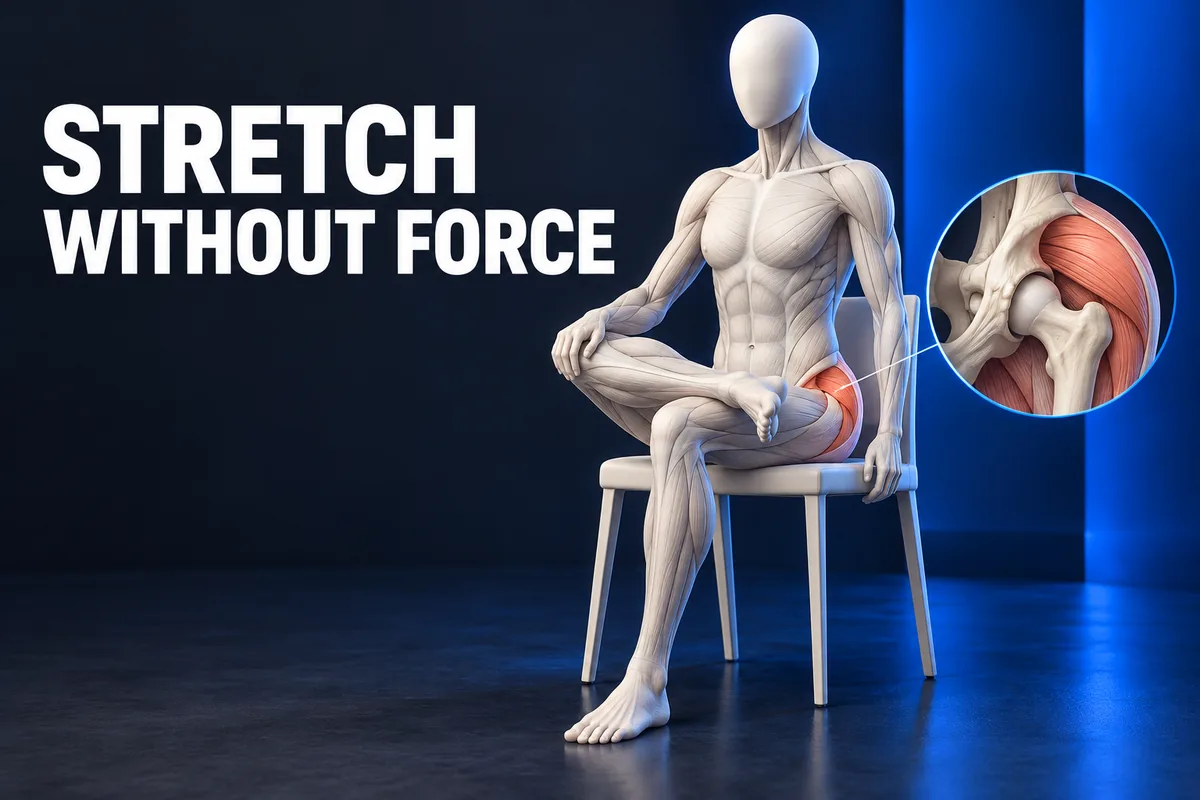
The figure four position places one ankle across the other thigh while you sit. A comfortable version may create a stretch around the outer hip or buttock. The South Tees hospital guide and University of Washington guide describe this position, but their clinical instructions are not a universal schedule.
Check whether this position suits you
Choose another movement if crossing the ankle hurts your hip or knee. After hip replacement, surgery or with movement restrictions, ask your own clinician before trying it. Both institutional guides warn against treating the position as automatically suitable after hip replacement.
Set a stable chair and feet
Use a firm chair that does not roll. Sit where both feet can reach the floor, with your weight even on the seat and your back comfortably tall. Keep enough room to uncross the legs without twisting.
Rest the ankle on the opposite thigh
Lift one foot and place its ankle on the other thigh near, but not directly on, the kneecap. Keep the supporting foot grounded. Let the raised knee settle without pushing it down. If this position already feels like enough, stay upright or leave it there.
Hinge only if comfortable
If the hip and knee remain comfortable, tip slightly forward from the hips while keeping the back long. Stop before you need to round your back or press on the knee. The Veterans Health Library example also describes a seated figure four, but its clinical hold and repeat counts are not a target here.
Return and compare sides
Come upright slowly, lift the crossed ankle with your hands if helpful, and place both feet on the floor. Notice whether one side felt different without judging it as a diagnosis. Try the other side only if you can set it up comfortably. There is no required depth or duration.
Choose a related hip movement and respect limits
The floor hip rotation guide uses a different position. Seated hip marching is a moving alternative, and the beginner mobility guide helps you choose a routine. Stop for pain, numbness, dizziness or concerning symptoms. Fitonomy Mobility is a separate app and currently uses English.
If sitting on the floor and rising are comfortable, the seated butterfly stretch explores the inner thighs with both soles together. It uses a different position from this chair stretch.