Choose a stable place
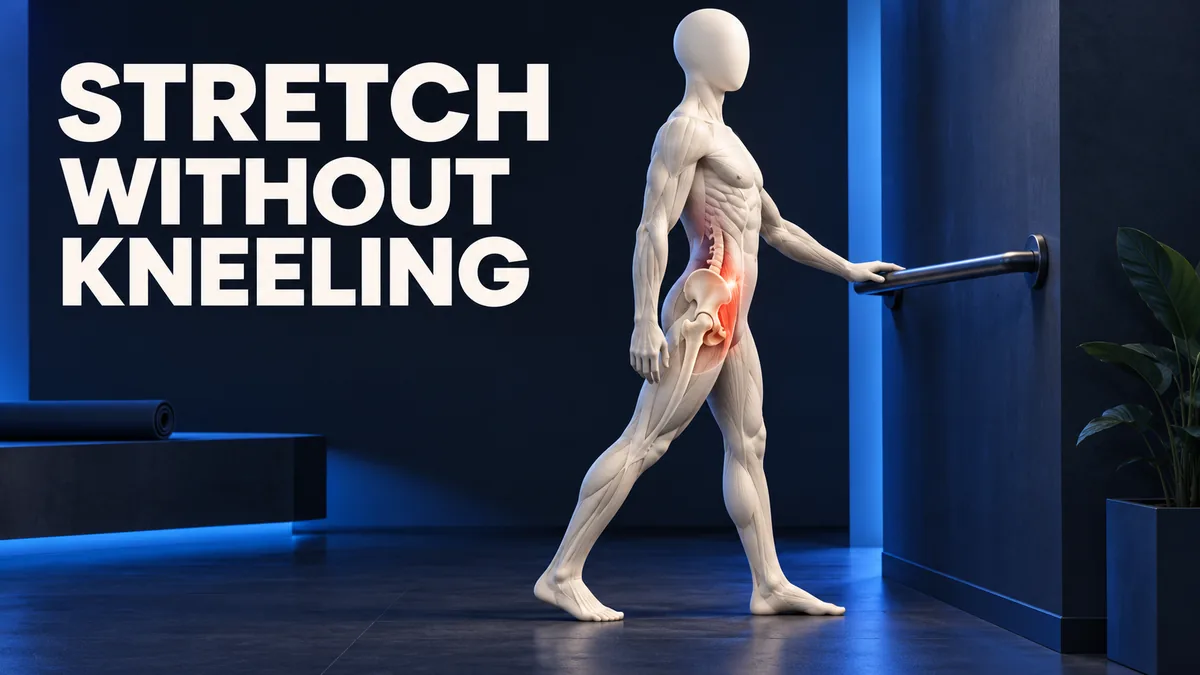
Stand beside a fixed counter or wall rail that will not slide. Clear the floor and wear footwear that gives you a secure footing. Keep both feet on the ground. This guide describes a standing split stance, not the standing stretch that holds one foot behind the body. If standing balance feels uncertain even with support, choose a different position.
Set a short split stance
Put one foot a comfortable step in front of the other and face both feet generally forward. Hold the support lightly and keep your torso upright. Start with your weight mostly over the rear leg. The University of Michigan standing hip flexor instructions use this split stance and an easy forward transfer. There is no prize for taking a long step.
Move through the hip
Gently shift some weight toward the front leg while keeping the rear foot grounded and the pelvis facing forward. Let the front knee bend a little, but do not force a deep lunge or arch your lower back. You may notice a mild stretch at the front of the rear hip or upper thigh. The Oregon State standing example and Leeds NHS movement options show this general direction, not a required depth for everyone.
Ease out and compare
Shift your weight back to the starting position, pause, then change which leg is behind only if steady and comfortable. Breathe normally and do not bounce. Stop if you feel pain, dizziness, numbness or instability. A recent injury, surgery or personal movement restriction calls for individual clinical advice. This general guide does not diagnose the reason a hip feels stiff.
Choose the right alternative
Our half kneeling hip flexor guide uses a padded knee on the floor and a different balance demand. The standing quadriceps stretch holds the foot behind the body and is not this split stance movement. For an active backward leg path instead of a held stretch, see supported hip extension. Fitonomy Mobility can help organize comfortable movement practice, but its app language does not follow every article translation.