Confirm the task is suitable
This explanation is for adults already taught or individually cleared for this task. The York NHS booklet is for people with arthritis and leaves exercise choice and amount to a therapist. Injury, surgery, a splint or a flare can change what is suitable. Do not use a circle to diagnose symptoms or replace your own plan.
Support before moving
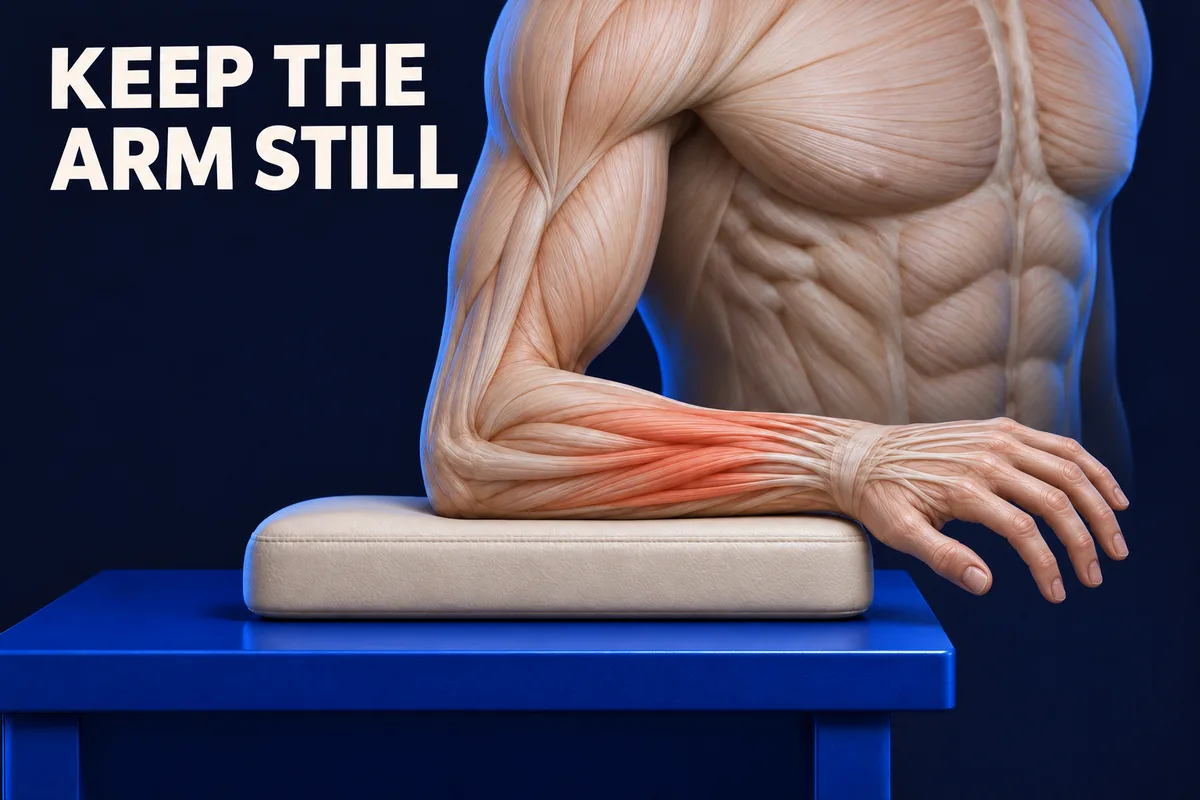
Sit comfortably beside a stable table. Support the elbow and forearm on the surface, using a comfortable pad if needed. Keep the shoulder relaxed and elbow roughly at a right angle. Leave the hand enough room to move, without pressing the table edge into the wrist crease. The target forearm should stay in contact with its support.
Trace a small comfortable path
Loosely curl the fingers rather than gripping a tight fist. Use the wrist to guide the hand around a small circle. Keep the forearm and elbow quiet instead of turning the palm with the whole forearm. Move slowly, breathe normally, pause and reverse direction. The path need not be perfectly round or large.
Notice substitutions and symptoms
If the forearm lifts or rolls, pause and reset the support with a smaller path. Northern Trust guidance also keeps the forearm and elbow still. Do not pull with the other hand, add weight or lean body weight onto the palm. Follow your individual amount. Stop for pain, tingling, numbness, swelling or lost control and seek advice.
Record the task accurately
Note the side, support, directions and comfort, without calling a larger circle a proven gain. The seated wrist guide separates wrist bends from forearm turns. The table sideways movement is a linear wrist path. Those tasks have their own setup; do not borrow their counts or use them as automatic progressions.