Decide whether hand loading fits today
This movement uses body weight over fixed palms. It differs from seated wrist mobility, which does not require body weight on the hands. Being comfortable with the seated option does not automatically make this a suitable next step. You need comfortable floor access and tolerance of hand support. After an injury or surgery, or with restrictions, follow your clinician’s advice rather than this general guide.
Set up a supported position
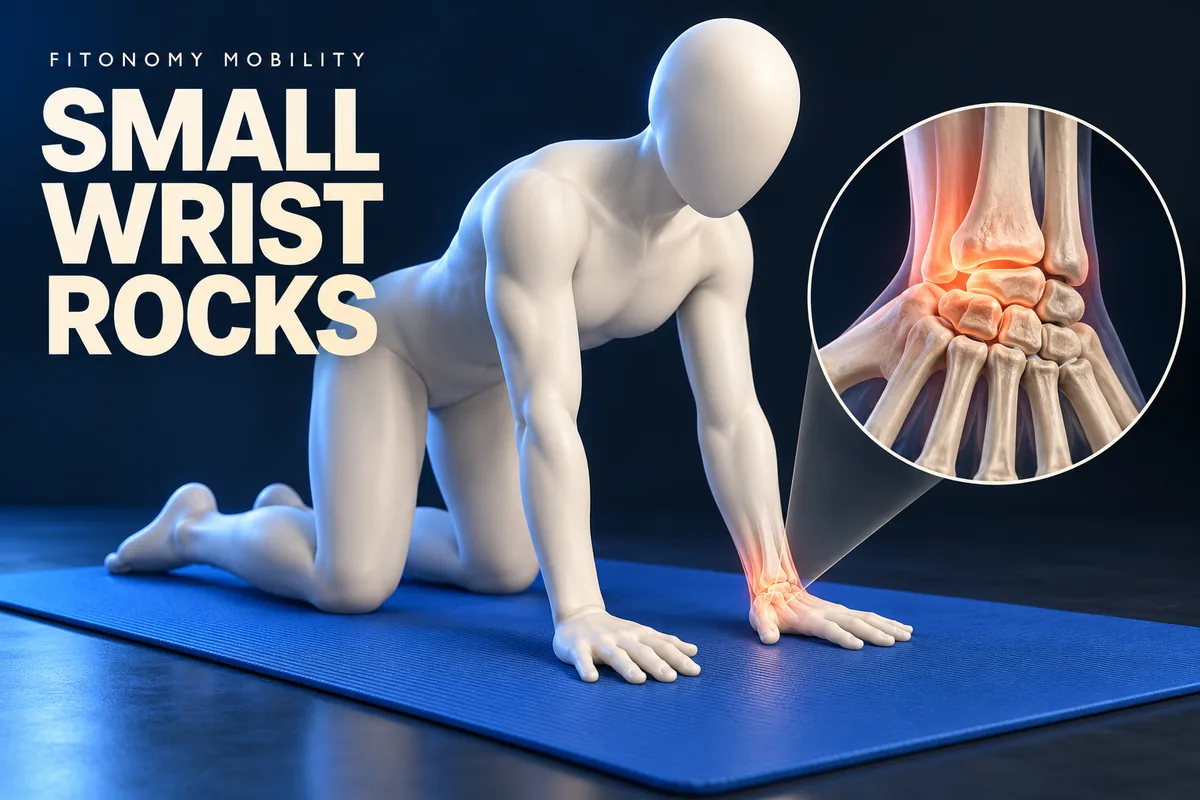
Kneel on a comfortable mat and place both palms flat with fingers pointing forward. Keep both knees grounded and share support between hands and knees. Let the back stay long and the head follow its line. Start with the shoulders near the wrists, not with a large lean. The Prehab exercise demonstration shows this hands and knees setup.
Make a small forward rock
Gently shift your body forward so the shoulders move over the wrists, then return to your starting position. Keep palms and fingers in contact with the mat and elbows comfortably straight without forcing them back. Use a small, easy range. Do not flip the hands, reverse the fingers or add weight. This is not the hips toward heels movement in our quadruped hip rock back.
Let comfort guide the movement
Move slowly enough to notice pressure without pushing into pain or significant discomfort. There is no universal repetition target or hold time here. Pause whenever you need to. Stop for pain, tingling, numbness or dizziness. If symptoms persist or recur, seek suitable professional advice. Mayo Clinic’s stretching guidance supports avoiding painful forcing; its static stretch timing is not a dose for these dynamic rocks.
Choose a useful place in your routine
Record whether the position felt comfortable and how small a shift you could control, without treating a deeper lean as proof of progress. If hand loading is unsuitable, consider the seated guide only if that movement is appropriate for you. Table wrist movements offer another distinct task. Use our beginner mobility guide to plan your routine. Mobility app links support routine planning, not diagnosis; article availability does not establish app language support.