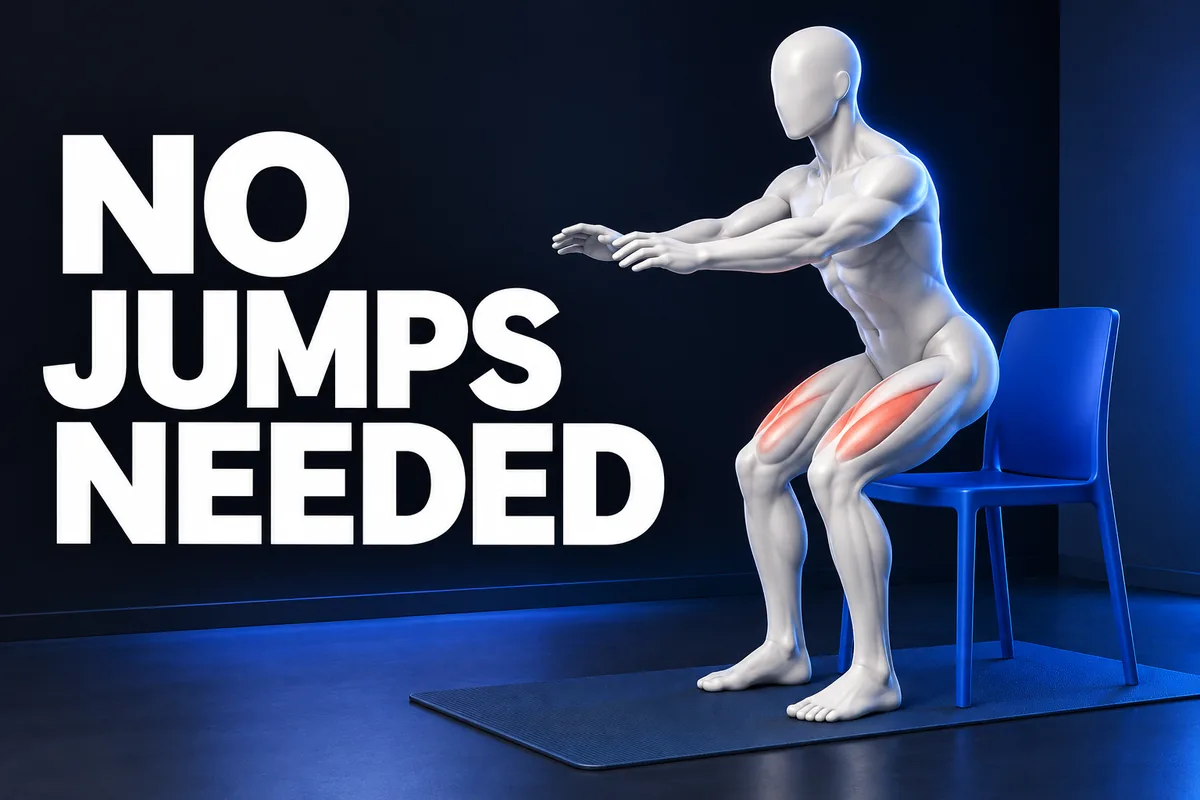
A quiet apartment workout starts with controlled contact: keep your feet grounded during strength movements and lower yourself gently onto the chair or floor. Skipping jumps removes one source of impact, but it cannot guarantee that neighbours hear nothing. Test the space before adding speed.
Before starting at home, use the small space setup check to leave room for your planned movements and transitions.
For another quiet equipment option, the beginner resistance band workout combines controlled curls and shallow squats with a wall press.
If time is your main constraint, the 20 minute beginner workout shows how to include preparation, rest and a gradual finish in the same time budget.
Set up before starting
Clear enough room to reach your arms and move between positions. Choose a solid chair without wheels, a secure wall and a floor where your feet will not slip. A thin exercise mat may make floor contact more comfortable; do not assume it soundproofs the room. Check that the chair remains stable on your chosen surface.
Begin with gentle walking and easy practice repetitions. The American Heart Association recommends gradually warming up and cooling down. In a small room, use short relaxed steps instead of stamping in place.
Try this small circuit
This is an introductory example, not a complete strength program. Learn each movement first and skip any position you cannot enter comfortably.
- Chair rises: try five slow repetitions. Stand with control, then return to the seat without dropping onto it.
- Wall push ups: try five repetitions with secure feet and a comfortable body angle. Bring your body toward the wall and press away smoothly.
- Supported calf raises: hold a stable chair, lift both heels gently and lower them quietly. Try five repetitions without bouncing.
- Glute bridges: if floor access is comfortable, try five controlled repetitions. Lower your hips gently instead of letting them fall. Otherwise omit this movement today.
The NHS strength exercise guide demonstrates the standing and chair movements. Rest until your breathing and control feel ready before continuing. One round is enough for a first practice; finishing the list is optional.
Make it quieter before making it harder
If a step thuds, shorten it and slow down. If the chair shifts, stop and change the setup. Put objects down gently and avoid dragging furniture between exercises. A towel under a chair is not a safe noise solution if it makes the legs slide.
If the same circuit feels manageable across several sessions, add a repetition to one movement. Later you can consider another round, with rest. Keep the same controlled contact rather than adding jumps to prove you worked hard.
Record a useful observation
Write down the movements, repetitions and one setup note, such as chair stayed still or floor transitions were comfortable. Noise level alone does not measure training quality. Stop for pain, dizziness or loss of control. If injury, surgery or a condition affects your movement, ask a qualified clinician which exercises suit you.