Confirm personal instructions
This explanation is for adults already taught and individually cleared for this task. CUH hand therapy describes clinical wrist exercises. Ask your clinician which contact, effort and amount apply; an article cannot choose a recovery stage.
Support the palm down setup
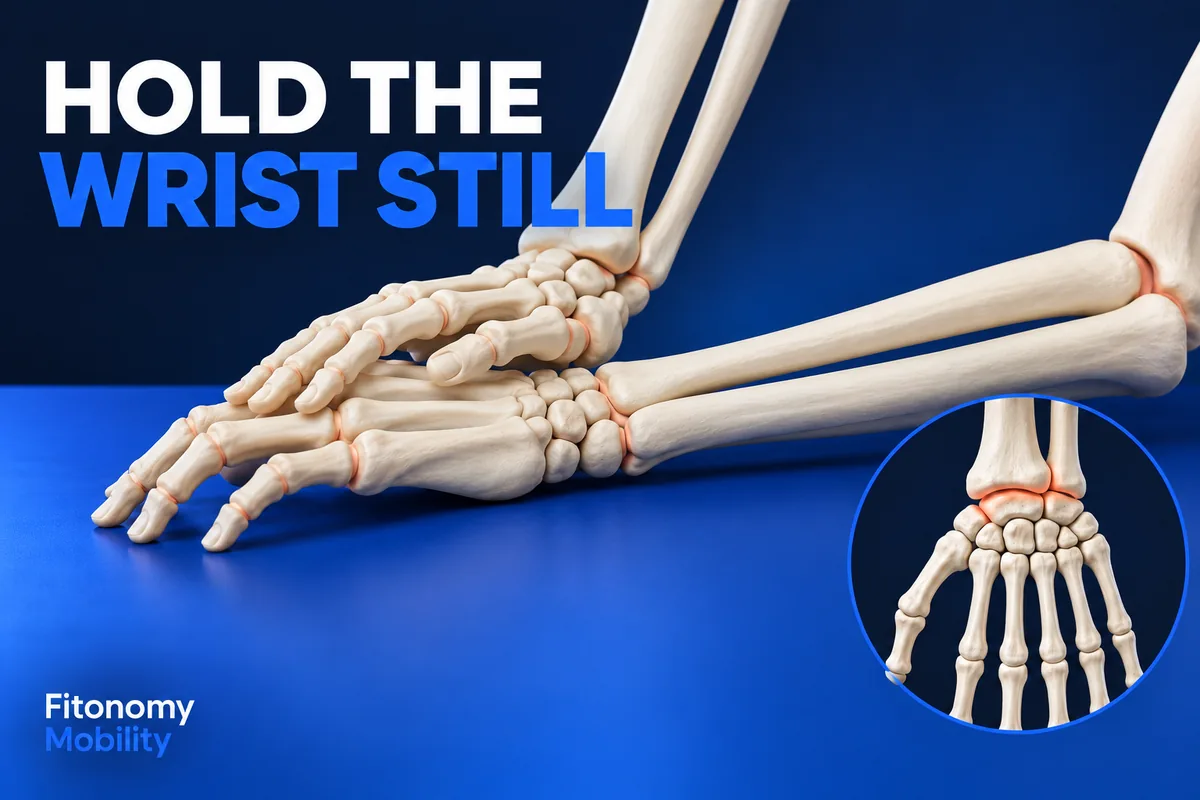
The Leeds example places the involved hand palm down on a table, with the elbow supported. Place the other hand over its back as taught. Keep the wrist aligned with the forearm and fingers comfortably bent, without gripping individual fingers.
Apply stationary effort
Gently try to lift the lower hand at the wrist while the top hand prevents movement. Keep the forearm supported and breathe normally. The wrist stays still. Do not turn the palm, lean onto the hand or force a bend. Ask for a demonstration if contact is unclear.
Release before resetting
Ease pressure off before moving the hands. Use only your personal instructions for holds, effort and repetitions. Stop for pain, tingling, numbness, swelling or lost control and seek individual advice. The source's rehabilitation phase does not mean everyone may start after six weeks.
Record the task accurately
Active wrist bends actually move the joint. An assisted flexion stretch and an extension stretch use different assistance. Do not transfer their doses. Record side, setup and comfort, not an assumed range gain. The beginner mobility guide offers broader context, not treatment or automatic progression.
If your taught task is instead a stationary palm up effort, check the isometric wrist flexion distinction. Its contact and dose remain individual.