Start with individual instruction
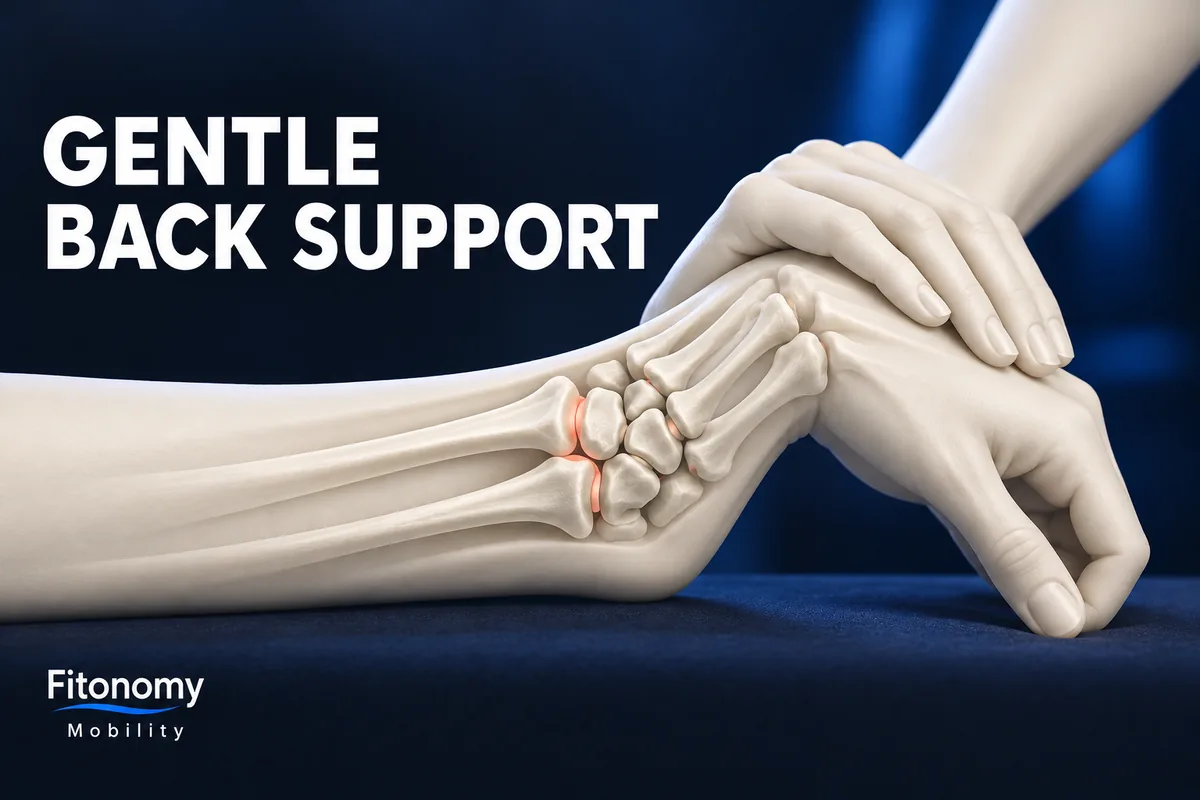
The Cambridge University Hospitals hand therapy leaflet describes passive wrist exercises for an injured wrist. Passive means the other hand helps move it. This is an explanation of a clinician taught stretch, not a general daily routine. After injury, surgery or splint use, confirm suitability and restrictions with your treating professional before trying it.
Support the outer edge
The leaflet places the outer edge of the hand on a table. Bend the wrist forwards so the palm moves toward the inside of the forearm. Keep the supporting surface stable and the movement slow. If the taught position is unclear or uncomfortable, ask for a demonstration rather than finding a deeper angle yourself.
Use the back of the hand
The other hand gently assists on the back of the bent hand, following your instruction. Do not pull the fingers, bounce or lean body weight into the stretch. Your clinician determines range, hold and frequency. The leaflet's prescribed schedule is not a universal dose, and this article does not reproduce it as one.
Distinguish neighboring movements
Active seated wrist movement uses your own muscles without the other hand's assistance. Assisted wrist extension bends the opposite way with different hand contact. Sideways wrist movement uses another plane. They are distinct movements, not interchangeable prescriptions.
Keep a useful note
Record the side, taught support, instructions and comfort, without treating these notes as a diagnosis or proof of progress. Stop for pain, tingling, numbness or swelling and seek individual advice. Use the beginner mobility guide for broader movement context. Explore Fitonomy Mobility separately; translated articles do not mean the app supports every article language or assesses this clinical stretch.
Moving sideways toward the thumb differs from bending forward. Clarify the personally taught sideways assistance with your clinician rather than transferring flexion contact or dose.