Begin with individual instruction
This guide explains a stretch your clinician has taught as suitable. The AAOS programme requires medical supervision. Its rehabilitation schedule is not a universal routine. After injury, surgery, splint use or movement restrictions, follow your own instructions before trying it.
Understand wrist extension
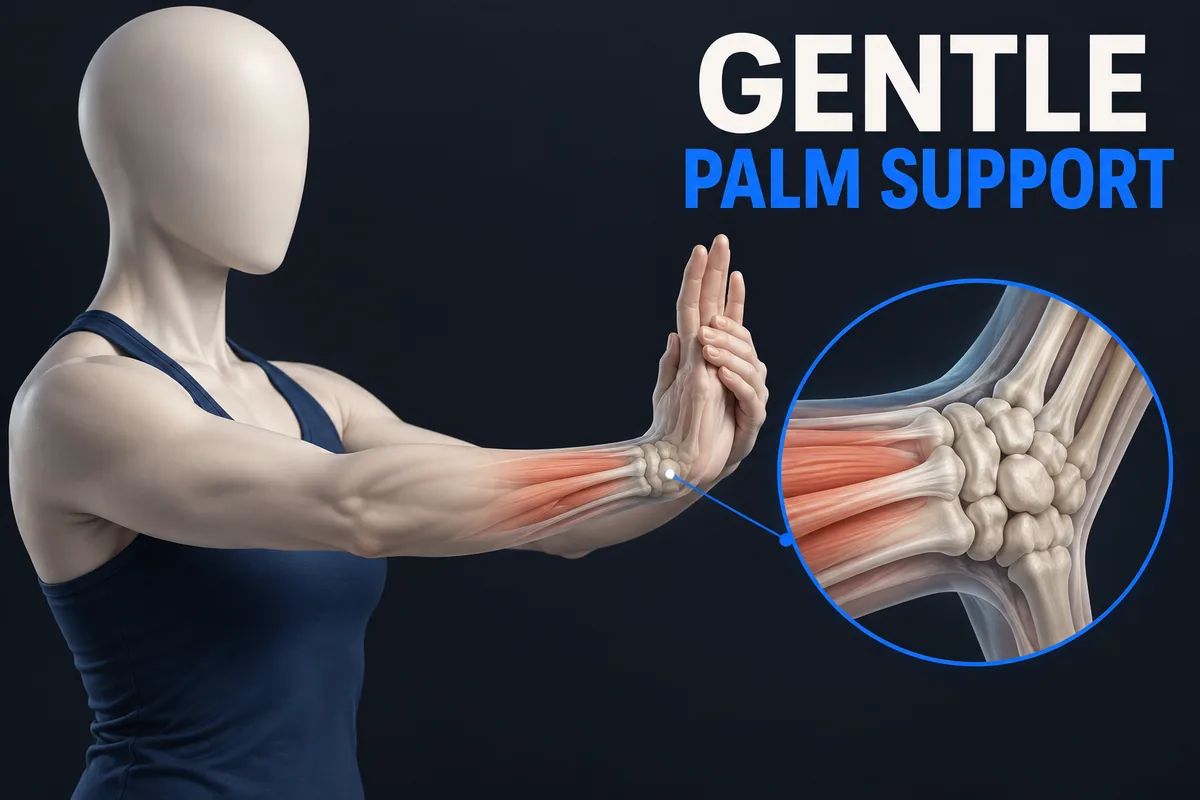
Extend the arm comfortably without locking the elbow. Bend the wrist back so the palm faces outward like a stop signal. This differs from moving sideways along a table in the sideways wrist guide.
Use only gentle assistance
As taught, place the other hand across the palm and apply gentle pressure toward you until there is a mild stretch inside the forearm. Do not pull individual fingers, bounce or press with bodyweight. Release gently. Use only your prescribed range and hold, without chasing an angle.
Separate active movements
In active wrist bends, your own muscles move the hand without opposite hand pressure. Do not add this assisted stretch to that routine automatically. Keep the tasks separate when recording practice.
Record context and respect symptoms
Note the side, taught setup and comfort rather than a score. Stop for pain, tingling, numbness or swelling and seek individual advice. No repetition target, diagnosis or treatment promise is provided. Explore Fitonomy Mobility; translated articles do not imply matching app languages.
Flexion moves the wrist in the opposite direction and uses the back of the hand for assistance. Read the clinician taught wrist flexion setup only with suitable individual instructions; do not reuse extension contact or its prescribed schedule.