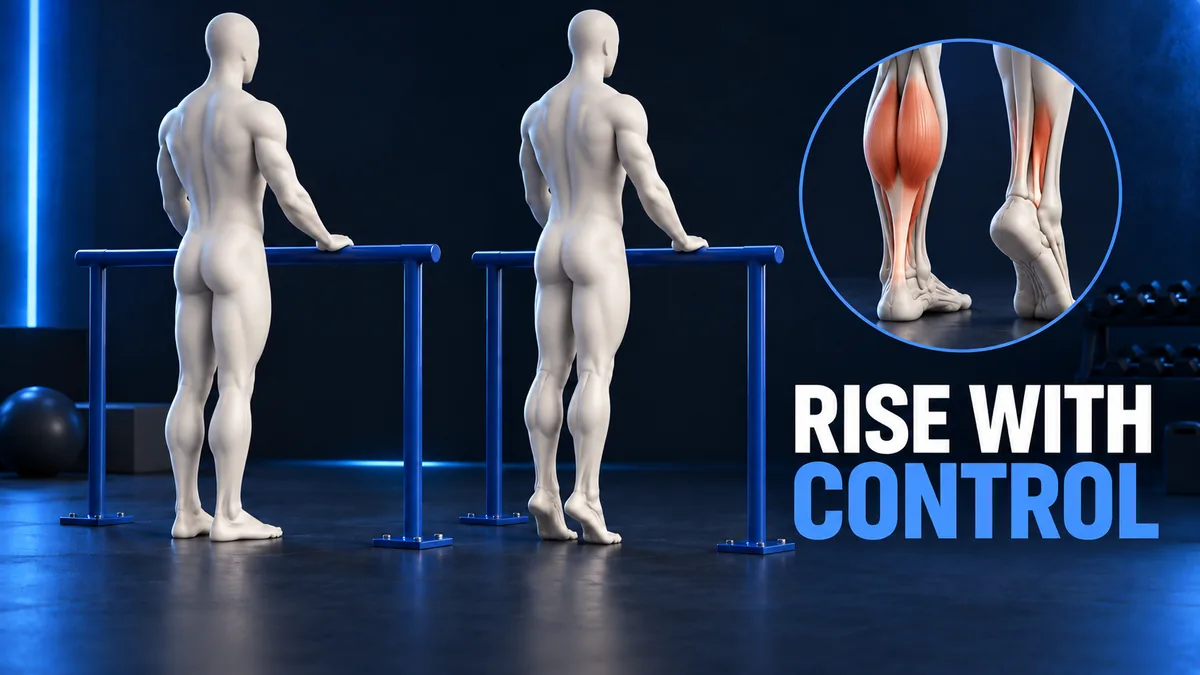
A standing calf raise is a simple strength movement, but the useful version is steady rather than rushed. Start with both feet on a level floor and enough support to keep balance from deciding the movement.
Set the support first
Face a stable rail, counter, or chair that will not slide. Rest the hands lightly and stand tall. The Royal National Orthopaedic Hospital guide also shows a supported double leg heel raise, although its clinical programme and timing are not general rules.
Lift both heels together
Keep the forefeet on the floor and let both heels rise at a similar speed. Avoid throwing the chest forward or pulling hard with the arms. The Leeds exercise page describes rising onto the toes and lowering steadily, without making its clinical dose a target here.
Lower without dropping
Reverse the same path until both heels meet the floor quietly. A smaller smooth lift is clearer than a high rise followed by a sudden drop. Keep the knees comfortable rather than forcing them rigid.
Notice what stays quiet
Watch for one foot rolling outward, one heel rising earlier, or the body swaying into the support. Reset the stance or reduce the height if those changes hide the calf movement. The sit to stand guide offers another supported lower body pattern.
Add difficulty only after control
Practise the bodyweight path before adding load or using an edge. The progressive overload guide explains how to change one demand at a time. You can also check movement guidance in the Fitonomy exercise library. Stop for pain, dizziness, loss of balance, sudden weakness, or symptoms that persist.