Settle into a stable seat
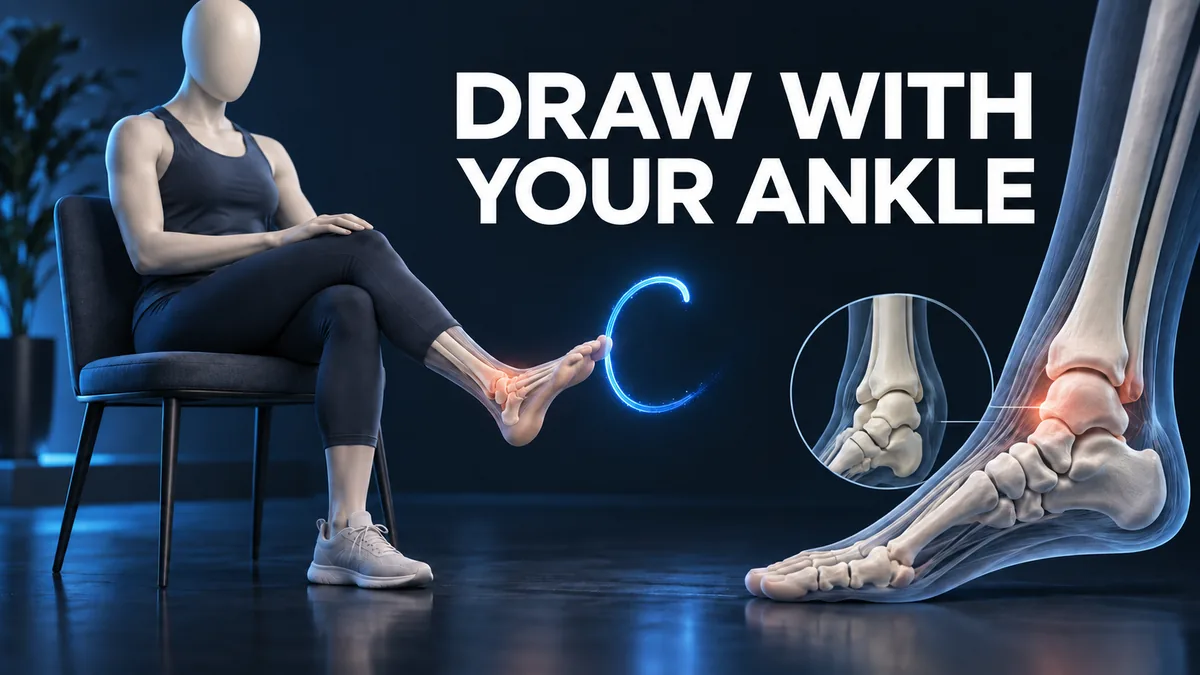
Sit on a steady chair and place the other foot firmly on the floor. Let the working foot move freely without balancing on the chair edge. Rest the thigh comfortably so the knee and hip can stay relatively quiet. The NHS ankle movement sheet describes a seated alphabet with small letters.
Imagine your toe as a pencil
Picture the tip of your big toe drawing on an invisible page in front of the foot. Start with a simple small letter or familiar shape. The Leeds Community Healthcare guide uses this pencil idea. You do not need to draw a whole alphabet or copy English letter forms if another script is more familiar.
Draw from the ankle
Move slowly through a comfortable path rather than making the largest possible letter. Let the foot change direction while the shin stays mostly in place. If the knee or hip begins to swing, make the letter smaller or pause. A smooth small path is enough for a movement check.
Pause and compare directions
After one or two shapes, relax the foot and notice which turns feel easy or awkward. Try a different letter or small curve only if the first stays comfortable. For one repeated path, compare seated ankle circles. For a simpler side movement, see seated ankle inversion and eversion.
Choose a simpler option when needed
If the alphabet is too complicated, move the toes gently up and down or follow seated heel and toe raises. You can return to letters another day. The beginner mobility guide explains how to choose manageable movements. The Fitonomy Mobility app offers movement routines, but availability of app languages should be checked in the app.
Stop at your own limit
Stop for pain, swelling, numbness, dizziness or symptoms that worsen. Injury, surgery or a clinician’s restriction calls for individual guidance before trying a movement. This is a nonclinical way to explore active ankle control, not a treatment or a promise to increase range. Small, comfortable letters are enough.